Guide | May 12, 2026
Bone Density Testing & Treatment: Targeted Treatment for Osteoporosis
Osteoporosis treatment does not begin with medication, but rather with a precise assessment of your individual bone health risk. At the ROC Regenerative Center in Aschheim near Munich, we view bone density as part of a bigger picture: symptoms, previous fractures, family history, medications, lab results, exercise, diet, muscle strength, balance, and lifestyle are all factored into the assessment.
Many people seek a bone density test because they are experiencing back pain, have lost height, have suffered a fracture after a minor fall, or have a family history of osteoporosis. Others take an early interest in their bone health because they are taking corticosteroids, see themselves as being at higher risk after menopause, or want to remain physically active.
It is precisely at this point that a professional bone density test at the ROC in Aschheim provides the basis for effective osteoporosis treatment.
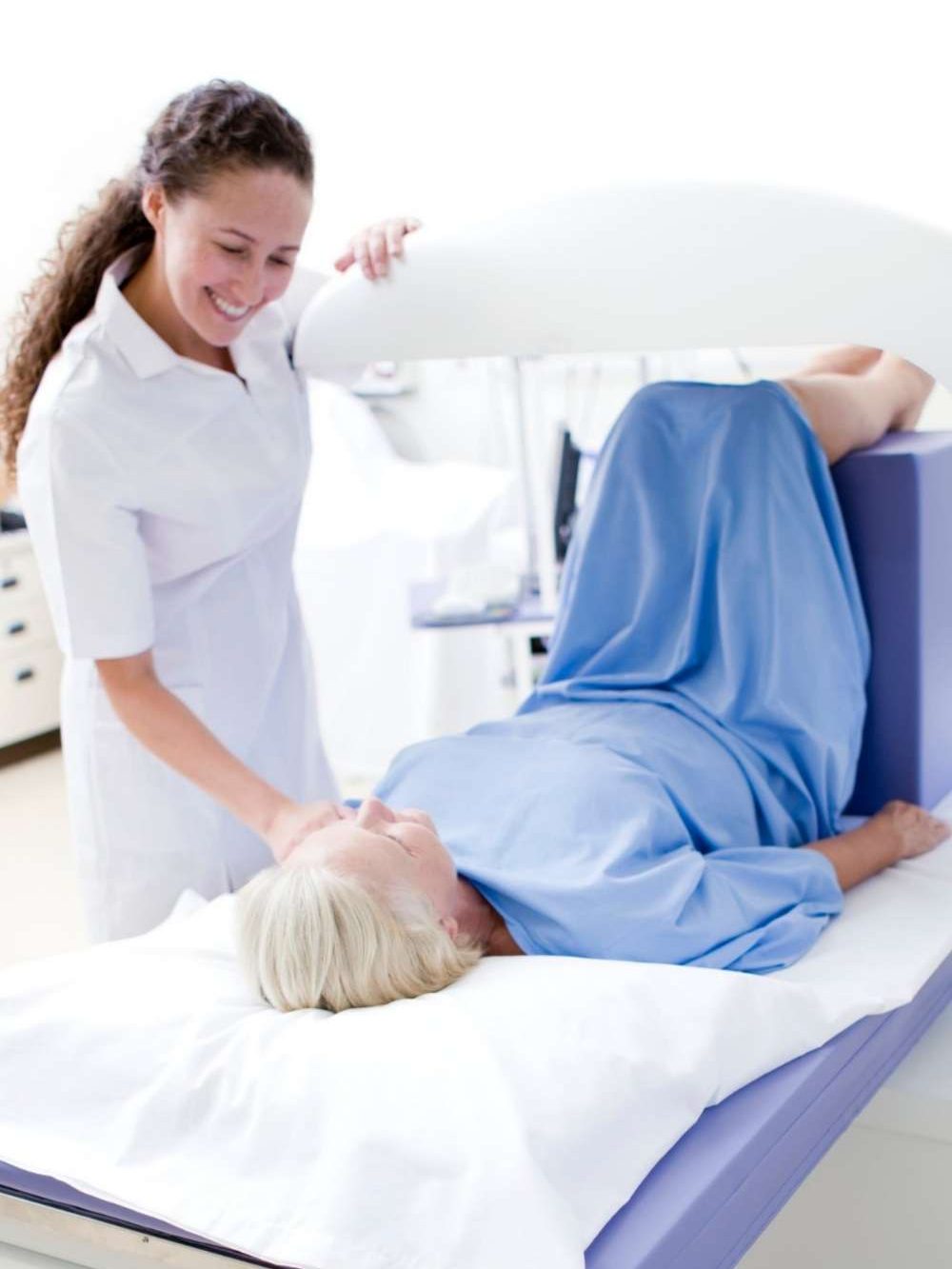
The current German-language DVO guideline recommends DXA measurement (see photo) of the lumbar spine and hip as the standard procedure for assessing bone density and factoring fracture risk into treatment decisions. The guideline also identifies drug therapy, exercise, fall prevention, and calcium and vitamin D supplementation as key components of care.
Why Bone Density Testing and Treatment Go Hand in Hand
A bone density test does more than just determine whether you have osteoporosis. It shows how strong your skeleton is compared to that of a young, healthy reference group and whether you are at increased risk for vertebral, hip, or wrist fractures. Therefore, when it comes to bone density testing and treatment, it is not just a single value that matters, but your overall medical condition.
The T-score describes how much your measured bone density deviates from the average for young adults. A T-score of up to -1 is generally considered normal; values between -1 and -2.5 indicate osteopenia; and values of -2.5 or lower meet the clinical definition of osteoporosis. This classification helps make the test results easier to understand. The medical evaluation also takes into account age, gender, risk of falls, previous fractures, comorbidities, and medications.
In everyday practice, it is often the case that two people with similar T-scores do not automatically require the same treatment. A 55-year-old female patient with no history of fractures, strong muscles, and good nutritional status has a different risk profile than a 78-year-old male patient with a vertebral fracture, unsteady gait, and a history of long-term corticosteroid therapy. That is why, at the ROC, we combine orthopedic diagnostics with a structured treatment plan.
What a bone density test actually measures
In osteodensitometry, a device measures the mineral content of specific bone regions. The lumbar spine and hip are typically the focus of the examination because osteoporotic fractures in these areas have particularly serious consequences. The DXA method uses very low-dose X-rays and provides measurements that are used worldwide for diagnosis, monitoring progress, and planning treatment.
The test measures bone mineral density, not overall bone quality. Bone strength is determined by several factors: mineral content, microarchitecture, bone remodeling, muscle pull, hormonal status, and risk of falls. Bone density testing therefore provides more meaningful information when combined with medical history, a physical examination, and relevant additional findings.
If the findings are abnormal, we at the ROC assess whether additional tests are warranted. Depending on the situation, these may include laboratory tests of bone metabolism, imaging studies if fractures are suspected, and a functional analysis of posture, gait, or muscle control. Laboratory diagnostics at the ROC help identify underlying causes such as vitamin D deficiency, thyroid disorders, inflammation, or other metabolic issues.
Bone Density Measurement: CT or DXA—Which Method Is Right for You?
Many patients ask about “bone density testing via CT or DXA.” The short answer: For routine osteoporosis diagnosis, DXA is considered the gold standard. It measures bone density in typical high-risk areas, involves low radiation exposure, and allows for comparability with guidelines, follow-up measurements, and therapeutic thresholds.
Quantitative computed tomography, often referred to as qCT, uses a different measurement method. It captures three-dimensional data and distinguishes between specific bone components more precisely. However, the procedure involves a higher radiation dose than DXA and is not always the first choice. In special cases, qCT provides additional information, such as when DXA results appear distorted due to severe degenerative changes in the spine.
When it comes to bone density testing, the technically “most advanced” test is not automatically the most appropriate one; rather, it is the method with the greatest clinical relevance to your specific clinical question. The DVO guideline lists DXA of the lumbar spine and proximal femur as the recommended standard procedure; alternative methods may be considered if DXA does not provide a sufficient basis for decision-making. Source
| Characteristic | DXA measurement | CT-based measurement |
|---|---|---|
| Typical Applications | The Standard for Osteoporosis Diagnosis and Follow-Up Care | Specific Issues, Supplementary Risk Assessment |
| Measurement Regions | Lumbar Spine and Hip | Depending on the procedure: the spine, hip, or other areas |
| Radiation exposure | Low | Usually higher than DXA |
| Reference to the Guidelines | Well-established | Depending on the situation |
| Benefits for Treatment Planning | Highly comparable to T-score, trends, and treatment thresholds | Helpful for specific anatomical or diagnostic questions |
When a Bone Density Test Is Recommended
A bone density test is particularly beneficial when its results lead to therapeutic action. This includes people who have suffered a bone fracture following minor trauma, postmenopausal women with risk factors, older men, individuals with a family history of osteoporosis, those undergoing long-term corticosteroid therapy, those with inflammatory rheumatic diseases, those who are underweight, those who have experienced repeated falls, or those with certain hormonal disorders.
Diagnostic evaluation also becomes increasingly important in cases of unexplained back pain, rounded shoulders, loss of height, or suspected vertebral fractures. Osteoporosis does not typically cause pain for a long time. It is often not noticed until after a fracture occurs. A good bone density screening program therefore begins earlier: it identifies risks before the first major fracture disrupts daily life.
At ROC, our private orthopedic practice in Aschheim, we assess which risk factors are present and whether a bone density test is the next appropriate step. This medical evaluation helps avoid unnecessary diagnostic tests while ensuring that relevant risks are not overlooked.
How a bone density test is performed at the orthopedist's office
The exam is painless and usually takes only a few minutes. You will lie comfortably on an exam table while the DXA machine scans the target areas. Wearing clothing without metal parts makes the process easier. Before the scan, the team will ask about your medical history, surgeries, fractures, implants, medications, and dietary supplements.
After the measurement, you will not receive a list of isolated numbers, but rather a medical evaluation. The report includes measurement values, a T-score, a Z-score (if applicable), and a classification of your fracture risk. For bone density measurement and treatment, this raises the question: Are basic measures sufficient, is closer monitoring needed, or does the risk profile indicate a need for medication to treat osteoporosis?
If back pain, spinal changes, or joint problems are present at the same time, additional imaging procedures can be specifically incorporated. The ROC offers, among other things, digital X-rays, open MRI, and ultrasound. This provides a clear picture, rather than simply listing individual findings side by side.
Osteopenia: What to Do If Your Bone Density Is Low?
Osteopenia means that bone density is below the normal range but has not yet reached the level of osteoporosis. While this may sound reassuring at first, it warrants attention. Osteopenia is not a harmless incidental finding when additional risk factors are present. These include previous fractures, advanced age, falls, corticosteroid use, smoking, alcohol consumption, vitamin D deficiency, chronic inflammation, or a family history of hip fractures.
Treatment for osteopenia based on bone density measurements is guided by the overall risk. For low-risk patients, the focus is on exercise, strength training, balance, a protein-rich diet, calcium intake, vitamin D, and fall prevention. For patients at higher risk, closer medical monitoring is required; in select cases, medication may be considered.
A real-world example: A patient with a T-score of -1.8, normal muscle strength, and no fractures typically receives different recommendations than a patient with the same T-score who has a history of repeated falls and is taking prednisolone. The measuring device indicates the bone density value. The physician’s risk assessment determines the appropriate course of action.
Osteoporosis Treatment: Which Factors Work Together?
Effective osteoporosis treatment is like a sturdy bridge: multiple pillars support it together. Medication alone is no substitute for exercise. Exercise alone cannot compensate for every structural weakness in cases of high fracture risk. Nutrition helps when it is tailored to individual needs. Fall prevention offers protection in situations where many fractures occur: in everyday life, when getting up, on stairs, in low light, or after episodes of dizziness.
There are four levels of bone density measurement therapy:
- Diagnostic level: DXA results, medical history, fracture risk, laboratory test results, imaging in cases of suspected vertebral fractures.
- Basic treatment: A calcium-rich diet, vitamin D supplementation, protein, strength and balance training, quitting smoking, and moderate alcohol consumption.
- Specific treatment: Antiresorptive or bone-building medications as prescribed by a doctor.
- Process: Clinical follow-ups, adherence to treatment, management of side effects, repeat measurements, and adjustment of the plan.
At ROC, we combine bone health with orthopedic function. People who suffer from joint pain, osteoarthritis, or spinal problems often become less active. Reduced activity further weakens muscles and bones. That is why, when necessary, we also consider osteoarthritis treatment, physical therapy at ROC, and functional diagnostics as part of a comprehensive treatment plan.
Drug Therapy for Osteoporosis Following a Bone Density Test
Drug therapy for osteoporosis is based on fracture risk, gender, age, kidney function, previous fractures, comorbidities, dental health, tolerability, and treatment goals. Commonly used classes of drugs include bisphosphonates, denosumab, selective estrogen receptor modulators, and bone-forming agents such as teriparatide or romosozumab, depending on the specific risk profile.
Antiresorptive medications slow bone resorption. Bone-forming therapies stimulate new bone formation and are primarily considered in cases of high or very high fracture risk. The DVO guideline states that specific drug therapy may be indicated in cases of corresponding fracture risk, regardless of the T-score alone; following treatment with denosumab, teriparatide, or romosozumab, a follow-up strategy is important to ensure that the protective effect achieved is not lost. Source
It is important for patients to understand that osteoporosis treatment is not a one-size-fits-all approach. Treatment requires a clear initial goal, follow-up checkpoints, and a discussion of possible side effects. With bisphosphonates, dosage instructions, tolerability, and kidney function are important factors. For injectable therapies, the correct dosing interval is crucial. When prescribing bone-building agents, the doctor plans early on how to subsequently stabilize the therapeutic effect.
Basic Therapy: Nutrition, Vitamin D, and Protein as the Foundation
Bone is living tissue. It responds to stress, hormones, nutrients, and inflammation. In the context of bone density measurement and treatment, this means that the measurement reflects the current status, while basic therapy improves the conditions under which bone is maintained or built up. Calcium, vitamin D, and protein form the nutritional foundation for this process.
Calcium is found in dairy products, calcium-rich mineral water, green vegetables, nuts, and fortified foods. Vitamin D supports calcium absorption and bone metabolism. The DVO summary recommends a minimum daily intake of 800 IU of vitamin D as a guideline; the specific dose depends on lab results, age, sun exposure, diet, and medical condition. Source
Protein deserves more attention in the context of osteoporosis than it often receives. Muscles protect bones because they reduce the risk of falls, maintain mobility, and exert tensile forces on the bones. For older adults at increased risk of falling, the DVO summary recommends a protein intake of 1.0 g per kilogram of body weight per day. Source
Which vegetables are good for your bones?
Vegetables are not a substitute for osteoporosis treatment, but they do help maintain a balanced nutrient intake. Green vegetables such as broccoli, kale, pak choi, arugula, fennel, and leeks are particularly suitable. They provide minerals, phytochemicals, and—depending on the variety—vitamin K. Legumes provide additional protein and minerals, provided they are well tolerated.
Bone density management isn’t about individual “superfoods,” but rather about a sustainable, long-term diet. A balanced meal includes protein, vegetables, high-quality fats, and sources of calcium. Those who avoid dairy products can turn to calcium-rich mineral water, fortified plant-based beverages, or other suitable sources. In cases of kidney stones, kidney disease, or certain metabolic disorders, a calcium intake plan should be coordinated with a doctor.
At ROC Vital in Aschheim, the focus is on prevention: health remains more resilient when metabolism, exercise, and recovery are considered together. This approach is particularly well-suited for people who don’t want to wait until their next injury to take action.
Exercises for Osteoporosis: Weight-Bearing, Strength, and Balance
Exercises for osteoporosis are designed to stimulate bone growth, strengthen muscles, and reduce the risk of falls. Suitable exercises typically include strength-training exercises with an appropriate level of intensity, balance training, climbing stairs, brisk walking, functional leg training, and core stabilization. In cases of advanced osteoporosis or vertebral fractures, the exercise program must be professionally adapted to ensure that the body benefits from the exercise while avoiding risky movements.
Bone responds to tension and compression. A bone that is completely spared receives fewer stimuli for bone formation. At the same time, a severely weakened bone cannot tolerate uncontrolled impact loads. This balance is why qualified guidance is so valuable. Bone density measurement provides the framework: The training strategy is adjusted based on the measurement results, pain, fractures, and muscle condition.
At ROC, we assess gait patterns, foot pressure distribution, and spinal alignment as needed. Pedobarography and gait analysis help us understand weight-bearing patterns. 4D spinal measurement provides additional information about posture without exposing the patient to additional X-ray radiation. This allows us to develop a training program tailored to the individual’s body.
Fall Prevention: The Underestimated Protection Against Fractures
Many osteoporotic fractures are not caused by dramatic accidents, but by everyday falls. Carpet edges, slippery tiles, poor lighting, inappropriate footwear, the need to urinate at night, dizziness, muscle weakness, or certain medications increase the risk. Fall prevention is therefore an integral part of bone density treatment.
Practical measures are simple but effective: Remove tripping hazards, ensure stairs are well-lit, use grab bars in the bathroom, have your vision checked, get any fluctuations in blood pressure evaluated, practice balance exercises, and have your medications checked for side effects such as dizziness or drowsiness. Anyone who has already fallen will benefit from a structured analysis rather than simply being told, “That was just bad luck.”
For neurological, autonomic, or stress-related symptoms, VNS analysis in the ROC can provide additional insights into regulatory patterns. For pain and limited mobility, our team assesses whether manual medicine, chiropractic care, or other orthopedic interventions can improve mobility.
New Findings on Osteoporosis: What Has Changed in Treatment
Modern osteoporosis care places greater emphasis on absolute fracture risk. In the past, the T-score was often the primary focus. Today, more risk factors are taken into account: age, gender, previous fractures, risk of falls, medications, comorbidities, and, in many cases, the pattern of fractures. As a result, bone density testing leads to more individualized treatment.
Another development concerns the sequence of medication. In cases of high or very high fracture risk, bone-building agents are becoming increasingly important. Antiresorptive therapies remain an established part of treatment, particularly for stabilization. Recent reviews describe the current range of antiresorptive and osteoanabolic options, which are used depending on the individual’s fracture risk. Source
For those affected, this means that the question is no longer “Which osteoporosis medication is generally the best?” but rather “Which treatment is right for my risk, my medical history, my tolerance, and my goals?” This is precisely the kind of question that should be addressed in a thorough consultation with a doctor.
How Long Does Osteoporosis Treatment Last?
The duration of osteoporosis treatment depends on the active ingredient, the risk of fracture, and the course of the disease. Some medications are prescribed for several years, while others have limited treatment intervals and subsequently require stabilizing follow-up therapy. Therefore, treatment does not automatically end when test results improve. The current risk of fracture is the decisive factor.
When planning treatment based on bone density measurements, we schedule follow-up visits from the very beginning. These include clinical appointments, questions regarding tolerability, reassessment of falls, laboratory test results, and, depending on the situation, a repeat DXA scan. The DVO guideline recommends initial clinical follow-ups at intervals of three to six months after the initiation of specific therapy. Source
Patients receiving denosumab require special attention when discontinuing the medication, because the risk of fracture may increase again without appropriate follow-up treatment. With bisphosphonates, the question of whether to continue or take a break from treatment becomes important after a prolonged period of therapy. These decisions should not be based on a rigid timeline but rather on a physician’s assessment of the risks.
Follow-up Measurement: When It Makes Sense to Have Another Bone Density Test
A follow-up DXA scan shows whether bone density remains stable, continues to decrease, or increases with treatment. The timing depends on the baseline value, risk, and treatment. Follow-up scans performed too early often reveal few meaningful differences because bone responds slowly and measurements are subject to technical variability.
In cases of high risk, a new fracture, or a change in treatment, follow-up is conducted differently than for stable osteopenia without additional risks. Bone density testing does not use follow-up measurements as an end in itself. Each follow-up answers a clear question: Has the treatment had the desired effect? Has the risk changed? Does the treatment plan need to be adjusted?
At the ROC, we correlate the trend with the clinical situation. If pain decreases, mobility increases, and the risk of falling decreases, that is also a sign of successful treatment. If the measurement remains stable even though a significant decline had previously been expected, that, too, can be a good sign.
What Are the Disadvantages of Bone Density Testing?
DXA bone density testing involves minimal radiation, is quick, and is painless. However, it has its limitations. It measures mineral content, not all aspects of bone quality. Degenerative changes, calcifications, or vertebral deformities can skew measurements of the spine. That is why it is important to measure both the hip and the spine and to have a doctor review the results for plausibility.
Another drawback stems from misinterpretation. A single T-score without a medical history can lead to a false sense of security or unnecessary worry. Osteopenia does not automatically mean a high risk of fracture. A normal or only slightly reduced value does not rule out all risk in certain risk scenarios. Bone density testing therefore requires experience in interpreting the results.
The issue of cost also plays a role. Statutory health insurance plans cover DXA scans only in certain cases, such as when there is concrete suspicion of osteoporosis and the scan is necessary for treatment. The Techniker Krankenkasse lists, among other things, fractures with no obvious cause where there is a justified suspicion of osteoporosis, as well as the optimization of a decision regarding drug therapy, as situations in which the cost can be billed through the health insurance card. Source
Which doctor performs bone density tests?
Bone density measurements are frequently performed in orthopedic, radiology, osteology, endocrinology, or specialized internal medicine practices. It is not only the device that matters, but also the medical interpretation of the results. The findings become more valuable when the treating physician can identify risk factors for osteoporosis, explain treatment options, and monitor the patient’s progress.
At the ROC, our orthopedic care takes this holistic approach: We consider bones, joints, the spine, muscles, and range of motion as a unified whole. For patients from Munich, Aschheim, and the surrounding area, this means a seamless transition from diagnosis to consultation to treatment planning.
If you already have previous test results, please bring them with you to your appointment: past DXA scans, X-ray or MRI images, lab results, your medication schedule, doctor’s notes, and information about any fractures. This will allow us to plan your bone density treatment more precisely and avoid unnecessary duplicate tests.
What does COPD have to do with osteoporosis?
COPD and osteoporosis occur together more often than many people with these conditions expect. The reasons include smoking, reduced physical activity, inflammatory processes, low body weight, vitamin D deficiency, and the use of glucocorticoids. High-dose or long-term corticosteroid therapy, in particular, can negatively affect bone metabolism.
Recent reviews describe a link between inhaled corticosteroids for COPD and an increased risk of osteoporosis or fractures, particularly at higher doses. COPD itself can contribute to bone weakness through lack of physical activity, inflammation, and muscle loss. Source
In terms of bone density measurement and treatment, this means that people with COPD benefit from early risk assessment. Respiratory therapy, tailored exercise, muscle strengthening, smoking cessation, fall prevention, and a customized medication strategy indirectly support bone health. Osteoporosis treatment is not a substitute for pulmonology therapy, but it complements it in cases where the risk of fracture increases.
Osteoporosis and Back Pain: Not All Pain Is Due to Wear and Tear
Back pain has many causes: intervertebral discs, facet joints, muscles, spondylolisthesis, osteoarthritis, inflammation, or osteoporotic vertebral fractures. With osteoporosis in particular, vertebral fractures can occur even after everyday movements, such as lifting a bag, stumbling, or turning abruptly.
Warning signs include acute back pain without a clear cause of trauma, loss of height, a hunched back, pain when standing up straight, or a history of osteoporosis. In such cases, bone density testing alone is not sufficient treatment. Imaging helps determine whether the fracture is recent or older. Depending on the specific clinical question, the ROC offers modern imaging techniques for this purpose, including open MRI at the ROC.
Once the cause has been determined, we proceed with appropriate treatment. This may combine pain management, physical therapy, orthotic consultation, muscle strengthening, osteoporosis medication, and fall prevention. For chronic spinal pain, we also explore additional options for spinal therapy.
Bone Density Testing: Treatment for Osteoarthritis and Joint Pain
At first glance, osteoarthritis and osteoporosis seem to be opposites: osteoarthritis causes changes in the joint cartilage and surrounding bone, while osteoporosis leads to a loss of bone mass. In everyday life, however, these two conditions often overlap. Pain limits movement, compensatory postures weaken muscles, falls become more likely, and surgeries require good bone quality.
A bone density test is therefore also advisable before making major orthopedic decisions if risk factors are present. A stable bone structure supports physical resilience, rehabilitation, and safe movement. People who are less active due to knee, hip, or spinal problems need a plan that protects their joints while still providing adequate stress on their bones.
At ROC, we offer a variety of conservative and regenerative treatment options for this condition. Depending on the findings, we provide advice on hyaluronic acid treatments, autologous blood therapy and orthobiology, shock wave therapy, or other procedures. The goal remains the same: less pain, improved mobility, and greater confidence.
A New Approach to Osteoporosis Treatment: Personalized Care Instead of a Standard Protocol
Modern osteoporosis care begins by identifying the primary issue. For one person, it may be a low T-score. For another, it may be a recent vertebral fracture. For a third person, it may be repeated falls, muscle weakness, and medications. Bone density measurement and treatment address all these aspects, ensuring that the focus is not solely on the numbers.
At ROC, we take a patient-centered approach. This means we explain the findings in a way that’s easy to understand, discuss treatment options transparently, and plan therapies so they fit into your daily life. A therapy is effective only if it is medically sound, well-tolerated, and practical.
Self-paying patients and those with private insurance, in particular, often seek a detailed assessment. They want to know whether a bone density test is necessary, which method is appropriate, whether medication is needed, which supplements make sense, and how to stay active despite pain. We don’t answer these questions with generalizations, but rather with a structured osteological and orthopedic evaluation.
What to Keep in Mind Before a Bone Density Test
Before your DXA scan, please bring any previous test results and your medication schedule with you. This includes previous bone density measurements, doctor’s notes, X-rays, MRI results, lab test results, information about fractures, and details regarding dietary supplements. Metal fasteners on clothing or belts can interfere with the examination; wearing comfortable, metal-free clothing will make the process easier.
Many medical offices ask patients to stop taking calcium supplements on the day of the exam or shortly before, because residual tablets in the digestive tract can affect the results. You will receive specific instructions from the medical office performing the exam. It is also important to mention any pregnancy or possible pregnancy before any X-ray-based exam.
At the ROC, you’ll receive clear information about the process on-site. To schedule an appointment, use the directions to the ROC in Aschheim; for organizational questions, visit the ROC Ortho service section. For further questions about billing, the “Prices at ROC Ortho” page provides guidance.
How We Develop a Treatment Plan Based on Measurement Data at the ROC
Our approach follows a clear process. First, we gather your personal history: symptoms, fractures, falls, family history, medications, pre-existing conditions, diet, activity level, and goals. Next, we perform the appropriate diagnostic tests. We then discuss the results in plain language and determine which measures are most likely to be beneficial.
Treatment following a bone density test can vary greatly depending on the results. In cases of mild osteopenia without additional risk factors, a consistent prevention plan is often sufficient. In cases of established osteoporosis with a high risk of fracture, specific medication becomes the primary focus. If the patient experiences pain, unsteadiness while walking, or spinal problems, we supplement the treatment plan with orthopedic or physical therapy measures.
Our mission at the ROC Regenerative Center: We don’t just treat the test results. We treat the person who lives with those results, works, wants to exercise, plans trips, holds their grandchildren, or wants to climb stairs safely again.
Common Mistakes After a Bone Density Test
A common mistake is to wait and see despite a clearly elevated risk. Osteoporosis doesn’t cause pain for a long time, but fractures can abruptly change a person’s life. Anyone who doesn’t receive a treatment plan after an abnormal test result is wasting time. The opposite is just as problematic: fear of taking any step at all. Excessive rest weakens muscles and balance, which increases the risk of falls.
A second mistake is taking dietary supplements in an uncoordinated manner. More calcium, more vitamin D, or additional supplements do not automatically provide greater protection. The appropriate dose depends on diet, blood test results, kidney function, comorbidities, and medication. Supplements that are too high in dosage or inappropriate can have undesirable effects.
A third mistake is discontinuing treatment without consulting a doctor. Especially with denosumab and bone-building therapies, ending treatment requires a follow-up plan. Bone density testing, therefore, remains an ongoing process, not a one-time appointment.
When You Should Seek Medical Attention Promptly
Prompt evaluation is recommended in cases of acute back pain following minimal exertion, sudden loss of height, new onset of a hunched back, a bone fracture following a minor fall, or repeated falls. This is especially true in cases of known osteoporosis, corticosteroid therapy, cancer treatment with hormonal effects, chronic inflammatory diseases, or significant underweight.
Even if a previous bone density test showed abnormal results and no treatment plan has been developed yet, it’s worth having the results reevaluated. Please bring your previous test results with you. A trend over several years often reveals more than a single value. For a comprehensive consultation, you can reach the ROC through the ROC Ortho telephone consultation service or schedule an appointment for an in-person examination.
Our team, led by the physicians at the ROC, supports you with state-of-the-art diagnostics, orthopedic expertise, and a focus on regenerative and preventive medicine. This provides a framework for bone density testing and treatment that is both scientifically sound and practical for everyday use.
Your Next Step Toward Bone Health
If you want to know whether your bones are strong enough, whether your osteopenia requires treatment, or which osteoporosis treatment is right for your risk level, a structured evaluation is the best place to start. A bone density test can provide guidance before uncertainty, pain, or a fracture begin to affect your daily life.
Schedule your appointment at the ROC Regenerative Center in Aschheim, near Munich. We’ll assess your risk factors, perform the appropriate diagnostic tests, and develop a treatment plan tailored to your body, your goals, and your lifestyle. For more information, visit the Bone Density Testing page on the ROC Ortho website.
Frequently Asked Questions About Bone Density Testing
What should you keep in mind before a bone density test?
Which method for measuring bone density is the best?
What does COPD have to do with osteoporosis?
What are the disadvantages of bone density testing?
What vegetables should you eat if you have osteoporosis?
Is omega-3 good for osteoporosis?
How many vitamin D units are recommended for osteoporosis?
How long should treatment for osteoporosis last?
How is a bone density test performed by an orthopedist?
Is it possible to improve bone density again?
Contact us
ROC Ortho
St.-Emmeram-Str. 5 (Ground Floor)
85609 Aschheim
www.roc-ortho.de
Tel.: 089 46259930
Email: praxis@roc-ortho.de
References
- DVO Osteoporosis Guidelines 2023: Basis for Diagnosis, DXA Standard, Fracture Risk, and Treatment Recommendations.
- DVO Summary and DVO Prevention Chapter: Guidance on Vitamin D, Protein, Exercise, and Risk Assessment.
- G-BA and Techniker Krankenkasse: Information on coverage of DXA bone density testing under statutory health insurance.
- Current scientific literature on COPD, inhaled corticosteroids, osteoporosis, and fracture risk.
- Current Overview of Osteoporosis Treatment in 2025 and Therapeutic Drug Classes.