Laboratory
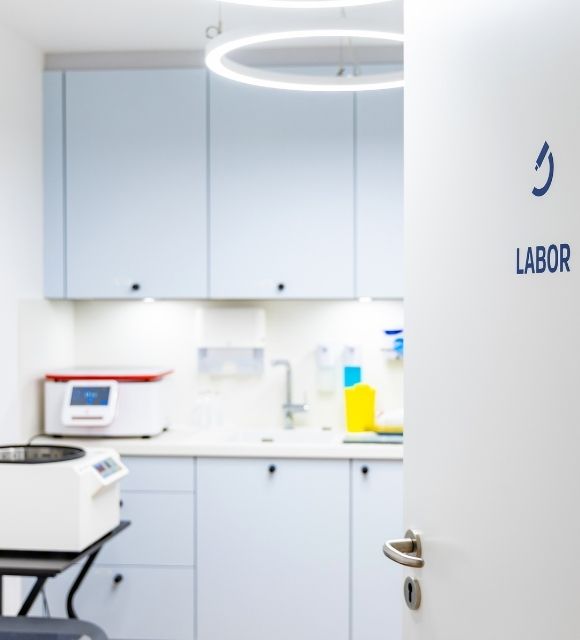
Laboratory tests can provide important insights when symptoms, inflammation, or changes in the joints need to be investigated more closely. With our in-house ROC Laboratory, we lay the groundwork for fast, precise, and personalized diagnostics right on-site. Through close collaboration between the laboratory and our medical departments, we can evaluate test results promptly and plan targeted treatments. We address specialized issues in collaboration with our partner laboratories.
We support our patients with state-of-the-art laboratory tests, streamlined processes, and personalized care all under one roof. We place a special emphasis on personalized diagnostics, which help us better understand health-related factors and tailor treatments to each patient’s specific needs.
In addition, our laboratory enables us to analyze cell samples as part of regenerative therapy procedures. This allows us to verify key quality parameters on-site and monitor our treatments with even greater precision.
Through our ROC Laboratory, we combine state-of-the-art diagnostics, medical expertise, and innovative procedures to establish a solid foundation for personalized treatment decisions.
We can test emergency and inflammatory markers right here in the office within minutes. Through our partnership with an external laboratory, we can also obtain all fluid samples and lab test results within 24 hours.
The results are always evaluated in conjunction with your symptoms, the physical examination, and, if applicable, imaging findings. This provides a solid foundation for further diagnosis and treatment planning.
When is laboratory testing appropriate in orthopedics?
Laboratory tests can be used, among other things, to:
- if inflammation or infection is suspected
- To investigate unexplained joint pain
- before certain orthopedic procedures
- to assess the current inflammatory status
- for progress monitoring
- for questions regarding bone metabolism
- to complement other diagnostic procedures
Which values are actually relevant depends on the specific medical issue at hand.
Rapid Inflammation Diagnostics Right on Site
With our point-of-care system, we can measure selected laboratory parameters, such as C-reactive protein (CRP), right in the office. The CRP level can provide clues about inflammatory processes in the body and support the physician's assessment.
Depending on the test, results are available within about 3 to 15 minutes. This allows them to be incorporated promptly into further diagnostic procedures and treatment planning.
Depending on the specific parameter, capillary or venous whole blood, serum, or plasma may be used as the sample.
Multiplex PCR for Suspected Joint Infections
Joint infections must be detected and medically evaluated as quickly as possible. If an infection is suspected, our laboratory can perform a modern multiplex PCR test using synovial fluid—that is, joint fluid.
The nucleic acid-based test enables the simultaneous qualitative detection of various bacterial and fungal pathogens, as well as selected genes associated with antimicrobial resistance. Results are typically available within about 60 minutes.
The test covers a total of 39 clinically relevant target structures:
- 29 bacterial pathogens
- of which 15 were Gram-positive and 14 were Gram-negative bacteria
- 2 yeast cells
- 8 Genes for Antimicrobial Resistance
This test can aid in the diagnosis of suspected septic arthritis or a periprosthetic joint infection. The results are not interpreted in isolation but are evaluated by a physician in conjunction with the patient’s symptoms, clinical findings, and, if necessary, additional microbiological tests.
How is synovial fluid collected?
The necessary synovial fluid is extracted under sterile conditions during a joint aspiration. The treating physician will determine whether an aspiration is necessary and advisable following a preliminary examination.
The collected sample can then be used directly for further laboratory testing.
Additional orthopedic laboratory tests
Depending on the specific issue, additional laboratory tests may be performed. These include, for example:
- Vitamin D
- Parathyroid Hormone (PTH)
- Ostase as a marker of bone metabolism
- other inflammatory markers
- customized laboratory test panels
We can offer a broader range of tests in collaboration with our partner laboratories. In doing so, we select only those parameters that are medically relevant to the specific orthopedic issue at hand.
Here's how laboratory diagnostics are conducted at the ROC
The first step is a medical examination. During this examination, we determine the nature of the symptoms and identify which lab test results can help us make a further diagnosis. Depending on the specific issue, this is followed by a blood draw or a joint aspiration.
As soon as the results are available, we will review them along with the rest of your test results and discuss them with you in a way that is easy to understand. If further testing is necessary, we will plan the next diagnostic steps carefully.
Are any other laboratory tests offered?
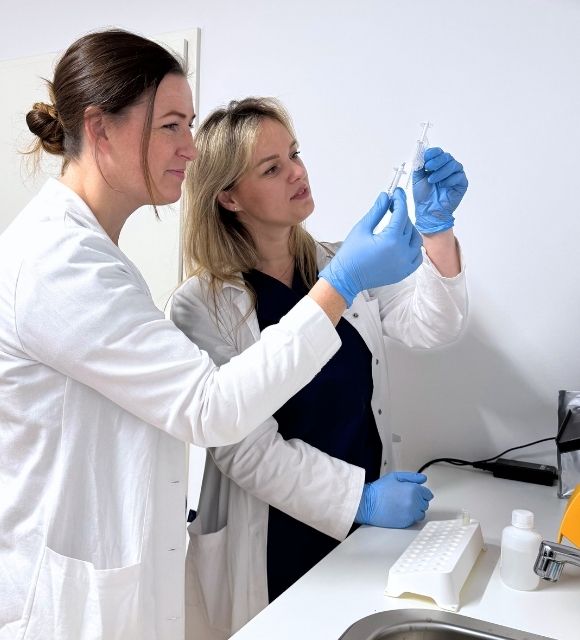
The ROC Laboratory supports various medical specialties with a wide range of laboratory tests. You can find an overview of the full range of services on the " In-House ROC Laboratory" page.