In-house laboratory & active research
What most practices outsource, we handle right here on-site.
Precise diagnostics and scientific expertise form the foundation of modern medicine. That is why we at the ROC Regenerative Center have two specialized laboratory divisions: a medical diagnostic laboratory and a laboratory for regenerative biology. This close integration of diagnostics, scientific expertise, and clinical application enables us to ensure the highest standards of quality in patient care.
In our laboratory, we not only analyze test results, but also prepare treatments, monitor therapies, examine cellular material, and further develop new procedures. This approach results in a form of medicine that directly applies scientific findings to benefit people—in a personalized, transparent manner that reflects the latest research.
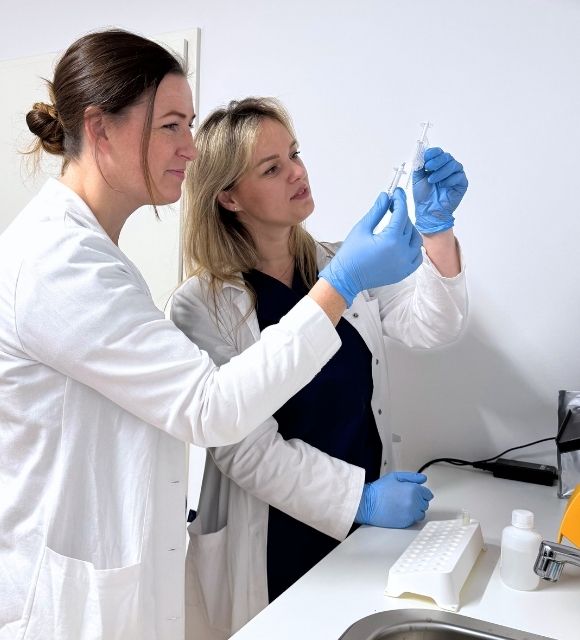
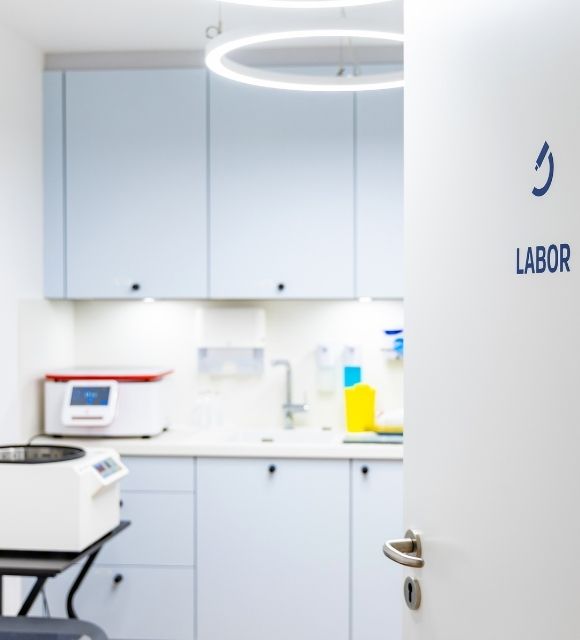
Lab work that makes a difference
Our laboratory operates across all departments and supports every aspect of care at the ROC—from diagnostics to monitoring treatment progress.
's Personalized Treatment Profiling Every treatment begins with a personalized analysis of relevant health parameters. Depending on the specific issue, this may include factors such as cell quality, metabolic status, inflammatory markers, or other laboratory values.- Assessing readiness for treatment
Before starting treatment, we determine whether the timing is right—for example, by assessing the level of inflammation (including CRP). - Quality Control of Cell Material
Before any stem cell treatment, we can ensure that only viable and clinically relevant cell material is used. This testing can be performed individually for each patient upon request.
Follow-up Care The success of the treatment is objectively monitored through regular follow-up examinations—based on medical findings, not on a hunch.- Evidence-Based Optimization
Our treatment protocols are continuously refined based on the latest research findings. - In-House Research & Laboratory Development
We actively conduct research and develop innovative methods.
Diagnostic Laboratory
Medical Laboratory Diagnostics – Accurate, Fast, and Patient-Centered
Accurate laboratory test results form the basis for many medical decisions. In our in-house laboratory, we perform a wide range of laboratory tests—from preventive care and diagnostics to treatment planning and monitoring of patient progress.
The medical laboratory diagnostics program is led by Jasna Vizintin, a medical laboratory scientist. Drawing on her professional expertise, she is responsible for the organization, quality assurance, and continuous improvement of diagnostic processes.
Through modern analytical methods and standardized testing procedures, we ensure reliable and timely laboratory results. In close collaboration with our physicians, the test results are directly incorporated into each patient’s individual care and form an important basis for sound diagnosis and treatment.
Our range of services includes, among other things:
Vitamin Testing
- Vitamin D
- Vitamin B12
- Folic acid
Tumor markers
- PSA (Prostate-Specific Antigen) & Free PSA (fPSA)
- CEA (Carcinoembryonic Antigen)
Bone Metabolism
- PTH (parathyroid hormone)
- Ostase
Thyroid Diagnostics
- TSH (thyroid-stimulating hormone)
- fT3 (free triiodothyronine)
- fT4 (free thyroxine)
- Anti-TPO antibodies
Sex and Reproductive Hormones
- Testosterone
- SHBG (Sex Hormone-Binding Globulin)
- DHEA-S
- Estradiol
Diabetes and Metabolic Diagnostics
- Insulin
- C-peptide
Further Analysis
- Cortisol
- Ferritin
- A wide range of analyses in collaboration with our partner laboratories
Sample type: Serum (venous blood)
Results are typically available within 24 hours. Upon request, we can create customized lab profiles tailored to your specific concerns and health situation.
Rapid on-site laboratory diagnostics
A modern point-of-care system enables fast and accurate laboratory diagnostic analysis of various parameters (e.g., CRP, vitamin D, β-hCG, etc.) directly on site. Results are available within 3 to 15 minutes, thereby supporting rapid and reliable treatment decisions and reducing wait times for laboratory results, especially in emergency situations.
The system enables the analysis of various sample types, including whole blood (venous and capillary), serum, and plasma. Testing is simple and efficient. Because results are available quickly, patients receive a timely diagnosis and treatment, which contributes to improved and safer medical care.
Specialized Laboratory Diagnostics in Our Departments
Every medical issue requires precise diagnosis. That is why we supplement our general laboratory diagnostics in the various specialties with specialized testing procedures. This allows us to diagnose diseases accurately, plan individualized treatment plans, and reliably monitor treatment outcomes.
Diagnostics for ROC Ortho
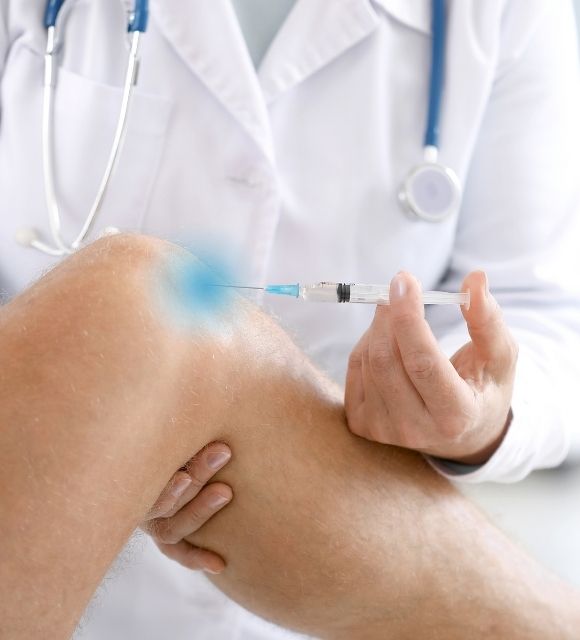
Multiplex PCR Diagnostics for Joint Infections Using Synovial Fluid
A modern multiplex PCR test enables the rapid identification of pathogens associated with joint infections. This nucleic acid-based in vitro diagnostic test is used for the simultaneous qualitative detection and identification of various bacterial and fungal pathogens, as well as selected genes associated with antimicrobial resistance, directly from synovial fluid.
The test is indicated for suspected joint infections and provides comprehensive diagnostic information within approximately 60 minutes. Rapid detection of clinically relevant pathogens and resistance markers supports targeted antimicrobial therapy and facilitates prompt clinical decision-making.
The test covers a total of 39 clinically relevant target structures:
- 29 bacterial pathogens (15 Gram-positive and 14 Gram-negative bacteria)
- 2 yeast cells
- 8 Genes for Antimicrobial Resistance
This test aids in the diagnosis of suspected septic arthritis and periprosthetic joint infections.
Specimen: Synovial fluid (joint fluid), collected in accordance with current standard procedures for joint aspiration.
Diagnostics for ROC Gyne
In gynecology, we perform certain tests directly in our in-house laboratory.
Rapid Urine Test for Detecting Bladder Tumors
The BTAstat® is a rapid test for detecting bladder tumor antigens in urine. It can aid in the follow-up care and monitoring of bladder cancer and provides results within a few minutes. The test is particularly suitable for people aged 50 and older or those with an increased individual risk.
Combined rapid test for the early detection of colorectal cancer
The combined rapid test aids in the early detection of changes in the colon. By combining two testing methods, it can detect both bleeding and non-bleeding abnormalities. The test is performed using a small stool sample and provides results within a few minutes.
Advantages of the test:
- No adulteration by food ingredients
- No special diet is required
- A tiny stool sample is enough
- Test results in just a few minutes
- Ease of Implementation
Diagnostics for ROC Derma
Our laboratory also provides support in the field of dermatology through targeted diagnostics.
- Allergy Testing
With the ALEX³ allergy test, we offer comprehensive allergy screening. The test simultaneously detects specific IgE antibodies against up to 300 allergen components—from a single blood sample. This provides a complete picture of potential sensitivities without the need for multiple tests. - Fungal Diagnostics
If fungal infections of the skin or nails are suspected, we perform fungal swabs right here in the office and analyze them in our in-house laboratory. - PCR Diagnostics for Dermatomycoses
Laboratory for Regenerative Biology
Our Regenerative Biology Laboratory provides the scientific foundation for our regenerative therapies. Under the leadership of Szilvia Ruszkai-Szaniszló, Translational Science Lead, research and clinical practice work closely together to responsibly translate new scientific findings into patient care.
Thanks to our in-house laboratory, we are able to process autologous biological products under controlled conditions and ensure the highest quality standards. As a result, our patients benefit from scientifically sound treatments based on quality, safety, and continuous improvement.
Regenerative Treatment Portfolio
Our laboratory supports the clinical application of the following autologous regenerative therapies in various departments of our practice:
- PRP (platelet-rich plasma) is used in the following fields: orthopedics, dermatology, aesthetics, and gynecology
- SVF (stromal-vascular fraction) is used in the field of orthopedics.
- MFAT (microfragmented adipose tissue) is used in orthopedics.
- Cartilage-based micrograft therapy (AMT) is used in the field of orthopedics.
Areas of Practice
- Processing of Autologous Regenerative Biological Products
- Determination of Cell Viability
- Development and Implementation of Quality Control Strategies
- Scientific Support for Regenerative Medicine Procedures
- Method Development and Laboratory Optimization (e.g., cryopreservation and management of biological samples)
- Translational Science and Evidence-Based Innovation
- Supporting clinical research and scientific collaborations—we are always open to new partnerships
Quality Through In-House Research and Laboratory Expertise
Having our own laboratory allows us to monitor regenerative procedures under controlled conditions and to continuously refine them. Through close collaboration between science and clinical practice, we ensure the highest quality standards and lay the groundwork for responsibly integrating new scientific findings into the treatment of our patients.
For you, this means that medical decisions are based not only on experience, but also on objective data and the latest scientific findings.
Our lab team
Expertise you can count on


Szilvia Ruszkai-Szaniszló
Director of the Laboratory for Regenerative Biology

Dr. med Ulrich Hölzenbein
Laboratory medicine