Manual medicine (chirotherapy)
Gentle relief for functional symptoms

Chiropractic therapy, also known as manual medicine, can help you if your mobility is limited not by structural damage but by a functional disorder.
At the ROC Regenerative Center in Aschheim near Munich, experienced physicians relieve blockages and tension using controlled, gentle manual techniques grounded in conventional medicine and tailored to your symptoms. A thorough examination—supplemented, if necessary, by modern imaging such as MRI or ultrasound—forms the basis for safe treatment.
Gentle, controlled technique
Precise positioning instead of jerky maneuvers

Based on conventional medicine
Recognized Manual Medicine, Not an Alternative Method

Individual Assessment
First the diagnosis, then the treatment
What Is Chiropractic Therapy? Manual Medicine Explained in Simple Terms
By this we mean a treatment method recognized by conventional medicine in which we use controlled manual techniques to correct functional disorders of the joints, muscles, and spine. Unlike traditional chiropractic, at ROC we use particularly gentle techniques and combine them with modern diagnostic methods such as ultrasound and MRI. This allows us to determine before each session which structure is affected and whether manual intervention is both possible and safe. Accurate orthopedic diagnostics are therefore an integral part of every treatment.
When Chiropractic Treatment in Munich Is Recommended
Manual medicine is particularly effective for functional complaints—that is, when muscles, joints, or fascia are no longer working together properly. If, on the other hand, there is acute structural damage, such as a bone fracture, a different approach is necessary. We rule out exactly that through the initial examination and, if necessary, through imaging.
Typical symptoms for which we provide treatment include, for example:
- Acute and chronic back pain
- Neck and Shoulder Tension
- Blockages in the thoracic and lumbar spine
- Headaches and tension headaches caused by muscle tension
- Pain in the hip, knee, or ankle joints
- Limited mobility after improper posture or prolonged sitting
If manual treatment alone is not sufficient, we explore complementary regenerative procedures from the ROC Ortho program. In cases of joint wear and tear, for example, stem cell therapy may be an option for osteoarthritis. You can find an overview of all options in our orthopedic treatment methods.
When Chiropractic Treatment Is Not Used
Manual techniques are not suitable for every situation. We deliberately refrain from applying manipulative force in cases such as a fresh bone fracture, advanced osteoporosis, acute inflammation, a herniated disc with neurological deficits, or tumors in the treatment area. The same applies in cases of instability or vascular disease in the cervical spine. That is why we always begin with a thorough examination, supplemented by imaging if necessary.
If our assessment shows that a different approach is more appropriate, we’ll discuss it openly with you. In such cases, we’ll use minimally invasive alternatives at the ROC or refer you to the appropriate specialists. That way, you’ll always know why we’re recommending a particular course of action.
Gentle Techniques in Manual Medicine
The treatment is performed with precise positioning, good deep tissue contact, and a comfortable level of tension. If necessary, a short, controlled impulse is applied, similar to what you might experience during a “joint adjustment.” We also use muscle energy techniques and myofascial techniques to complement the treatment.
These techniques aren’t limited to the spine. They can also be used to relieve pain in the shoulders, hips, knees, or other joints, gently correct misalignments, and improve mobility. For subsequent stabilization, we work closely with the physical therapy department at ROC, whose manual therapy complements medical treatment.
Chiropractic Treatment for Back and Neck Pain
Back and neck pain are among the most common reasons patients come to see us. Often, there is no serious underlying condition; rather, the issue stems from a blockage in individual vertebral joints or muscle tension, which can be effectively relieved using manual techniques. We palpate the affected segments, assess mobility and muscle tension, and then release the blockage.
The pain often subsides after just a few sessions. To prevent the symptoms from returning, we also look for possible triggers in your daily life—such as uneven strain at your desk or a lack of exercise—and provide you with appropriate exercises. If the symptoms persist despite treatment, we’ll determine the cause through further diagnostic testing.
Benefits of Manual Medicine at a Glance
- Gentle rather than abrupt: controlled movements tailored to your condition.
- No medication or surgery: the procedure focuses on function and does not require any invasive procedures.
- Relief often comes quickly: A noticeable improvement is frequently possible early on in the course of treatment.
- Modern imaging: MRI and ultrasound help guide treatment.
- Medical treatment: provided by medical specialists with a subspecialty certification in Manual Medicine/Chiropractic Therapy.
- Personalized Treatment Plan: We tailor our diagnostics, treatment, and follow-up care to your specific situation, rather than offering a one-size-fits-all solution.
Here's how a chiropractic treatment session works at our practice
First, we’ll discuss your symptoms and previous test results in detail. This is followed by a thorough physical examination, supplemented as needed by imaging techniques such as MRI or ultrasound. We’ll then explain in simple terms which structures are affected and which technique we’ll be using. The actual treatment takes place in a calm atmosphere using precisely calibrated pulses; if you’d like, we’ll provide you with exercises and recommendations for your daily routine.
Would you like to know if your symptoms are suitable for chiropractic treatment in Munich? Schedule a personal consultation at the ROC in Aschheim and receive personalized advice.
Your Appointment at the ROC: Preparation and Follow-Up Care
Proper preparation helps us assess your symptoms more quickly. Please bring all documentation of your previous treatment to your first appointment:
- Current test results and doctor's notes
- Any existing X-ray, MRI, or CT images, ideally from the past six months
- a list of your medications, if you take any on a regular basis
- a bank transfer, if you have one; it is not absolutely necessary
After the session, we’ll provide you with simple exercises and recommendations for daily life—such as tips on posture, movement, and physical strain at work—if you’d like. This helps ensure that the results of the session last longer. In cases of more severe strain, we’ll coordinate your ongoing care closely with our colleagues in physical therapy.
Medical team

Dr. med. Daniel Filesch
Specialist in orthopaedics and trauma surgery

Martina Berger
Doctor for regenerative orthopaedic procedures

Dr. med. Edan Manos
Doctor for regenerative orthopaedic procedures

Patrick Heine
Specialist in orthopaedics and trauma surgery
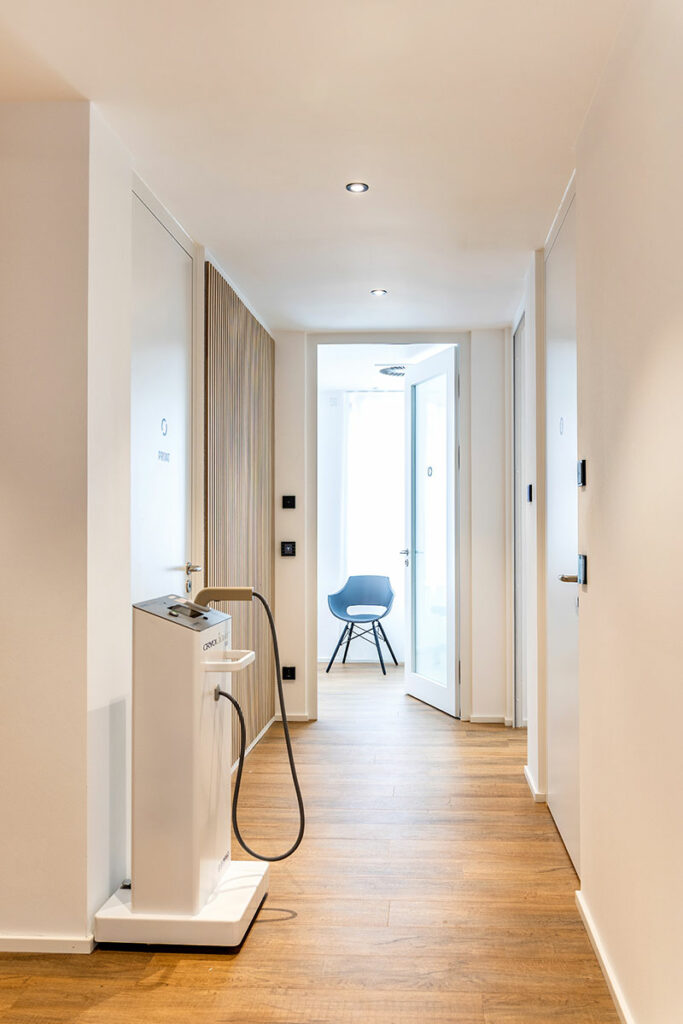
Modern medical offices in Aschheim, near Munich


Frequently Asked Questions About Chiropractic Care in Munich
For which conditions is this treatment particularly suitable?
Is the treatment painful or risky?
How many sessions are usually needed?
Do I need a referral for the treatment?
Who performs chiropractic therapy at the ROC?
Would you like to learn more? Contact us to schedule a consultation and have your symptoms evaluated at the ROC Regenerative Center in Aschheim.
ROC Ortho
Private Orthopedic Practice
St.-Emmeram-Str. 5
85609 Aschheim
Email: praxis@roc-ortho.de
Phone: +49 89 46259930
Opening hours
| Monday | 7:30 a.m. – 6:00 p.m. |
| Tuesday | 7:30 a.m. – 6:00 p.m. |
| Wednesday | 7:30 a.m. – 8:00 p.m. |
| Thursday | 7:30 a.m. – 6:00 p.m. |
| Friday | 7:30 a.m. – 3:00 p.m. |