Spinal Therapy for Back Pain and Herniated Discs
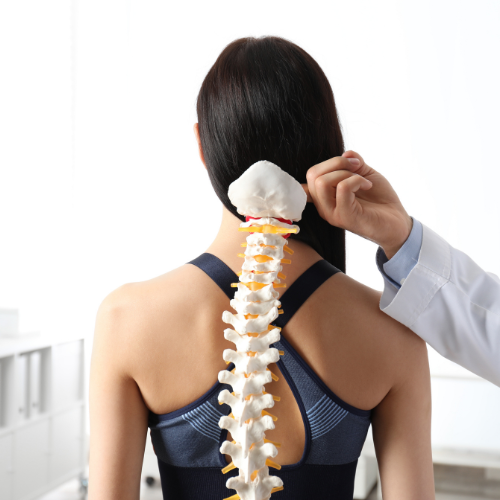
Back pain, herniated discs, or wear and tear on the small vertebral joints can severely limit your daily activities—such as getting up, sitting, bending over, turning, or exercising. At the ROC in Aschheim near Munich, we conduct a targeted assessment to determine the source of your symptoms and identify the most appropriate conservative treatment for you.
Our treatment targets the source of the pain: the intervertebral disc, nerve root, facet joint, sacroiliac joint, or muscles. The goal is to relieve pain, restore mobility, and avoid surgery whenever possible.
Spinal therapy at the ROC is therefore not based on a single standard procedure. The key factors are which structure is causing the symptoms and whether the primary issues are localized back pain, limited mobility, or radiating symptoms. We tailor our diagnostic approach and treatment individually based on these factors.

Identify the cause in a targeted manner
Among other things, we distinguish between symptoms originating in the intervertebral disc, nerve root, facet joint, sacroiliac joint, and muscles.

Conservative Treatment
When medically appropriate, the focus is on non-surgical and, whenever possible, targeted treatment methods.

Diagnostics and Treatment at the ROC
Examination, imaging, and various conservative treatment options can be coordinated in a structured manner.
Spinal Therapy as the Primary Approach for Herniated Discs and Back Pain
This page is intended to provide guidance for patients with back pain, disc problems, or radiating pain. Depending on the findings, we will guide you from diagnosis to the appropriate treatment: conservative therapy, facet joint injections, manual therapy, infusion therapy, or procedures near the nerves, such as PRT-guided injections and Racz catheters.
What does spinal therapy involve?
The term “spinal therapy” encompasses a variety of treatment approaches. The appropriate method depends on where the pain originates and which structures are affected. For example, localized symptoms originating in the small vertebral joints require a different treatment than pain that radiates to the leg or arm due to an irritated nerve root.
Muscular tension, functional blockages, and discomfort in the sacroiliac joint can also be perceived in a similar way. Accurate diagnosis therefore prevents the situation where only the pain is treated without adequately identifying its possible source.
Which treatment is right for your symptoms?
Localized Back Pain
Radiating pain in the leg or arm
Blockages and Pain During Movement
Acute flare-up of pain
Our focus
- Ultrasound-guided facet joint injections: targeted injections into painful small vertebral joints
- Manual Therapy / Mobilization: gentle techniques for treating blockages, muscle tension, and restricted movement
- Infusion Therapies: Pain relief administered intravenously, especially for acute symptoms or when oral medication is not feasible
Diagnostics Prior to Spinal Therapy
The first step is to determine where the symptoms are actually originating. We therefore consider not only the site of the pain, but also any radiating pain, range of motion, muscle strength, sensation, and the patient’s medical history. If necessary, we supplement the examination with appropriate imaging.
Especially in cases of persistent symptoms, neurological symptoms, or an unclear cause, the open MRI at the ROC can provide additional information about the intervertebral discs, spinal canal, and adjacent structures. Only after reviewing these findings do we determine which spinal treatment is appropriate.
Ultrasound-guided facet infiltrations
Facet joint injection is a precisely guided injection into the small facet joints performed under ultrasound guidance. Unlike CT-guided injections, this procedure does not expose you to radiation. Anti-inflammatory medications, hyaluronic acid, or PRP (autologous blood plasma) can be injected directly into the facet joint.
This allows for targeted relief of inflamed and painful joints, especially in cases of localized pain in the cervical or lumbar spine.
Manual therapy / mobilization
If your movement is restricted not by structural damage but by a functional disorder, we use targeted, gentle manual therapy techniques. The goal is to release blockages, relieve tension, and make everyday movements easier again.
Treatment is provided following a thorough examination, supplemented by imaging if necessary. Techniques used include mobilization, muscle energy techniques, and myofascial techniques—that is, the treatment of muscle and connective tissue tension.
Infusion therapies
When administered intravenously, active ingredients are delivered quickly and evenly throughout the body. This can be helpful in cases of acute pain flare-ups, severe muscle tension, or inflammatory processes.
Especially if you have gastrointestinal issues, are taking blood thinners, or have other underlying medical conditions, tablets aren't always the best option. We'll assess on a case-by-case basis whether infusion therapy is right for you.
How does spinal therapy work at the ROC?

Classifying symptoms:
We'll discuss the progression of the pain, any radiating pain, previous treatments, and limitations in daily life.
Orthopedic examination:
Mobility, neurological abnormalities, and possible sources of pain are specifically assessed.

Supplement the diagnosis:
Depending on the findings, an ultrasound or further imaging may be considered.

Determine the treatment:
We will then discuss which conservative treatment option is best suited to your diagnosis.
Related Topics in the Herniated Disc Cluster
- Conservative Treatment for a Herniated Disc: When Treatment Without Surgery Is Possible and When Further Evaluation Is Necessary.
- PRT and nerve-adjacent infiltrations: Options for radiating pain caused by irritated nerve roots.
- Racz catheter: A possible treatment for persistent symptoms near nerves.
- Facet joint injection: Treatment for pain originating in the small vertebral joints.
- Open MRI: Diagnostics used when the cause of symptoms needs to be pinpointed more precisely.
- Denervation: An option for chronic, clearly localized pain in the facet joints or sacroiliac joints.
Spinal Therapy at ROC Aschheim near Munich
At the ROC in Aschheim near Munich, the goal is to identify the cause of the symptoms as accurately as possible before beginning treatment. This is particularly important because back pain does not automatically mean disc pain, and radiating pain does not necessarily have the same cause as localized pain.
Depending on the findings, examinations, imaging, and conservative treatment may be combined. This means there is no one-size-fits-all standard protocol for back pain, but rather a treatment plan tailored to the suspected source of the pain and your individual symptoms.
Our experienced team of doctors

Dr. med. Daniel Filesch
Specialist in orthopaedics and trauma surgery

Martina Berger
Doctor for regenerative orthopaedic procedures

Dr. med. Edan Manos
Doctor for regenerative orthopaedic procedures

Patrick Heine
Specialist in orthopaedics and trauma surgery
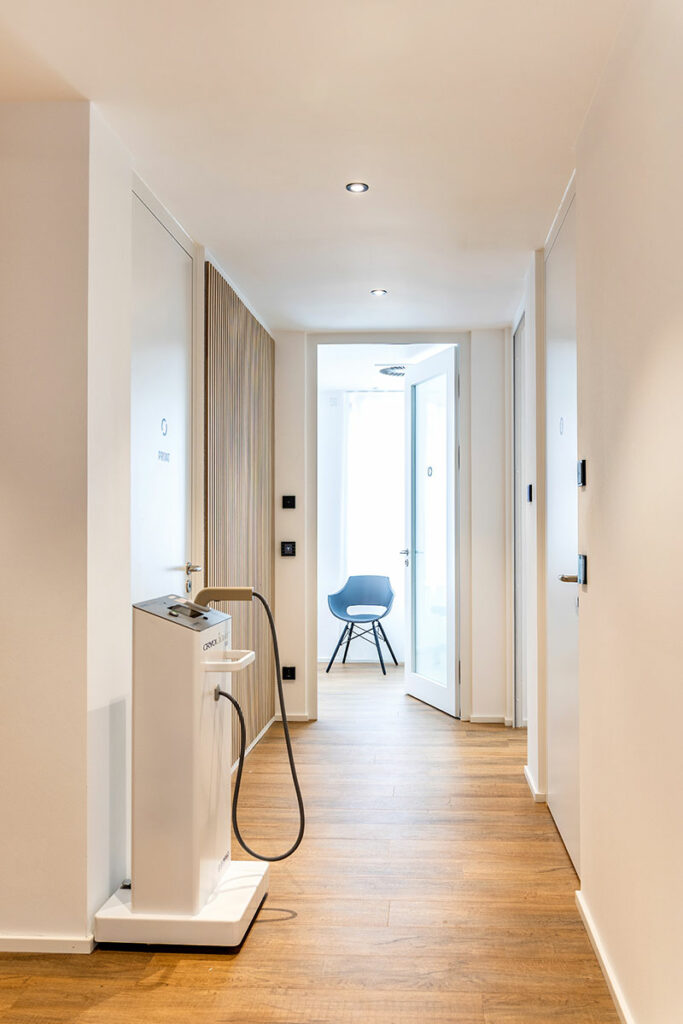
Modern medical office space in Aschheim


Frequently Asked Questions
When is spinal treatment without surgery possible?
Who is a good candidate for conservative treatment of a herniated disc?
What is the difference between facet infiltration and PRT?
How does treatment at the ROC work?
What treatment helps with radiating back pain?
When is an MRI recommended for back pain?
ROC Ortho
Private Orthopedic Practice
St.-Emmeram-Str. 5
85609 Aschheim
Email: praxis@roc-ortho.de
Phone: +49 89 46259930
Opening hours
| Monday | 7:30 a.m. – 6:00 p.m. |
| Tuesday | 7:30 a.m. – 6:00 p.m. |
| Wednesday | 7:30 a.m. – 8:00 p.m. |
| Thursday | 7:30 a.m. – 6:00 p.m. |
| Friday | 7:30 a.m. – 3:00 p.m. |