Shock Wave Therapy for Shoulder, Tendon, and Heel Pain

Short mechanical pressure pulses can specifically stimulate painful tissue. In shock wave therapy (ESWT), we deliver these pulses from outside the body to the affected area, such as the shoulder, elbow, Achilles tendon, or sole of the foot. The goal is to reduce pain, activate tissue repair processes, and make movement easier again—without additional medication or surgery.
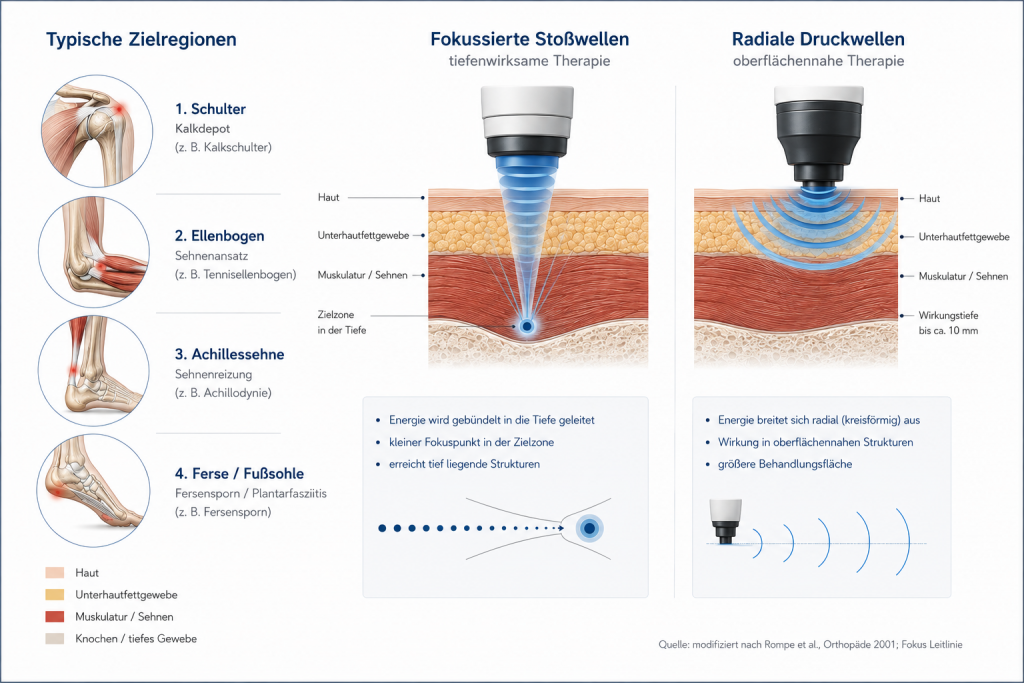
At the ROC in Aschheim near Munich, we use focused and radial techniques depending on the patient’s symptoms. Focused shock waves target deeper structures such as tendon insertions or bony changes. Radial pressure waves spread more broadly and are particularly suitable for muscle and tendon issues close to the surface. We often combine both methods when the findings and pain pattern indicate that this is appropriate.
Focused or Radial Shock Wave Therapy: Which Is Right for Your Condition?
Not every area of pain requires the same technique. For calcific tendinitis of the shoulder, Achilles tendon irritation, or a persistent heel spur , a focused treatment may be appropriate. For trigger points, muscle tension, or more widespread discomfort, the radial method is generally the better choice. We decide which technique to use based on the examination, the location of the pain, and the depth of the tissue.
What is shock wave therapy, and when is it used?
Minimally invasive
A minimally invasive, outpatient procedure that does not require major surgery
Regenerative approach
Your own cells trigger the healing process

Tennis Elbow and Golfer's Elbow
In cases of irritated tendon insertions at the elbow, pressure pulses can support regeneration and reduce pain caused by physical activity.
Heel Spurs and Plantar Fasciitis
If you have heel pain on the sole of your foot, shock wave therapy for heel spurs may be a non-surgical option.
Other Applications of Shock Wave Therapy
Other potential applications include muscle trigger points, tendon irritation, slow-healing bone fractures, bone marrow edema, and early stages of osteoarthritis. We will determine whether this procedure is appropriate for you following an examination and, if necessary, additional diagnostic tests.
Shoulder and Calcific Tendinitis
Achilles tendon
What does the treatment process involve?
The treatment is administered to the skin using an applicator. We adjust the intensity based on your symptoms and can change it at any time during the session. The pressure pulses are directed into the affected tissue, where they often trigger the typical, familiar pain. This indicates that we are reaching the painful area.
The electrical impulses promote blood circulation, stimulate the release of pain-relieving neurotransmitters, and activate the body’s own repair processes. This allows the affected tissue to heal more effectively. For you, this means—in the best-case scenario—less pain, improved mobility, and a gradual return to daily life, work, or sports.
When is this method not appropriate?
In certain situations, shock wave therapy is not appropriate—or is appropriate only after a thorough medical evaluation—such as in cases of acute infections in the treatment area, severe coagulation disorders, pregnancy, malignant tumors in the target area, or directly over growth plates in children. Fresh injuries or severe pain of unknown origin should also be carefully evaluated first.
Session Duration and Number of Shock Wave Therapy Sessions
A session lasts about 15 minutes. We often recommend 3 to 6 treatments, spaced one week apart. The number of appointments that are appropriate for you depends on your diagnosis, the duration of your symptoms, and your response to the first few sessions. Before we begin, we’ll clearly explain the expected costs and whether your insurance may cover them.
Certified Application and Expertise
Extracorporeal shock wave therapy is an established treatment for musculoskeletal pain. At the ROC, it is performed in accordance with the standards of the professional association DIGEST e.V.; our staff has demonstrated the necessary expertise. In cases of unclear symptoms, we supplement the examination as needed with imaging—such as open MRI—or with a functional analysis of posture, gait, and load.
If early joint changes are the primary concern, further osteoarthritis treatment may also be advisable. Depending on the findings, accompanying physical therapy at the ROC can support the gradual increase in physical activity.
Frequently Asked Questions About Shock Wave Therapy
How many sessions are usually needed?
Is the treatment painful?
Does health insurance cover the costs?
How quickly does the treatment take effect?
Can I exercise afterward?
Our Expert in Stem Cell Therapy

Our experienced physician, Martina Berger, will consult with you personally to determine whether and how this treatment is appropriate for you.
If you would like to know whether shock wave therapy is appropriate for your symptoms, please schedule a consultation at our practice in Aschheim, near Munich.
Email:praxis@roc-ortho.de
Phone:+49 89 46259930