Guide | July 15, 2026
Recognizing Dizziness Caused by Neck Tension

Dizziness and the Neck: When the Cervical Spine Is Linked to the Vestibular System
Dizziness combined with neck pain unsettles many people because the cause is rarely apparent at first glance. Often, the symptoms feel vague: pressure in the neck, lightheadedness, unsteadiness when walking, or a sensation of swaying when moving the head.
At the Regenerative Center (ROC) in Aschheim near Munich, we often see patients who have already been through several departments: orthopedics, ENT, neurology, or physical therapy. Many say, “I have pressure in my neck, my head feels light, and no one can figure out what’s wrong.” This is exactly where a calm, structured, and medically sound evaluation is needed.
It’s important to note that not all dizziness stems from the cervical spine. That would be too simplistic. However, if neck pain, limited mobility, a feeling of pressure at the back of the head, and unsteadiness when walking occur together, the cervical spine should be included in the diagnostic evaluation.
Medically speaking, doctors refer to this as cervicogenic dizziness when the findings are consistent with the condition. This diagnosis is not based on a hunch, but is made only after other causes have been carefully ruled out and the symptoms are demonstrably related to the cervical spine.
Dizziness in the Neck Area: Typical Symptoms
Many people affected do not describe the classic spinning sensation of vertigo, like being on a merry-go-round. More commonly, they experience unsteadiness, lightheadedness, a “cotton-wool” feeling in the head, or a brief sense of unsteadiness when turning their head. These symptoms are often accompanied by muscle tension, pressure in the head, pain in the upper cervical spine, or a pulling sensation extending into the shoulder, jaw, or back of the head.
An important clue is the timing. If dizziness occurs after sitting at a computer for a long time, after car rides, strength training, periods of stress, or sleeping in an awkward position, it’s worth having an orthopedic evaluation of the cervical spine. If head movements make the symptoms worse, this may also be consistent with a cervical spine issue.
Typical symptoms of dizziness associated with neck problems include:
- A feeling of unsteadiness when walking or standing
- Dizziness instead of classic vertigo
- Pressure at the back of the head or at the temples
- Tense neck and shoulder muscles
- limited head rotation
- Nausea, fatigue, or difficulty concentrating
- Uncertainty when shifting one's gaze between the screen, the street, and the room
- worsening symptoms after sitting for a long time or experiencing stress
Dizziness, nausea, and fatigue can take a heavy toll on daily life. Meetings, car rides, exercise, or prolonged screen time can suddenly feel exhausting or unsafe. That’s why it’s important to rule out dangerous causes and identify specific functional triggers. The most important factors in treatment are the extent to which the nerve is affected and the symptoms experienced in daily life.
What's causing my dizziness? The neck is just one possible cause
The question “What is causing my dizziness?” can rarely be answered at a glance. Balance results from the interaction of the inner ear, eyes, proprioception, brain, circulatory system, and autonomic nervous system. If any one of these systems disrupts this coordination, dizziness can occur.
The cervical spine continuously sends information to the brain about head position and movement. Small receptors in muscles, joint capsules, and ligaments signal the head’s position in space. These signals can become disrupted due to muscle strain, blockages, arthritic changes, or following a whiplash injury.
Then the eyes, inner ear, and neck no longer send exactly the same signals. The brain has to process conflicting information. This can lead to a feeling of dizziness, lightheadedness, or unsteadiness.
It is important to note that an MRI finding in the cervical spine alone does not prove that the dizziness actually originates in the cervical spine. Many people have disc changes or signs of wear and tear without developing dizziness. Conversely, severe muscle tension, limited mobility, or functional disorders can cause symptoms even if the imaging results do not appear dramatic.
Therefore, the combination of medical history, physical examination, movement assessment, and diagnostic testing to rule out other conditions is crucial.
When Dizziness Requires Immediate Medical Evaluation
Dizziness caused by tension in the cervical spine sounds less serious than the symptoms actually feel. Nevertheless, there are warning signs that indicate you should not attempt to treat this condition on your own.
Seek immediate medical attention if you experience sudden, severe dizziness or if neurological symptoms develop.
Warning signs include:
- Speech Disorders
- Double Vision or Vision Loss
- drooping corner of the mouth
- Paralysis, numbness, or severe weakness in an arm or leg
- Noticeable unsteadiness while walking with a tendency to fall
- a sudden, severe headache
- repeated vomiting
- Fever or stiff neck
- Dizziness following an accident, a fall, or forceful manipulation of the neck
Dizziness accompanied by vomiting, unsteadiness, or neurological deficits must be evaluated urgently, as these symptoms may be caused by serious conditions such as circulatory disorders, inflammation, or neurological diseases.
Dizziness Caused by Tension in the Cervical Spine: Why Muscles Can Irritate the System
Muscle tension and dizziness are often linked through muscle chains. When people are stressed, they unconsciously raise their shoulders, clench their jaws, and tilt their heads forward. Spending hours on a laptop or cell phone further exacerbates this posture.
The deep neck muscles are then constantly under tension. Yet they are actually responsible for precise control. Over time, this can lead to trigger points, restricted movement, and reduced control over the head.
Many people notice this when glancing over their shoulder while driving, looking up, turning their head quickly, or getting out of bed. The dizziness caused by tension in the cervical spine then feels like an error message from the vestibular system.
This is often accompanied by a cycle of compensatory posture and uncertainty. Dizziness makes people cautious. Caution reduces movement. Less movement increases muscle tension and uncertainty. It is precisely this cycle that can cause symptoms to become chronic.
At the ROC, we therefore don’t just examine the neck. We assess head posture, the thoracic spine, the jaw region, the shoulder girdle, pelvic alignment, gait, and stress regulation. This allows us to better determine whether the dizziness is actually related to the cervical spine or whether other causes are the primary factor.
What Types of Dizziness Must Be Distinguished from Cervical Spine-Related Dizziness
A thorough diagnostic evaluation helps distinguish between similar sets of symptoms. This protects against misdiagnoses and prevents treatments that fail to address the actual cause. After all, not every case of dizziness accompanied by neck pain is actually caused by the cervical spine.
Cervicogenic vertigo requires a different treatment than benign positional vertigo, vestibular migraine, or neurological vertigo. That is why the first step is not treatment, but rather the question: What type of vertigo is actually present?
| Symptoms | Typical Notes | The Next Logical Step |
|---|---|---|
| Cervicogenic Vertigo | Neck pain, limited range of motion in the cervical spine, dizziness, discomfort when holding the head in certain positions | Orthopedic examination of the cervical spine, functional diagnostics, ruling out other causes |
| Benign positional vertigo | A brief, intense episode of spinning dizziness when turning over in bed or lying down | ENT or vestibular diagnostics, positional maneuvers |
| Vestibular Migraine | Recurrent episodes of dizziness accompanied by sensitivity to light, headaches, or known migraines | Neurological Assessment, Personalized Migraine Treatment |
| Vertigo Caused by Circulatory Problems | Blurred vision, rapid heartbeat, discomfort when standing up quickly | Blood Pressure Monitoring, Laboratory Tests, Internal Medicine Diagnostics |
| Neurological Vertigo | Double vision, speech disorders, signs of paralysis, or pronounced gait disturbances | Immediate neurological evaluation |
At first glance, this distinction may seem matter-of-fact, but it often saves time and prevents unnecessary treatments. Anyone who has been suffering from dizziness and neck pain for weeks or months doesn’t need more guesswork—they need a clear diagnosis with well-defined next steps.
Diagnostics in Munich: From Symptom to Functional Map
For patients experiencing dizziness and neck pain, the examination at the ROC begins with a detailed consultation. We are interested not only in the fact that dizziness occurs, but above all in when, how, and by what means the symptoms are triggered.
Among other things, we ask:
- When did the symptoms begin?
- How long do the episodes of dizziness last?
- Do these symptoms occur along with neck pain?
- Do certain head movements make the dizziness worse?
- Are there any accompanying symptoms, such as nausea, headaches, or difficulty concentrating?
- What medications are you taking?
- Do you have any pre-existing conditions or past injuries?
- What kinds of occupational or athletic stressors are present?
- What tests or treatments have already been performed?
It is particularly important to determine whether there is a temporal relationship between dizziness and the cervical spine. If prolonged sitting, computer work, or certain head positions exacerbate the symptoms, this may indicate cervicogenic dizziness.
This is followed by orthopedic and functional examinations. During these examinations, we assess, among other things, the mobility of the cervical spine, the function of the small vertebral joints, the tension in the neck muscles, as well as coordination, posture, and basic neurological functions. If other causes are suspected, we recommend appropriate evaluation by a specialist.
The ROC offers state-of-the-art diagnostic procedures for further evaluation. The 4D spinal measurement enables a radiation-free analysis of posture, pelvic alignment, axial alignment, and dynamic movement patterns. This helps identify postural imbalances and strain patterns that may contribute to dizziness caused by tension in the cervical spine.
If structural changes in the cervical spine are suspected, an open MRI of the cervical spine can supplement the diagnosis. It provides a detailed view of the intervertebral discs, nerve structures, and soft tissues—without the confinement of a traditional MRI tube.
In cases of unclear muscular or neurological symptoms, additional procedures such as ultrasound of the musculoskeletal system, digital X-rays, or electrophysiological examinations may also be considered.
In some patients, stress, exhaustion, or impaired homeostasis also play a role. In these cases, a VNS analysis of the autonomic nervous system can provide additional insights. It is not a substitute for vertigo diagnostics, but it supplements the overall picture when stress on the nervous system could be influencing the symptoms.
Our goal is not merely to diagnose “dizziness caused by the cervical spine, ” but to gain a comprehensive understanding of why your symptoms have developed. Only once the cause has been clearly identified can we plan a targeted and personalized treatment plan.
Treatment: What Can Help with Dizziness Caused by Tension in the Cervical Spine
Treatment for dizziness caused by tension in the cervical spine always depends on the underlying cause and the individual’s specific symptoms. Cervicogenic dizziness can rarely be permanently alleviated by a single intervention. In most cases, the body needs three things: less irritation, improved range of motion, and renewed confidence in normal head movements.
At the ROC Regenerative Center, we combine modern conventional medical diagnostics with conservative and regenerative treatment approaches. The appropriate treatment depends on which structures are actually involved in the symptoms.
For functional symptoms of the cervical spine, the following measures—among others—may be considered, depending on the findings:
- Targeted physical therapy to improve mobility and stability
- Manual Medicine and Chiropractic Care Provided by Experienced Physicians
- Posture Training and Ergonomic Counseling
- Targeted training of the deep neck muscles
- Pain Management for Severe Symptoms
- Guidelines for Exercises You Can Do at Home
Studies show that the combination of manual therapy and active exercise therapy, in particular, can be helpful for dizziness and neck pain, provided that other causes have been ruled out. The goal is not only to reduce pain but also to restore normal function to the cervical spine.
In cases of chronic symptoms or accompanying irritation of the spine, we also explore the options offered by modern spinal therapy. For example, if there is facet joint irritation or distinct pain patterns, minimally invasive procedures may be appropriate.
If muscular strain is the primary issue, complementary treatments such as shock wave therapy or the Super Inductive System (SIS) may be considered to reduce muscle tension and support neuromuscular control.
It is important to remember: Manipulation of the cervical spine should only be performed by experienced practitioners and only after a thorough examination. In cases of neurological symptoms, vascular risks, recent injuries, or unclear symptoms, safety always comes first.
Exercises for Dizziness: Start Gently and Do Them Regularly
Targeted exercises for dizziness caused by cervical spine issues can help improve the coordination between the cervical spine, the vestibular system, and the muscles. However, this is only effective if the exercises are tailored to the cause of your symptoms.
Many people with this condition adopt a protective posture or completely avoid certain head movements out of fear of experiencing dizziness again. As a result, the body unconsciously learns: “Head movements are dangerous.” It is precisely this avoidance strategy that can exacerbate the symptoms in the long run.
That is why we take a different approach to cervicogenic vertigo: Small, controlled movements are intended to restore a sense of security to the nervous system.
Start slowly and stop the exercises if you experience severe nausea, new vision problems, numbness, severe headaches, or other neurological symptoms.
The following exercises may be a gentle way to start for people with known neck tension accompanied by dizziness:
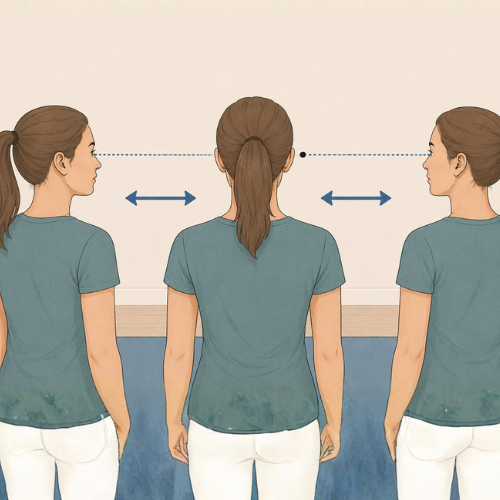
Practice Eye Stabilization
Focus on a point on the wall. Slowly turn your head a few centimeters to the right and left without taking your eyes off the target. Start with about 30 seconds.
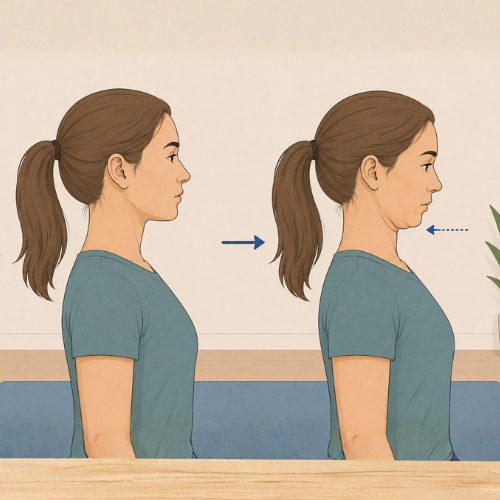
Activate the deep neck muscles
Pull your chin back slightly, as if you were trying to create a small double chin. Hold the position for five seconds, then release. Ten repetitions are usually sufficient.
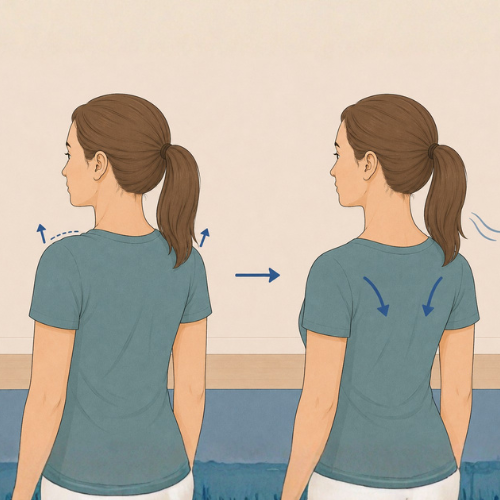
Relax the shoulder girdle
Gently pull your shoulder blades back and down, and continue breathing calmly. The goal is not to strengthen these muscles, but to consciously relieve tension in the shoulder and neck muscles.
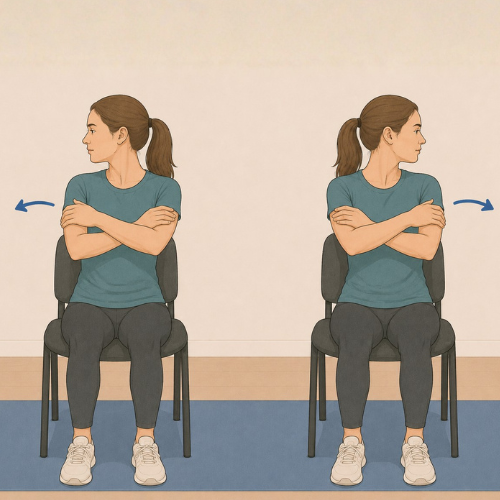
Mobilizing the Thoracic Spine
Sit up straight, cross your arms in front of your chest, and slowly twist your upper body to the right and left. Perform the movement calmly and in a controlled manner.
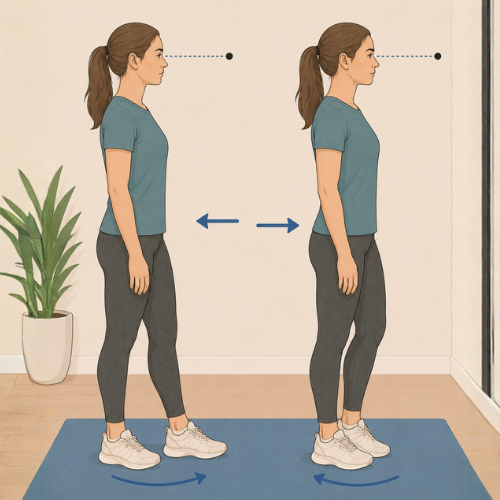
Gently Promoting Balance
Stand with your feet hip-width apart, focus on a fixed point, and slowly shift your weight from one foot to the other.
When dizziness is caused by tension in the cervical spine, consistency is often more important than intensity. Two short exercise sessions a day are often more helpful than a long routine that makes the symptoms worse.
Medications for Dizziness: Why the Cause Matters
Many people look for medications to treat dizziness because they want to get back to their normal activities as quickly as possible. That’s understandable. However, it’s important to note that while medications can relieve symptoms, they don’t automatically treat the underlying cause.
Especially in cases of vertigo caused by cervical spine issues, relying solely on medication often falls short. Medications for vertigo can reduce nausea or acute symptoms, but they do not resolve muscular imbalances or functional disorders of the cervical spine.
Depending on the cause, different treatment approaches may be considered. Vestibular disorders, migraines, circulatory disorders, and inflammatory processes each require their own treatment plans.
Therefore, do not take medication for dizziness on a long-term basis without consulting a doctor. Some medications can impair the balance system's ability to adapt, thereby delaying recovery.
If pain, lack of sleep, increased muscle tone, or stress exacerbate the symptoms, we at the ROC develop a treatment plan that addresses all of these factors together. This includes diagnostics, exercise therapy, manual therapies, stress management, and—if necessary—targeted pain management.
Why Women Sometimes Experience Dizziness Differently
The search query “causes of dizziness in women” is one of the most common questions related to dizziness. While there is no specific “female” form of cervical spine-related dizziness, certain factors can influence the symptoms.
These include, among other things:
- hormonal changes during the menstrual cycle
- Perimenopause and Menopause
- Migraine Disorders
- Iron Deficiency
- Fluctuations in blood pressure
- Sleep Disorders
- increased stress levels
Many women report that dizziness and neck pain increase, particularly during periods of hormonal change or after periods of intense physical exertion. In such situations, examining the cervical spine alone is often not enough.
A diagnostic approach that considers orthopedic, neurological, internal medicine, autonomic nervous system, and gynecological factors together is advisable. It is precisely this interdisciplinary approach that aligns with the ROC concept.
When You Should Visit the ROC If You Have Dizziness and Neck Pain
A brief episode of dizziness after a restless night often goes away on its own. However, if the symptoms recur or interfere with your daily life, the cause should be investigated further.
An orthopedic evaluation is particularly helpful when:
- if the dizziness lasts longer than a few days,
- neck pain occurs at the same time,
- Head movements that make the symptoms worse,
- Uncertainty while walking arises,
- concentration is significantly impaired in daily life, or
- the symptoms keep coming back.
If you suspect that your cervical spine might be contributing to your dizziness, please schedule an appointment at the ROC. Please bring any existing medical reports, MRI or X-ray images, lists of medications, and information about possible triggers.
If you’ve already undergone numerous tests, we take that seriously. Chronic symptoms don’t need hasty diagnoses, but rather a thorough evaluation, a clear explanation, and a personalized treatment plan that you can incorporate into your daily life over the long term.