Guide | June 19, 2026
Rhizarthrosis: When the thumb's saddle joint hurts
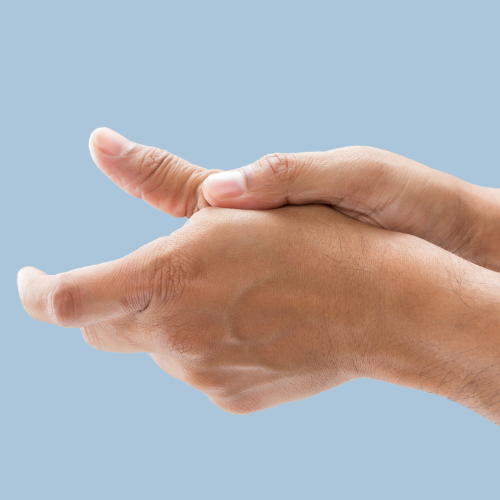
Rhizarthrosis affects a small joint in the hand, but it can significantly limit daily activities. Grasping, twisting, writing, typing, playing sports, or performing work-related tasks suddenly become difficult. Even simple hand movements become a challenge.
Many people with this condition first notice a sharp pain in their thumb when opening a screw-top jar, turning a key, or gripping something firmly. As the condition progresses, symptoms occur even with light exertion. The thumb’s metacarpophalangeal joint hurts, the hand loses strength, and the thumb feels increasingly unstable. Swelling or limited range of motion often accompany these symptoms.
At ROC Ortho in Aschheim near Munich , we do not simply view rhizarthrosis as age-related wear and tear. The key questions are: Which structures are causing the symptoms? How far have the joint changes progressed? And what treatment makes the most sense for each individual? Our goal is to reduce pain, maintain mobility, and avoid surgery whenever possible if conservative or regenerative treatments offer a promising outcome.
What is rhizarthrosis?
Rhizarthrosis refers to osteoarthritis of the thumb’s saddle joint. This joint connects the large polygonal bone of the carpal region to the first metacarpal bone and enables the thumb’s characteristic oppositional movement relative to the other fingers—the basis for nearly every grasp.
It is precisely this mobility that makes the thumb saddle joint susceptible to wear and tear. When opening a bottle, carrying bags, holding a smartphone, or performing tasks that require fine motor skills, significant compressive and shear forces act on a relatively small joint surface.
As cartilage quality declines, the joint surfaces lose their ability to glide smoothly. The result: increased stress on the joint, irritation of the joint capsule, and painful inflammatory reactions.
Rhizarthrosis is one of the most common forms of osteoarthritis affecting the hand. Postmenopausal women are particularly susceptible. Men are more likely to develop the condition following injuries or as a result of long-term, hand-intensive strain from work or sports.
Symptoms of Rhizarthrosis: Typical Symptoms in the Thumb Saddle Joint
The first symptoms of rhizarthrosis often develop gradually. At first, symptoms usually occur only during certain activities. However, as the osteoarthritis progresses, the pain may become persistent.
Typical symptoms of rhizarthrosis include:
- Thumb Pain at the Base of the Thumb
- Pain in the thumb carpometacarpal joint when grasping, twisting, or carrying
- Loss of strength when opening bottles or jars
- Unsteadiness when holding objects
- Swelling in the area of the thumb's saddle joint
- Cracking, rubbing, or crunching sounds when moving
- Limited mobility of the thumb
- Pain that radiates to the wrist or forearm
- Advanced-stage thumb deformities
Many patients also report feeling as though objects slip out of their hands or that their thumb gives way when they try to grasp something.
A particularly common symptom is “swelling and pain in the thumb joint,” especially after prolonged strain or during periods of increased joint irritation.
Important to know: Not every type of thumb pain is caused by rhizarthrosis. Tendonitis, ligament injuries, instability, carpal tunnel syndrome, or rheumatic diseases can also cause similar symptoms. An accurate diagnosis is therefore crucial.
Causes of Rhizarthrosis: Why Does Osteoarthritis Develop in the Thumb Saddle Joint?
Rhizarthrosis is usually caused by a combination of several factors. The thumb saddle joint is stabilized by ligaments, the joint capsule, and muscles. If this stability decreases, the load is distributed unevenly across the joint surfaces—causing certain areas of cartilage to bear a greater load and wear down more quickly.
The most common causes and risk factors include:
- Family History of Osteoarthritis
- Hormonal Changes After Menopause
- Previous injuries or fractures in the thumb area
- Overstretched or unstable ligaments
- Occupational Activities That Place a Heavy Strain on the Hands
- Repeated turning and grasping movements
- Long-term stress caused by tools or machinery
- Sports that place high stress on the hands, such as tennis, golf, rock climbing, or strength training
- Hypermobility with increased joint mobility
Modern daily habits can also exacerbate symptoms. Heavy smartphone use leads to frequent repetitive thumb movements and can place additional strain on an already irritated thumb saddle joint. While smartphone use alone does not cause rhizarthrosis, it can significantly worsen existing symptoms.
The sooner the causes are identified and the stress factors are reduced, the better pain can be managed and thumb function maintained in the long term.
Diagnosis of Rhizarthrosis: Targeted Classification of Symptoms
Successful treatment of rhizarthrosis begins with an accurate diagnosis. This is because not every form of thumb pain or pain in the thumb’s saddle joint is actually caused by rhizarthrosis.
At the ROC Regenerative Center in Aschheim, we evaluate range of motion, grip strength, joint stability, tendons, nerves, and adjacent joints. The so-called Grind Test can provide indications of rhizarthrosis, but it is not a substitute for imaging.
Depending on the findings, we supplement the examination with modern diagnostic tests. Ultrasound reveals capsular irritation, effusions, and changes in the tendons. Digital X-rays reveal typical signs of osteoarthritis, such as narrowing of the joint space, misalignments, or bony spurs.
In cases of unclear symptoms, associated injuries, or inflammatory changes, open MRI in Aschheim can supplement the diagnostic workup. In select cases, we also use digital volume tomography (DVT) to evaluate bony structures even more precisely.
Our goal is not to provide a standard treatment based on X-ray findings, but rather a personalized treatment for rhizarthrosis that is tailored to your symptoms, your daily life, and the stage of the disease.
Stages of Rhizarthrosis and ICD: What the Diagnosis Means for You
Rhizarthrosis does not progress the same way in every person. Some X-rays may show significant changes, while the hand still functions well in daily life. Other patients experience severe pain even with relatively early changes. That is why imaging, physical examination, and your personal activity profile are all important factors to consider together.
| Classification | Typical Findings | What is usually the main focus in therapy |
|---|---|---|
| Early Stage | Pain on weight-bearing, irritation, early narrowing of the joint space | Weight-bearing relief, orthotics, occupational therapy, targeted injections, load management |
| Intermediate Stage | Significant cartilage loss, bone spurs, loss of strength | Combined pain and rehabilitation therapy, exercise, workplace adjustments |
| Advanced Stage | Malalignment, instability, severe pain during movement | Conservative management; surgical evaluation by a hand surgeon, if necessary |
In the medical field, rhizarthrosis is coded using the ICD for billing and documentation purposes. In the ICD-10-GM, the diagnosis is classified under M18.-. This includes, for example, primary, post-traumatic, secondary, and unspecified forms. This coding says little about your pain. What matters for treatment is how well your hand functions and which symptoms are limiting you.
Conservative Treatment for Rhizarthrosis: Relieving Pressure on the Thumb Without Immobilizing It
In most cases, conservative treatment is the first step—and often remains effective even in the moderate stage. Not every case of rhizarthrosis requires surgery.
The rhizarthrosis orthosis plays a key role: It stabilizes the thumb saddle joint without significantly restricting the mobility of the other fingers. It noticeably reduces pressure on the joint, especially during activities that involve a lot of gripping or twisting.
In addition, individually tailored exercises, occupational therapy techniques for joint protection, and physical therapies are used. Heat often helps with chronic stiffness, while cold is more effective for acute inflammation and swelling. For more severe symptoms, anti-inflammatory medications or targeted injections may be beneficial.
At the ROC Regenerative Center in Aschheim, we tailor the treatment plan to each patient’s specific symptoms, joint function, and stage of osteoarthritis. After all, not every painful thumb saddle joint requires the same treatment.
PRP, Hyaluronic Acid, and Regenerative Treatments for Rhizarthrosis
Many patients are looking for a way to relieve their symptoms without having to consider surgery right away. In such cases, regenerative therapies can be a useful complement to traditional osteoarthritis treatment.
At ROC, when appropriate, we evaluate the use of PRP (platelet-rich plasma) and hyaluronic acid injections, among other treatments. PRP is derived from the patient’s own blood and contains concentrated growth factors and signaling molecules. These can help influence inflammatory processes and support the joint environment.
Hyaluronic acid occurs naturally in the joint, where it acts as a lubricant. An injection can reduce mechanical irritation in the joint and improve mobility—especially in patients who still have some joint function.
Neither treatment can reverse existing rhizarthrosis. However, they help reduce pain, maintain joint function, and delay the need for surgery. We always decide whether they are appropriate based on the individual findings.
Exercises for Rhizarthrosis: Promoting Mobility and Stability
Surgery is rarely the first step in treatment. It is considered when conservative measures have not led to sufficient improvement over an extended period of time and pain or loss of strength significantly limits daily activities—or when there is marked instability and advanced joint changes.
The appropriate treatment option depends on the severity of osteoarthritis, joint stability, age, and occupational and personal needs. Any decision is preceded by a thorough evaluation—and an open discussion about realistic expectations.
When is surgery for rhizarthrosis an option?
Surgery is rarely the first step in treatment. It is considered when conservative measures have not led to sufficient improvement over an extended period of time and pain or loss of strength significantly limits daily activities—or when there is marked instability and advanced joint changes.
The appropriate treatment option depends on the severity of osteoarthritis, joint stability, age, and occupational and personal needs. Any decision is preceded by a thorough evaluation—and an open discussion about realistic expectations.
Rhizarthrosis in Everyday Life: Joint Protection and Practical Adjustments
Therapy and exercises are one thing—everyday life is another. Many people with joint problems find that small changes in the kitchen, at the office, or during leisure time make a bigger difference than they expected. Protecting your joints doesn’t mean giving things up—it means finding smart ways to take the strain off them.
Aids that relieve pressure on the thumb
Stores carry ergonomic everyday aids designed specifically for people with pain in the thumb saddle joint: bottle openers with a large lever, key holders with a wide grip, can openers with a crank mechanism, and cutlery with thickened handles. Electric kitchen appliances—such as those for cans, wine, or dough—can also replace hand movements that place a heavy strain on the hands.
Kitchen and Household
Twisting, squeezing, and gripping tightly are the main triggers. You can significantly reduce the strain by loosening screw-top jars by briefly warming them under warm water, securing the cutting board with a non-slip mat, or carrying bags with your whole arm instead of just the tip of your thumb. Transferring frequently used products into squeezable containers also helps protect the joint.
Office Work and Computer Work
An ergonomic mouse, a pen with a thickened grip, or a keyboard with a shallow key travel can reduce strain on the thumbs during everyday office work. People who type a lot benefit from taking regular short breaks and doing stretching exercises throughout the day. Voice control is a useful option for reducing strain during certain tasks.
Sports and Recreation
Not every physical activity has to be given up. Many people with this condition can remain active by using modified techniques, lighter weights, or specialized orthotics. For sports that place high stress on the grip—such as climbing, tennis, golf, and strength training—it’s worth working with a therapist to determine what stresses the joint can tolerate and where it’s best to set limits.
Smartphones and Digital Devices
Using large smartphones with one hand is one of the most underestimated sources of strain on the thumb's metacarpophalangeal joint. Phone mounts, finger rings for cell phones, or switching to a two-finger operation can help. Voice assistants also take some of the strain off the thumb.
Joint protection isn't a one-time piece of advice, but rather an ongoing learning process. Occupational therapists help you find personalized solutions for your daily life—tailored to your job, hobbies, and symptoms.
Tailored Treatment for Rhizarthrosis: The ROC Approach
At the ROC Regenerative Center in Aschheim, every treatment begins with a thorough analysis of your symptoms, your hand function, and the underlying causes. An X-ray alone is not enough—what matters most is how much your symptoms affect your daily life and what demands your hand must meet, both professionally and personally.
Depending on the findings, the treatment plan may include a brace, targeted exercises, physical therapy, occupational therapy, injections, PRP, hyaluronic acid, or an evaluation by a hand surgeon. If you have been experiencing pain, loss of strength, or recurring swelling in the thumb’s metacarpophalangeal joint for some time, it is worth seeking an early evaluation—to prevent further damage and to begin the appropriate treatment options in a timely manner.