Guide | August 22, 2026
Laser Skin Treatment in Munich-Aschheim – Medically Supervised, Customized for Each Patient
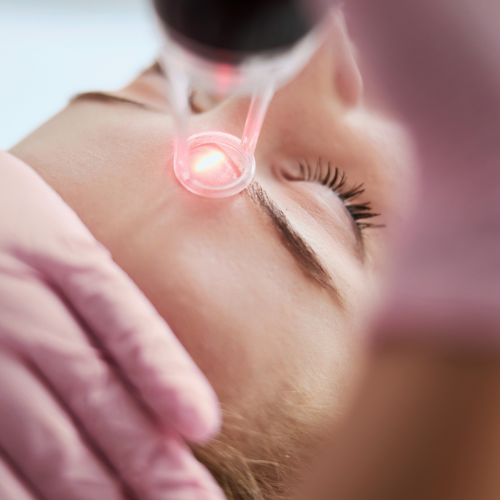
Laser treatments at ROC Derma make it possible to specifically target various skin conditions—from visible blood vessels and pigmented spots to scars and skin irregularities, as well as certain benign or light-induced skin changes. The key factor here is not only the type of laser used, but above all, an accurate dermatological diagnosis.
At ROC Derma in Aschheim, near Munich, we combine specialized dermatological diagnostics with modern laser medicine. Depending on the findings, we use different laser systems whose mechanisms of action are specifically tailored to blood vessels, pigments, or skin tissue.

Medical indication first:
Diagnosis Before Treatment

Three laser systems:
Dermablate®, QuadroStarPRO®, and NanoStar®

Easily accessible
from East Munich, Bogenhausen, Kirchheim, and the surrounding area
What skin conditions can be treated with laser therapy?
Not all lasers are the same. Depending on which structure in the skin is to be treated, different systems and treatment methods are required.
At ROC Derma, laser treatments may be an option, depending on the individual indication, for the following skin conditions, for example:
- visible blood vessels, rosacea, and telangiectasia
- Port-wine stains and small hemangiomas
- Pigment spots and age spots
- certain benign skin lesions
- Actinic Keratoses
- Xanthelasmas
- seborrheic keratoses
- Scars and Acne Scars
- enlarged pores and uneven skin texture
- Stretch marks
- fine lines
- unwanted tattoos
We determine which treatment is medically appropriate after a dermatological examination.
Why a Dermatological Examination Is Important Before Laser Treatment
Not every brown spot is a harmless pigmented lesion, and not every instance of redness has the same cause. That is why, at ROC Derma, a medical evaluation of the skin lesion is performed before any laser treatment.
Skin lesions with pronounced pigmentation should be clearly diagnosed before undergoing removal for cosmetic reasons. Lesions that are new, growing, changing in color or shape, bleeding, or exhibiting other abnormalities should first undergo dermatological evaluation.
Only once the diagnosis has been clarified can a decision be made as to whether laser treatment is appropriate and which system is suitable for the procedure.
Our Laser Systems at ROC Derma
ROC Derma offers three specialized laser systems for a variety of dermatological and aesthetic needs: Dermablate®, QuadroStarPRO®, and NanoStar® R.
Dermablate® – For skin lesions and skin texture
The Dermablate® is an Er laser whose energy is absorbed particularly strongly by water in the skin tissue. This allows for very precise treatment or ablation of the superficial layers of the skin.
Depending on the findings, the Dermablate® can be used, among other things, for:
- actinic keratoses
- Xanthelasmas
- seborrheic keratoses
- certain other benign skin lesions
- Acne scars, as well as hypertrophic and atrophic scars
- coarse pores
- Stretch marks
- fine lines and uneven skin texture
In addition, ROC Derma uses the Dermablate® for skin resurfacing and laser peels. Fractional laser energy can be used to specifically stimulate regeneration processes and new collagen formation in the skin.
The intensity of the treatment and whether an ablative or fractional treatment is appropriate depend on the specific indication, skin type, and desired treatment goal.
QuadroStarPRO® – Laser for Vascular Lesions
Visible spider veins occur when small blood vessels become visible through the skin. For suitable vascular skin conditions, ROC Derma offers the QuadroStarPRO®.
In vascular laser treatment, light energy is specifically absorbed by the red blood pigment in the blood vessels. The resulting heat acts on the treated vessel, while the surrounding tissue is spared as much as possible.
Depending on the findings, the QuadroStarPRO® can be used to treat the following vascular conditions, among others:
- Rosacea
- Telangiectasias
- Fire Painting
- small bloodworts
Whether a vascular lesion is suitable for laser treatment depends, among other things, on its type, size, depth, and location, as well as on the individual's skin type.
NanoStar® R – Laser for Pigment Spots and Tattoos
ROC Derma uses the NanoStar® R for certain types of pigment changes and tattoos.
The system uses very short light pulses in the nanosecond range. The energy is absorbed by the pigment particles and can break them down into smaller components. The fragments can then be gradually broken down by the body’s own processes.
At ROC Derma, the NanoStar® R is used, among other things, for:
- appropriate pigment spots
- Age spots
- black and green tattoos
A dermatological examination before treatment is particularly important when it comes to pigmented lesions. A noticeable pigmented skin lesion should not simply be removed for cosmetic reasons before its cause has been medically determined.
Which laser is best suited for what?
| Concerns | Laser System at ROC Derma | Treatment Approach |
| Rosacea & Telangiectasia | QuadroStarPRO® | Treatment of Visible Blood Vessels |
| Port-wine stains & small hemangiomas | QuadroStarPRO® | Vascular Laser Treatment |
| Pigment Spots & Age Spots | NanoStar® R | Targeted Treatment of Pigments |
| Tattoos | NanoStar® R | Treatment of Black and Green Tattoo Pigments |
| Acne Scars & Other Scars | Dermablate® | Fractional Treatment of the Skin's Structure |
| Coarse pores | Dermablate® | Laser Peeling or Skin Resurfacing |
| Fine Lines & Skin Texture | Dermablate® | Skin Resurfacing |
| Stretch marks | Dermablate® | Fractional Laser Treatment |
| Actinic Keratoses | Dermablate® | Precise ablation based on medical indications |
| Xanthelasmas | Dermablate® | Precise Removal |
| Seborrheic keratoses | Dermablate® | Precise Removal |
Laser Treatment for Pigment Spots and Age Spots in Aschheim
Over the course of our lives, sunlight leaves its mark on our skin. Pigment spots and age spots can develop, especially on the face, hands, décolletage, and other areas frequently exposed to the sun.
Before laser treatment, we first determine what type of pigmentation is present. This is because not every brown skin lesion should be treated with a laser.
If the skin condition is suitable for laser therapy, pigmentation can be specifically treated with the NanoStar® R. Treatment planning is based, among other factors, on the type, depth, and severity of the pigmentation.
Consistent sun protection plays an important role both before and after treatment, as UV radiation can promote pigment changes and increase the risk of new or more pronounced pigmentation.
Laser Tattoo Removal in Munich
In a tattoo, color pigments are permanently embedded in the skin. To remove them, very short laser pulses are used to break down the relevant color pigments into smaller components.
Since the body gradually breaks down these components over time, tattoo removal is usually not completed in a single session. Sufficient time must elapse between treatments.
The number of sessions required depends, among other things, on the tattoo’s color, size, depth, age, and ink application technique, as well as on the individual’s skin response. At ROC Derma, the NanoStar® R is used to treat black and green tattoos.
We cannot guarantee complete removal for every tattoo. During your personal consultation, we will therefore first assess the tattoo and discuss the realistic results you can expect.
Learn more: Tattoo removal with the NanoStar® R
Laser Treatment for Rosacea and Visible Blood Vessels
Rosacea often manifests as fine, permanently visible blood vessels on the face—for example, on the nose, cheeks, or chin.
ROC Derma uses the QuadroStarPRO® for treating specific vascular conditions. The laser energy is selectively absorbed by the red blood pigment and acts on the dilated blood vessels.
Before treatment, we assess the type of vascular lesion present and determine whether laser therapy is appropriate for it. In cases of persistent facial redness, for example, rosacea may be the underlying cause, which should be diagnosed by a dermatologist and treated separately if necessary.
Treating Scars and Acne Scars with Laser Therapy
Scars can vary significantly in terms of structure, depth, and severity. Accordingly, there is no one-size-fits-all approach to laser treatment for every scar.
For suitable scars, fractional treatment with the Dermablate® can be used to specifically target the skin's structure and stimulate regeneration and collagen remodeling processes.
Especially when it comes to acne scars, the first crucial step is to determine the type of scar. Depressed, raised, or scars of varying depths may require different treatment approaches.
The goal, therefore, is not simply to “remove” a scar, but to achieve a realistic improvement in the appearance of the skin tailored to the individual.
Skin Rejuvenation and Laser Skin Resurfacing
Laser treatments can also be used to improve skin texture. During skin resurfacing with the Dermablate®, specific areas of the skin are treated to stimulate regeneration.
Depending on the initial assessment, the treatment can help smooth out fine lines, reduce the appearance of large pores, and make the skin's texture appear more even.
The intensity of the treatment depends, among other things, on your skin type, the desired result, and the acceptable recovery time. That is why we discuss which type of resurfacing is right for you before the treatment.
Actinic keratoses and other skin lesions
Laser procedures are not used in dermatology solely for aesthetic reasons. Certain medical skin conditions can also be treated with the Dermablate®, depending on the diagnosis and individual findings.
These include, for example:
- Actinic Keratoses
- Xanthelasmas
- seborrheic keratoses
- other suitable benign skin lesions
The most medically appropriate treatment depends on the type, number, location, and severity of the skin lesions. Laser treatment is one of several possible treatment options.
Here's How Laser Treatment Works at ROC Derma
The first step is a dermatological examination. We’ll discuss which skin condition you’d like to have treated, how long it’s been present, and whether any pre-existing conditions, medications, or previous treatments need to be taken into account.
We then evaluate the findings and determine whether laser therapy is appropriate. If so, we select the appropriate laser system and tailor the treatment parameters to the patient’s skin type, indication, and treatment area.
To get started, ROC Derma offers a combined initial appointment that includes a medical consultation and a trial laser treatment.
After the treatment, you will receive specific instructions for aftercare. Depending on the procedure, cooling, appropriate skin care, and—in particular—consistent sun protection may be important.
What does the skin look like after laser treatment?
The skin reaction depends heavily on the laser system used and the intensity of the treatment.
After laser treatment, the following temporary side effects may occur, for example:
- Redness
- Swelling
- A sensation of warmth or tightness
- slight crusting
- Temporary changes in pigmentation
With ablative procedures, a longer recovery period is generally to be expected than with less invasive laser treatments.
We will discuss on an individual basis before the treatment how long it will take for the skin to recover and what limitations you can expect after the treatment.
What are the risks associated with laser treatment?
Even a laser treatment performed by a professional can have side effects. In addition to temporary redness, swelling, or scabbing, changes in pigmentation may occur, for example.
Less common complications include infections and scarring, among others. The individual risk depends on the procedure used, skin type, treatment area, and aftercare.
Careful assessment of the indication and adherence to the recommended care and sun protection measures are therefore important components of the treatment.
How much does laser treatment cost at ROC Derma?
The cost depends on the type of skin lesion, the size of the treatment area, the laser system used, and the number of sessions required.
At ROC Derma, the cost of medical laser treatments for self-pay patients ranges from 120 to 1,000 euros, depending on the area being treated. Aesthetic laser treatments range from 250 to 1,000 euros, depending on the treatment area.
The cost of laser tattoo removal starts at 120 euros and depends on the size, color intensity, and nature of the tattoo.
The combined initial appointment, which includes a medical consultation and a trial laser treatment, costs 100 euros.
Whether and to what extent private health insurance will cover the costs of medically necessary laser treatment depends, among other things, on the medical indication and the specific insurance policy. It may be a good idea to check with your insurance provider in advance.
Why Choose ROC Derma for Laser Treatment?
The key advantage of laser treatment at ROC Derma lies in the combination of dermatological diagnostics and modern laser medicine.
We don't treat patients based solely on what looks unsightly. First, we determine the nature of the skin condition and which procedure is medically appropriate. Then, we select the appropriate treatment from our range of laser systems.
Dermablate®, QuadroStarPRO®, and NanoStar® R are specialized systems designed for a variety of dermatological and aesthetic indications.
ROC Derma is a private dermatology practice in Aschheim near Munich that treats patients with private insurance, government-subsidized insurance, and those who pay out of pocket. The practice is easily accessible from Munich East, Bogenhausen, Trudering, Riem, Kirchheim, and Feldkirchen, among other areas.
Dermatologists with specialized experience in allergology

Dr. dr. med. Orsolya Horváth
Specialist in dermatology

Natalie Evenschor, M.D.
Specialist in dermatology
Dermatology and Aesthetics Under One Roof
In addition to dermatological diagnostics and laser therapy at ROC Derma, ROC also features ROC Aesthetic, a dedicated department for aesthetic medicine and plastic and aesthetic surgery.
Under the direction of Dr. Angelika Trey, M.D., a specialist in plastic and aesthetic surgery, ROC Aesthetic offers a wide range of aesthetic treatments and surgical procedures. As a result, ROC provides you with access to various specialized departments for dermatological and aesthetic concerns.
Learn more about ROC Aesthetic and Dr. Trey
| Monday | 9:00 a.m.–2:00 p.m. & 3:00 p.m.–6:00 p.m. |
| Tuesday | 8:30 a.m.–5:00 p.m. |
| Wednesday | 8:30 a.m.–2:00 p.m. |
| Thursday | 9:00 a.m.–1:00 p.m. |
| Friday | 9:00 a.m.–1:00 p.m. |