Guide | August 12, 2026
Skin Cancer Screening in Munich-Aschheim – Systematic, Medical, with Digital Follow-Up
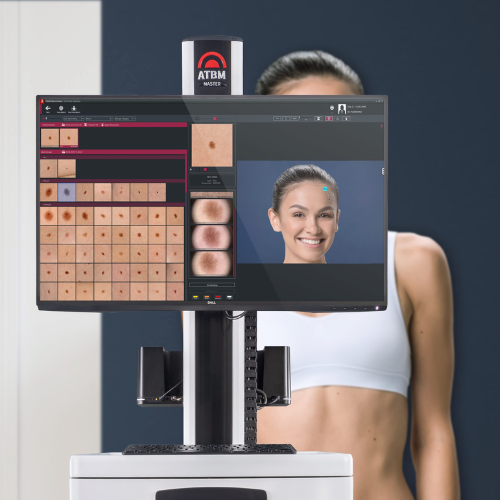
Our skin cancer screening program in the Munich district is designed for anyone who would like to have their skin examined thoroughly and systematically—by a doctor, with digital progress tracking and a clear assessment.
Skin cancer screening refers to a systematic examination of the entire skin to detect precancerous lesions and early-stage skin cancers—particularly melanomas, basal cell carcinomas, and spinaliomas—as early as possible. The earlier skin cancer is detected, the less invasive the treatment options tend to be.
At ROC Derma in Aschheim near Munich, we combine dermatological expertise with imaging diagnostics. This allows us to detect suspicious skin changes early, document unremarkable findings in a transparent manner, and precisely monitor moles that require follow-up over time. Especially in cases involving numerous moles, fair skin, a history of heavy UV exposure, or a family history of skin cancer, a quick glance is often not enough.
In Germany, the statutory skin cancer screening program is intended for individuals with public health insurance who are 35 years of age or older and is offered every two years. It is designed to facilitate the early detection of malignant melanoma, basal cell carcinoma, and squamous cell carcinoma, as reported by the Federal Ministry of Health. ROC Derma operates as a private dermatology practice. Patients with private insurance, those covered by government-subsidized insurance, and self-paying patients can receive an expanded screening at our practice, utilizing modern technology and a personalized medical evaluation.

Full-Body Examination

Digital Progress Tracking

175 € for self-pay patients
Why our skin cancer screening in Aschheim, near Munich, is more than just a quick look
Skin cancer often develops in areas where UV radiation has left its mark over the years: the face, scalp, ears, décolletage, forearms, and the backs of the hands. Melanoma, on the other hand, often develops from moles or appears as a new dark spot. According to the DKFZ Cancer Information Service, UV radiation is considered the most important external risk factor for nearly all types of skin cancer; fair skin, numerous moles, and a family history of skin cancer further increase the risk.
Nevertheless, no screening can replace consistent UV protection: Avoid intense midday sun, use sunscreen with a high SPF, wear protective clothing, and check your skin regularly on your own. The skin cancer screening program in Munich and Aschheim complements these measures but does not replace them.
That is why a thorough screening does not follow a rushed procedure. We examine the entire skin, assess any suspicious areas using a dermatoscope, and document relevant findings. If necessary, we supplement this with FotoFinder full-body photography, Nevisense, or OCT. This is particularly beneficial for people with many pigmented lesions that appear very similar at first glance. Comparing today’s images with those from the next appointment reveals changes that are easily overlooked in a single snapshot.
Who Should Consider Skin Cancer Screening in Aschheim, Munich
Many patients come to ROC Derma because they’ve recently noticed a specific spot. Others want a reliable assessment after years of outdoor sports, after spending time in the sun on vacation, or because of a family history of skin cancer. In both cases, we take the same thorough approach.
A skin cancer screening in Munich-Aschheim is especially recommended if any of the following apply to you:
- You have many moles or pigmented marks on your back, scalp, or other parts of your body that are difficult to see clearly.
- You have fair skin, freckles, and burn easily.
- They have previously had actinic keratoses, basal cell carcinomas, squamous cell carcinomas, or melanomas.
- There is a history of skin cancer in your family.
- You are regularly exposed to UV radiation through sports, work, gardening, or travel.
- You notice a new, dark, rough, bleeding, or growing patch of skin.
- You want a digital way to track your progress rather than relying solely on your memory.
If you notice rough, sun-induced early signs, please also read our article on actinic keratosis. If you have dark spots on your face or hands, our guide on removing age spots and pigment spots can help you determine what they are.
Here's how skin cancer screening works in Aschheim, near Munich
We start with a consultation. We’ll ask about your past skin conditions, surgeries, family history of skin cancer, sun exposure, immunosuppression, medications, and any recent changes. Please feel free to bring photos if an area has looked noticeably different in recent weeks.
This is followed by a full-body examination. We examine the scalp, face, torso, arms, legs, hands, feet, and the spaces between the toes. We analyze any unusual pigmented lesions using a dermatoscope. This reflected-light technique reveals structures that are not visible to the naked eye.
We use complementary techniques in a targeted manner. Not every mole requires every method. A single, clearly defined basal cell carcinoma calls for a different evaluation than a back with 120 pigmented moles. Our task is to make the right choices: Which areas require follow-up monitoring? Which lesions require further diagnostic testing? Which lesions should we remove only after histological confirmation?
The results are discussed in a way that is easy to understand. You won’t get a technical demonstration, but rather a medical assessment with a specific course of action: follow-up, treatment, removal, or clearance.
Videos on Skin Cancer Screening with the FotoFinder
FotoFinder: A Digital Overview of Many Moles
FotoFinder supports skin cancer screening with standardized imaging, full-body photography, and digital comparison. The FotoFinder ATBM is designed for automated total-body dermatoscopy and combines overview images with detailed dermatoscopic images. According to the manufacturer, optional AI modules assist in the analysis of individual lesions.
For patients, this means that moles don’t simply disappear in a handwritten note. The system captures photographs of relevant areas of the skin. At the next checkup, new or changed spots can be identified more easily. This documentation is particularly useful on the back, the sides, or the backs of the legs, because these areas are difficult to see on one’s own at home.
Screening with FotoFinder is particularly suitable for patients with numerous nevi, atypical moles, or a history of skin cancer. AI does not replace a medical diagnosis. It provides additional information that we incorporate into our overall dermatological assessment.
Nevisense and OCT: Additional Diagnostics for Unclear Findings
Nevisense measures the skin’s electrical properties to assess changes in the upper layers of the skin—the epidermis and dermis. The procedure uses electrical impedance spectroscopy and aids in the risk assessment of suspicious lesions, such as those suspected of being melanoma, basal cell carcinoma, or squamous cell carcinoma. The measurement is painless and, according to the manufacturer, takes only a few minutes.
Optical coherence tomography (OCT) uses light to generate cross-sectional images of the upper layers of the skin in real time. In dermatology, OCT is primarily used to evaluate light-colored skin tumors and unclear superficial lesions—without the need to remove tissue.
Both methods help to classify findings more precisely and often clarify unresolved issues. At the same time, if a lesion remains clinically suspicious, histological examination after removal provides the definitive diagnosis. We therefore combine traditional dermatological expertise with modern technology—this allows us to better distinguish between harmless changes and skin tumors that require treatment, and often helps avoid unnecessary surgeries.
| Procedure | Strength in Screening | Typical Benefits for Patients |
|---|---|---|
| Dermatoscopy | Detailed structural assessment of individual pigmented lesions | A thorough medical assessment of any abnormal findings during the examination |
| FotoFinder ATBM | Digital Full-Body Photography and Objective Progress Monitoring | Comparison of multiple moles over time, including those in hard-to-see areas |
| Nevisense | Electrical Measurement of Suspicious Lesions | Additional risk assessment for unclear findings; painless |
| OCT | Cross-sectional imaging of the upper layers of the skin | Noninvasive supplementary diagnostic tests, particularly for basal cell carcinoma |
Costs: A Comparison of Private Practices, Self-Pay Patients, and Public Health Insurance
Many patients want to know which services are covered by statutory health insurance and what costs they will have to pay out of pocket. Under standard statutory coverage, this service is available every two years starting at age 35. Some health insurance providers offer supplemental plans for younger insured individuals or more frequent checkups; the terms vary depending on the provider and region, as the Consumer Advice Center notes.
ROC Derma is a private practice. Patients with private insurance or government-subsidized insurance are billed according to their specific plan. Patients with public health insurance book appointments with us as self-paying patients. According to the ROC Derma service overview, the cost of a preventive screening is 175 euros for self-pay patients; an initial dermatology consultation ranges from 75 to 128 euros, depending on the scope of services.
If you are planning to undergo a skin cancer screening in Munich-Aschheim as a self-pay patient, we will discuss the estimated costs with you in advance. Please bring any test results, surgical reports, or previous photos with you—this will save time and help us make a more accurate medical assessment.
Easily accessible from Munich and the surrounding area
ROC Derma is located in Aschheim, east of Munich. The clinic’s address is St.-Emmeram-Str. 28, 85609 Aschheim. Patients from Bogenhausen, Trudering, Riem, Schwabing, Haidhausen, Ismaning, Kirchheim, Feldkirchen, and Unterföhring can easily reach us by car. Free parking is available at the practice and in the covered parking garage. You can find all the details on how to get here on the page “Directions to ROC in Aschheim.”
Patients from western Munich—such as those from Pasing—can reach Aschheim in a reasonable amount of time, depending on traffic conditions, especially when the focus is on digital follow-up care, FotoFinder, and private dermatology consultations.
Book your skin cancer screening in Munich-Aschheim well in advance if you’d like to have many moles checked or want peace of mind before a long trip. Any skin lesions that have changed suddenly, are bleeding, or are growing rapidly should be evaluated by a dermatologist as soon as possible.
ROC Derma: Dermatology, Prevention, and Treatment All Under One Roof
ROC Derma is part of the Regenerative Center in Aschheim near Munich. The ROC has evolved from a center specializing in orthopedics into an interdisciplinary center where prevention, diagnostics, and therapy work closely together. Within this structure, ROC Derma focuses on dermatology, skin cancer prevention, surgical dermatology, laser therapy, allergology, and aesthetic medicine—all embedded in an interdisciplinary regenerative approach that prioritizes long-term skin health and prevention.
Our dermatologists combine clinical experience, scientific research, and routine dermatological practice. On the team page, you’ll find information about the dermatologists’ qualifications and areas of expertise. For specific laboratory inquiries, patients benefit from our proximity to the ROC Laboratory.
A skin cancer screening at our private practice doesn’t end with a simple statement like “everything looks normal.” You’ll learn which areas of your skin to monitor, when a follow-up exam is recommended, and what treatment options are available for precancerous lesions or tumors. For certain types of sun damage, for example, we use photodynamic therapy; for specific conditions, we refer patients to laser treatments at ROC Derma.
Experienced female dermatologists at ROC Derma

Dr. dr. med. Orsolya Horváth
Specialist in dermatology
Career
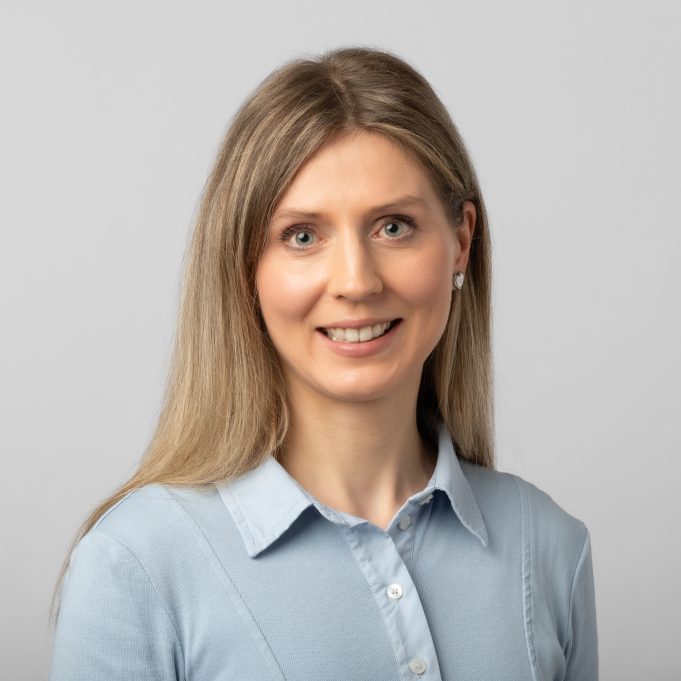
Natalie Evenschor, M.D.
Specialist in dermatology
Career
What to Do Before Your Appointment
Please come without heavy makeup, self-tanner, or nail polish if your nails or the surrounding skin are to be examined. Remove jewelry as much as possible. Make a note of any medications you are taking, any immunosuppression, previous skin tumors, and any cases of skin cancer in your family.
It’s helpful to ask yourself three questions beforehand:
- Which area of your skin has changed, and when did it start changing?
- Have there been any noticeable moles, surgeries, or histological findings in the past?
- How often would you like to have a follow-up visit in the future?
In practice, we recommend different intervals depending on the risk: For normal skin with no specific risk factors, an interval of one to two years is often sufficient. If you have many atypical moles, a history of skin tumors, or significant UV exposure, a shorter interval—for example, every 6 to 12 months—may be advisable. We will discuss the specific recommendation with you individually after the examination.
Between appointments, the ABCDE rule can help with self-examination: asymmetry, border, color, diameter, and evolution. If a mole looks different from your other moles or changes noticeably, make an appointment. Self-examination is no substitute for a medical skin cancer screening in Munich-Aschheim, but in cases of doubt, it can shorten the time it takes to get a definitive diagnosis—as the DKFZ Cancer Information Service also explains.
Frequently Asked Questions About Skin Cancer Screening in Munich-Aschheim
How much does a skin cancer screening cost at ROC Derma?
Does statutory health insurance cover skin cancer screening?
Is FotoFinder better than a regular skin checkup?
When do I need Nevisense or OCT?
What happens if ROC Derma finds a suspicious spot on the skin?
How often should I get a skin cancer screening in Munich-Aschheim?
At what age does it make sense to start skin cancer screening?
How long does a skin cancer screening take?
Do I have to take all my clothes off for the skin cancer screening?
If you notice a change in your skin or would like greater peace of mind, schedule your skin cancer screening now at ROC Derma in Munich-Aschheim—online or by phone. The sooner we detect changes, the more effectively we can treat them.
| Monday | 9:00 a.m.–2:00 p.m. & 3:00 p.m.–6:00 p.m. |
| Tuesday | 8:30 a.m.–5:00 p.m. |
| Wednesday | 8:30 a.m.–2:00 p.m. |
| Thursday | 9:00 a.m.–1:00 p.m. |
| Friday | 9:00 a.m.–1:00 p.m. |