Guide | August 26, 2026
Heel Spur Treatment: Walk More Easily
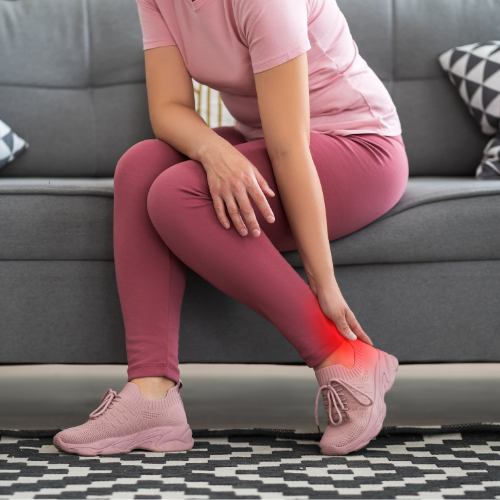
Treatment for heel spurs rarely begins with the bony spur itself. Often, the actual cause of the pain is an irritated plantar fascia—the strong band of connective tissue that runs along the sole of the foot from the heel bone toward the toes.
Many patients describe a very typical sensation to us: that first step in the morning feels like a stab in the heel. After walking for a few minutes, the pain subsides; however, it returns after standing for long periods, a full day at work, or during exercise. These symptoms are often consistent with plantar fasciitis, which is commonly referred to as a heel spur in everyday language.
At ROC Ortho in the Regenerative Center in Aschheim near Munich, we therefore do not view heel pain in isolation. We examine where the pain actually originates and which factors repeatedly put strain on the plantar fascia. Foot shape, mobility, calf muscles, gait, footwear, occupational stress, and athletic activities can all play a role.
It is only by considering this complete picture that we can develop a personalized treatment plan for heel spurs. Our goal is not only to reduce current pain but also to adjust the stress on the plantar fascia so that the irritated tissue can heal and the foot can gradually regain its ability to bear weight.
Heel Spur or Plantar Fasciitis: Why the Spur Is Often Not the Actual Cause of Pain
The term “heel spur” can quickly give the wrong impression: a small bony spur that pierces the surrounding tissue with every step. In reality, the relationship between the visible heel spur and the symptoms is much more complex. The pain often originates at the point where the plantar fascia attaches to the heel bone. Repeated tension and pressure can lead to painful irritation in that area. In cases of prolonged strain, a bony heel spur may also develop.
A heel spur like this can be seen on an X-ray. However, it does not necessarily cause pain. Some people have a clearly visible heel spur but experience no symptoms at all. Conversely, severe heel pain can persist even though no distinct spur is visible on an X-ray. For this reason, our heel spur treatment does not automatically focus on treating the visible bony protrusion. The key question is: Which structure is causing your pain, and why is it repeatedly being overloaded?
An accurate diagnosis can prevent unnecessary treatment attempts in this case. While an orthotic, ointment, or short-term rest may temporarily relieve symptoms, if the underlying cause of the strain persists, the heel pain may return.
Heel Spur Symptoms: What Does Typical Heel Pain Feel Like?
Typical symptoms of heel spurs or plantar fasciitis often appear when you start walking. Pain during the first few steps in the morning or after prolonged periods of rest is particularly characteristic.
Common symptoms include:
- a sharp, stabbing pain upon standing up,
- Heel pain after sitting or driving for a long time,
- Pain when pressure is applied to the bottom of the heel,
- Pain mainly in the inner part of the heel bone,
- increasing discomfort after standing or walking for long periods,
- Heel pain after running, hiking, or other physical activities,
- pain that returns after periods of rest,
- Altered gait due to a pain-induced compensatory posture.
Whether a person is male or female generally does not play a decisive role in the typical symptoms of heel spurs. More important factors include physical stress, foot mechanics, mobility, and any underlying medical conditions.
However, not all heel pain is caused by a heel spur. Numbness, significant swelling, severe pain at night while resting, fever, pain following an accident, or a rapid worsening of symptoms should be evaluated by a doctor as soon as possible.
Heel Spur Diagnosis: What We Examine at ROC Ortho
For us, targeted treatment of heel spurs begins with determining whether the plantar fascia is actually the cause of the symptoms. This is because heel pain can have various causes.
In addition to plantar fasciitis or a heel spur, other possible causes include, for example, Achilles tendon problems, bursitis, a stress fracture, nerve irritation, or other changes in the foot.
At ROC Ortho, we therefore don't just examine the painful spot on the heel. Among other things, we look at:
- the exact location of the pain,
- the plantar fascia and its attachment to the heel bone,
- the range of motion of the ankle joint,
- the tone and flexibility of the calf muscles,
- the longitudinal arch of the foot,
- Foot and leg axis,
- Gait pattern and foot roll.
Depending on the findings, we can expand the diagnostic work in a targeted manner.
An ultrasound exam can be used to evaluate the plantar fascia and surrounding soft tissue structures. A digital X-ray can reveal bone abnormalities and the presence of a heel spur. An MRI may be useful in cases of unclear or persistent symptoms, such as when other causes need to be ruled out.
If we suspect that an unfavorable pressure distribution or altered gait patterns are contributing factors to heel pain, pedobarography and gait analysis can also provide important information.
At ROC Ortho, treatment for heel spurs is not based solely on a visible spur visible on an X-ray, but on the structure that is actually causing your symptoms.
Heel Spur Treatment: Which Therapy Is Most Effective?
For us, successful treatment of heel spurs begins with a thorough examination. Most cases of heel spurs—or plantar fasciitis—can be treated without surgery. A combination of different approaches is often recommended.
Depending on the diagnosis, conservative treatment for heel spurs may include the following components:
- temporary adjustment of the load,
- Targeted stretching of the calf and plantar fascia,
- gradual strength training,
- Physical therapy,
- appropriate footwear,
- custom-fitted insoles for specific foot problems,
- Shockwave therapy for long-standing symptoms,
- Additional targeted procedures when indicated.
It is important to us to take a realistic view of the healing process. A plantar fascia that has been irritated for a long time needs time to regain its strength. A reputable heel spur treatment therefore does not promise permanent relief from pain after a single session.
Our goal is rather to gradually reduce the pain, address the cause of the strain, and help the foot gradually return to everyday activities, work, and sports in a controlled manner.
Treating Heel Spurs: Reducing Stress Without Completely Resting the Foot
When experiencing severe heel pain, it’s natural to want to put as little weight on your foot as possible. However, completely avoiding weight-bearing for an extended period is usually not the goal of heel spur treatment. At the same time, continuing to walk, stand for long periods, or exercise intensely despite the pain can keep the symptoms from resolving. It is therefore crucial to temporarily adjust the amount of weight you place on your foot.
If you’re experiencing acute symptoms, it may be helpful to initially reduce the number of kilometers you run, the amount of jumping you do, and the time you spend standing on hard surfaces. Depending on your symptoms, sports with lower impact may be a good alternative. If your job requires a lot of standing or walking, we’ll also take your daily physical demands into account. Footwear, the type of surface you walk on, how you structure your breaks, and any assistive devices can make a significant difference. Especially for patients who are physically active, treatment for heel spurs therefore also involves the question: When and how can you resume your usual training routine?
Returning to activity too quickly can irritate the plantar fascia again. That's why we ideally increase the workload gradually, based on your symptoms and your tolerance for exertion.
Heel Spur Exercises: Stretching the Plantar Fascia and Calf
Targeted exercises are among the most important components of conservative treatment for heel spurs. In particular, the flexibility of the calf muscles and the strength of the plantar fascia play a key role in this.
Limited mobility in the ankle joint or tight calf muscles can increase the strain on the plantar fascia. That is why we often combine different exercise approaches when treating heel spurs.
Possible exercises include, for example:
- Calf stretch: Stand facing a wall, step the affected leg back, and keep your heel on the floor. The stretch should be noticeable but not painful.
- Plantar fascia stretch: While sitting, gently pull the toes of the affected foot toward your shin until you feel a mild stretch on the sole of your foot.
- Gentle mobilization of the sole of the foot: Slowly roll the sole of your foot over a small ball. There is no need to apply strong pressure to the painful area.
Gentle movements before taking your first steps can be helpful, especially if you experience severe morning pain when starting to walk. Moderation is key here as well. Treating heel spurs does not benefit from stretching that causes as much pain as possible. Regular, controlled exercises are usually more effective than occasional, very intense sessions. As treatment progresses, building strength should be considered alongside improving flexibility. This is because a resilient foot requires not only flexible but also sufficiently strong structures.
Heel Spur Insoles and Shoes: When Are They a Good Idea?
Many patients ask us which insoles help with heel spurs or what shoes they should wear if they have heel pain. There is no one-size-fits-all answer to this question. Insoles can be helpful if the shape of the foot, pressure distribution, or gait pattern place additional strain on the plantar fascia. For example, a flat foot with a collapsed arch may require different support than a high-arched foot. That is why we do not automatically recommend a standardized “heel spur insole.” The key factor is whether an insole actually helps alleviate the individual’s strain in a meaningful way.
The same applies to footwear. During an acute phase of pain, many people find shoes with adequate cushioning and stable heel support to be comfortable. Walking barefoot on very hard surfaces, on the other hand, can exacerbate the symptoms. If you have an abnormal gait or recurring heel pain, we at the ROC can examine the pressure distribution under your foot in greater detail. Using pedobarography and gait analysis, we can determine how you distribute weight on your foot and roll through your gait. This information can then be incorporated into your heel spur treatment, the selection of appropriate orthotics, and your physiotherapy program to gradually increase your activity level.
Heel Spur Treatment with Shock Waves: When Is It Recommended?

Shockwave therapy for heel spurs is often used when stretching exercises, adjustments to physical activity, appropriate footwear, or orthotics have not provided sufficient relief over an extended period of time. Extracorporeal shock wave therapy (ESWT) can be a useful supplement to conservative treatment, particularly in cases of chronic plantar fasciitis.
In shock wave therapy, mechanical impulses are directed specifically at the painful area of the plantar fascia. It is important to note that the shock wave is not intended to “shatter” the heel spur. Rather, the goal of heel spur treatment is to stimulate biological processes in the irritated tissue and support healing at the site where the tendon and fascia attach.
At ROC, we use both focused and radial shock waves. Which type is appropriate for your heel pain depends, among other things, on the exact location of the pain, the depth of the affected structure, and your individual findings. Shock wave therapy is particularly suitable for long-standing symptoms, clearly localizable pain at the heel attachment site, and plantar fasciitis that does not heal sufficiently despite consistent basic treatment.
However, the duration of your symptoms is not the only factor we consider when treating heel spurs. We first determine whether the plantar fascia is actually the source of the pain and whether shockwave therapy is appropriate for your condition.
| Therapy Module | Suitable for | Important to Know |
|---|---|---|
| Strain and Load Control | early symptoms, pain upon starting to walk, shortened calf muscles | requires regular implementation over several weeks |
| Insoles and Shoe Advice | Improper posture, abnormal pressure distribution, high work-related stress | should be suited to the individual's foot mechanics |
| Shock wave therapy | chronic plantar fasciitis, persistent pain at the base of the foot | complements treatment of the underlying cause, but does not replace it |
| Infiltration | significant local irritation when the indication is appropriate | The benefits and potential risks must be weighed on a case-by-case basis |
| Operation | rare, persistent symptoms after conservative treatment has been exhausted | remains the exception in cases of plantar fasciitis |
Injections and Regenerative Treatments for Persistent Heel Pain
If treatment for heel spurs does not result in sufficient improvement over an extended period, many patients ask about injections. Cortisone can reduce pain and inflammation in the short term. However, such treatment must be carefully considered, especially when it comes to the plantar fascia. Repeated cortisone injections can weaken the tissue and, among other things, increase the risk of damage to the plantar fascia.
At the ROC, we therefore evaluate infiltration therapies on a case-by-case basis, taking your specific findings into account. Not every case of persistent heel pain requires an injection. If an injection is an option, we’ll discuss the treatment goal, potential risks, alternatives, and subsequent activity management with you. Regenerative procedures can also play a role in treating certain chronic tendon and fascia conditions. These include, for example, autologous blood therapy with PRP, in which the body’s own blood components are processed and applied in a targeted manner.
However, when it comes to treating heel spurs, the same principle applies: Regenerative treatments do not replace the correction of improper weight-bearing, exercises, activity management, or appropriate footwear. We will determine whether such therapy is appropriate for your symptoms based on your individual findings.
What provides quick relief for heel spurs?
People who can barely walk in the morning understandably look for quick relief from heel spurs. Short-term measures can alleviate acute heel pain. However, healing an irritated plantar fascia takes time.
The following measures can help in everyday life:
- Gently stretch your calf and the sole of your foot before taking your first steps in the morning.
- Temporarily avoid walking barefoot on hard floors.
- Wear shoes with adequate cushioning and stable heel support.
- Temporarily reduce jumping, sprinting, hill runs, and other high-impact activities.
- Cool your heel after strenuous activity, if it feels comfortable to do so.
- Pay attention to which activities make your heel pain worse.
An ointment for heel spurs can temporarily relieve acute symptoms if the active ingredient it contains is suitable for you. However, it does not automatically address the underlying cause of the strain. Home remedies for heel spurs, such as gentle cooling or a light massage of the sole of the foot, can also be helpful as a complementary measure. It is crucial that these measures do not cause more severe pain.
If you have been experiencing heel pain for several weeks, are already limping, or have had to significantly limit your physical activity and daily routine, we recommend an orthopedic examination. This will allow us to determine whether you actually have plantar fasciitis or a heel spur and which heel spur treatment is appropriate for your condition.
How long does it take for a heel spur to heal?
One of the most common questions is: How long does a heel spur take to heal? Chronic plantar fasciitis, in particular, can be persistent. The symptoms often do not disappear within a few days but improve gradually over weeks or months. How quickly the heel heals depends, among other things, on how long the symptoms have been present, how severely the plantar fascia is irritated, and what kind of stress the foot is exposed to in daily life. It’s a positive sign when the morning stiffness subsides, you can walk for longer periods with less pain, and your heel recovers more quickly after exertion. That’s why, when treating heel spurs, we don’t just focus on the current level of pain. What matters most is whether the foot’s ability to handle stress improves over time.
How long are you on sick leave if you have a heel spur?
How long you’ll be unable to work due to a heel spur depends heavily on your occupation, the severity of the heel pain, and your daily workload. If you spend most of your time sitting and can change positions regularly, sick leave is often not necessary—or is needed only for a short time. The situation may be different if your job requires you to stand for many hours, work on hard floors, walk long distances, or carry heavy loads. If you experience severe pain when starting to walk, a noticeable limp, or significant discomfort during the workday, it may be advisable to temporarily reduce the strain on your feet.
At ROC, we therefore take your work situation into account when treating heel spurs. For example, we ask: How long do you stand or walk each day? What kind of surface do you work on? What kind of shoes do you wear? Can you temporarily reduce the strain on your feet?
At first glance, these factors may seem insignificant, but they can be crucial to the healing process for plantar fasciitis.
Why Surgery Is Rarely Necessary for Heel Spurs
Most patients with plantar fasciitis or heel spurs do not require surgery. Conservative treatments are the primary focus in the management of heel spurs and lead to significant improvement in a large proportion of those affected.
Furthermore, surgery does not automatically eliminate the factors that led to overuse of the plantar fascia. For example, if limited mobility in the calf, poor pressure distribution, training errors, or other mechanical stresses persist, symptoms may still occur even after surgery. The American Academy of Orthopaedic Surgeons reports that in more than 90 percent of patients with plantar fasciitis, symptoms improve within ten months of starting simple conservative treatment methods. Before we consider surgical treatment, we therefore assess whether conservative options have been fully exhausted. Depending on the findings, these may include load management, targeted exercises, physical therapy, footwear and orthotic solutions, shock wave therapy, and selected additional procedures.
At ROC Ortho, our goal is to provide heel spur treatment that goes beyond simply addressing your current heel pain. We want to understand why your plantar fascia remains irritated and what steps are necessary to ensure that you can once again put weight on your foot as reliably as possible in your daily life, at work, and during sports.
Here's How Your Heel Spur Treatment at the ROC Works
For us, successful treatment of heel spurs begins with a thorough assessment of your symptoms. How long have you been experiencing heel pain? When is the heel pain at its worst? What kind of shoes do you wear in your daily life and when exercising? How much standing or walking does your job require? And what treatments have you already tried? We then examine your foot, heel, ankle, and calf muscles. During this examination, we look not only for the typical tenderness at the origin of the plantar fascia but also assess mobility, foot alignment, and any potential misalignment. If necessary, we incorporate your gait pattern and the pressure distribution under your foot into the diagnosis.
Once the cause of your symptoms has been determined, we’ll develop a personalized treatment plan. The goal isn’t to use as many therapies as possible at the same time. We’ll discuss with you which measures are appropriate for your condition and what their priorities are. Depending on the cause and duration of your symptoms, your heel spur treatment may include, for example, load management, targeted exercises, physical therapy, adjustments to your footwear or insoles, shockwave therapy, and—for certain conditions—additional orthopedic or regenerative procedures.
If physical therapy is recommended for your recovery, we can coordinate your treatment closely with ROC Physio. This allows us to integrate medical diagnosis, therapy, and the gradual increase in physical activity.
Would you like to have your heel pain evaluated? You can schedule an appointment through the ROC Ortho service portal. Please feel free to bring any X-rays, MRI scans, or ultrasound images you have, as well as information about previous treatments. You can also find information about scheduling appointments and directions on our website.
The Medical Team

Dr. med. Daniel Filesch
Specialist in orthopaedics and trauma surgery

Martina Berger
Doctor for regenerative orthopaedic procedures

Dr. med. Edan Manos
Doctor for regenerative orthopaedic procedures

Patrick Heine
Specialist in orthopaedics and trauma surgery
Modern office space


ROC Ortho
Private Orthopedic Practice
St.-Emmeram-Str. 5
85609 Aschheim
Email: praxis@roc-ortho.de
Phone: +49 89 46259930
Opening hours
| Monday | 7:30 a.m. – 6:00 p.m. |
| Tuesday | 7:30 a.m. – 6:00 p.m. |
| Wednesday | 7:30 a.m. – 8:00 p.m. |
| Thursday | 7:30 a.m. – 6:00 p.m. |
| Friday | 7:30 a.m. – 2:00 p.m. |