Guide | September 1, 2026
Treatment for a Herniated Disc: How to Relieve Pain
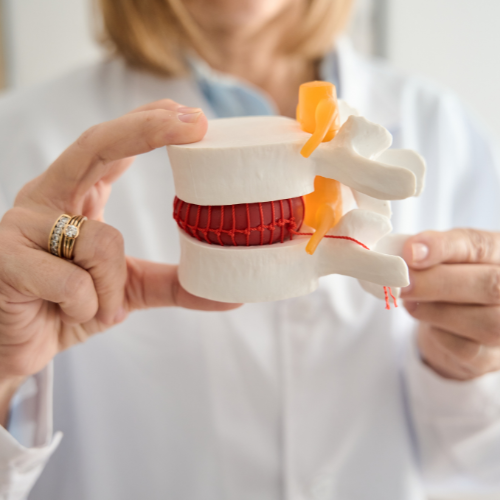
A herniated disc does not automatically require surgery. In many cases, a herniated disc can be treated without surgery. The most appropriate treatment for a herniated disc depends on the specific combination of symptoms, neurological findings, and MRI results.
At ROC Ortho in the Regenerative Center in Aschheim near Munich, we do not view the back in isolation as a “damaged intervertebral disc.” We examine which nerve root is irritated, how severe the inflammatory response is, which muscles are protecting or restricting the back, and whether posture, the pelvis, or gait are placing additional strain on the spine.
For many patients, one question takes center stage: How can I treat my herniated disc without taking unnecessary risks and return to my daily life, work, and sports as safely as possible? That is exactly what our individually tailored herniated disc treatment is designed to achieve.
A herniated disc is more than just an MRI finding
The intervertebral disc is located between two vertebral bodies and acts as a shock absorber for the spine. It distributes pressure while also allowing for mobility. In a herniated disc, tissue from inside the disc protrudes outward. This can irritate or compress nerves, leading to the typical symptoms of a herniated disc.
However, MRI findings alone rarely explain the full range of symptoms. Many people have visible herniated discs without experiencing any pain. Conversely, even a small herniated disc can cause significant discomfort if it affects a particularly sensitive nerve root.
Typical symptoms of a herniated disc include:
- Pain that radiates from the back to the buttocks, leg, shoulder, or arm
- Tingling or numbness along a specific nerve
- Pain when coughing, sneezing, or straining
- sharp, shooting pains during certain movements
- Loss of strength when standing on tiptoes, standing on heels, grasping, or lifting
A herniated disc in the lumbar spine most commonly affects the L4/L5 or L5/S1 segments. A herniated disc in the cervical spine, on the other hand, more often causes pain in the neck, shoulders, or arms, as well as tingling in the hands.
When You Need Immediate Medical Attention for a Herniated Disc
Most herniated discs can initially be treated conservatively. However, there are warning signs that indicate you should not wait.
Seek immediate medical attention if
- If the bladder or bowel suddenly stops functioning properly,
- If you experience numbness in the genital or perineal area,
- paralysis worsens,
- severe weakness develops in the leg or arm,
- These may be accompanied by a fever, severe nighttime pain, or significant weight loss.
If these warning signs are not present, there is usually enough time for a structured diagnostic evaluation of a herniated disc. At ROC Ortho, we use this time to identify the actual cause of the pain.
Among other things, we check:
- Does the progression of the pain correspond to the MRI findings?
- Is there actually nerve root irritation?
- Is the herniated disc causing the symptoms, or do the facet joints, sacroiliac joint, or muscles also play a role?
Many symptoms overlap, particularly in the lumbar spine. That is why we do not treat only the MRI findings, but the whole person.
Diagnosis of a Herniated Disc: Why an MRI Alone Is Not Enough
Successful treatment of a herniated disc does not begin with an injection or surgery, but with a thorough diagnosis.
That's why we first take the time to listen to your concerns:
- Where does the pain radiate to?
- How long have they been around?
- Which movements make your symptoms worse or better?
- Do you experience numbness or loss of strength?
- To what extent are daily life and work affected?
Depending on the specific issue, we supplement the examination with:
Next, we check reflexes, sensation, muscle strength, range of motion, and nerve function.
- Our open MRI
- digital X-ray
- Sonography
- neurological function tests
- Laboratory tests
- 4D Spinal Measurement
Our open MRI scanner in Aschheim images intervertebral discs, nerve roots, the spinal canal, and potential inflammatory reactions without using X-rays. Patients with a fear of enclosed spaces benefit particularly from the open design.
In addition, the 4D spinal assessment can reveal whether poor posture, pelvic misalignment, or unfavorable movement patterns are placing additional strain on the herniated disc and delaying the healing process.
Treatment for a Herniated Disc: Conservative Management or Surgery?
Most herniated discs can be successfully treated without surgery. However, that does not mean simply waiting it out. Successful conservative treatment for a herniated disc has clear goals: to reduce pain, soothe the irritated nerve root, maintain mobility, and gradually restore the back’s ability to bear weight.
Surgery for a herniated disc is particularly indicated when severe or worsening neurological deficits occur, when bladder or bowel dysfunction is present, or when severe radiating pain does not subside despite consistent conservative treatment over an extended period of time.
| Situation | Conservative Treatment for a Herniated Disc | Surgery for a Herniated Disc |
|---|---|---|
| Pain without paralysis | Usually the first choice, involving pain management, physical therapy, injections, and exercise | rarely necessary |
| Radiating pain in the leg or arm | recommended when nerve function is stable | Possible in cases of confirmed nerve compression and lack of improvement |
| progressive muscle weakness | close monitoring | frequent surgical evaluation |
| Bladder, bowel, or sensory disorders | no conservative delay | Emergency |
At ROC Ortho, we provide open and personalized advice. Our goal is neither to avoid surgery at all costs nor to recommend it prematurely. The key factor is determining which treatment for a herniated disc offers the greatest long-term benefit based on your diagnosis, your symptoms, and your personal goals.
Acute Phase: Reduce pain, soothe the nerve, and keep moving
In the first few days after a herniated disc, pain is often the primary concern. Many people automatically adopt a protective posture, have trouble sleeping, and avoid any movement. In the short term, this reaction can be helpful. However, if it persists, the muscles become tense, gait changes, and the irritated nerve root often becomes even more sensitive. That is why successful treatment of a herniated disc does not begin with strict bed rest, but rather with a personalized acute therapy plan. The goal is to relieve pain, soothe the nerve, and at the same time maintain mobility as much as possible.
Depending on the diagnosis, pain relievers and anti-inflammatory medications may be appropriate, provided that pre-existing conditions, tolerance, and potential interactions are taken into account. Heat helps many patients with muscle tension, while cold can relieve acute inflammation. Even short walks on level ground are often more helpful than lying down for long periods or complete rest.
At ROC Ortho, we assess early on which measures will most effectively support your treatment for a herniated disc. This may also include image-guided injections if necessary, should symptoms persist despite conservative baseline therapy. The correct dosage is always important. During the acute phase, a herniated disc usually tolerates neither complete rest nor intensive stretching programs or strength training pushed to the pain threshold. The irritated nerve root needs time for the inflammation and pain to subside.
Image-Guided Infiltrations: When the Irritated Nerve Needs Targeted Relief
The pain associated with a herniated disc is often caused by more than just mechanical pressure on the nerve root. The inflammatory response around the nerve is just as significant.
If pain medication, exercise, and physical therapy are not enough, a targeted injection can be a useful addition to the treatment of a herniated disc.
In periradicular therapy (PRT), anti-inflammatory and pain-relieving medications are delivered directly to the affected nerve root. At ROC Ortho, we rely on MRI-guided PRT, depending on the findings. This allows the treatment to be performed with precision without the additional radiation exposure associated with CT-guided therapy.
However, PRT is not suitable for every type of back pain. We recommend it especially when
- the symptoms clearly radiate along a nerve root,
- The MRI findings and symptoms are consistent with each other,
- and a consistent, conservative treatment for a herniated disc has not resulted in sufficient improvement.
If, on the other hand, the cause lies primarily in the small vertebral joints, a targeted facet joint injection may be more appropriate. That is why we at ROC Ortho carefully determine exactly which structure is causing the symptoms before recommending treatment.
Racz Catheter: An Option for Persistent Nerve Pain
Most herniated discs heal without surgery. In some cases, however, symptoms persist because scar tissue, adhesions, or ongoing irritation of the nerve root hinder the healing process. Such changes can also occur after disc surgery.
For selected patients, a Racz catheter may then be a useful addition to treatment for a herniated disc.
Medication is delivered directly to the irritated nerve root through a thin catheter. This procedure may be considered for the following conditions, among others:
- Herniated discs with persistent nerve root irritation
- Intervertebral Disc Protrusions
- Spinal canal stenosis
- Pain After Spinal Disc Surgery
- scarring changes in the area of the nerve root
Before each treatment, we carefully assess whether the pain is actually originating from the affected segment. A Racz catheter is not a substitute for physical therapy, active exercise, or an analysis of the underlying cause. However, it can reduce pain to the point where movement becomes possible again and subsequent rehabilitation is significantly more effective.
It is precisely the close collaboration between orthopedics, imaging, interventional pain management, and physical therapy that enables us to coordinate the individual treatment steps in the best possible way.
Physical Therapy for a Herniated Disc: Timing Is Key
Many patients ask us which exercises really help with a herniated disc. There is no one-size-fits-all answer. The key factors are the stage of pain, nerve involvement, muscle strength, and tolerance for physical exertion.
That is why we tailor the physical therapy at ROC Ortho to each patient's individual healing process.
During the acute phase, the following are often the main concerns:
- Postures that relieve strain
- Breathing Techniques
- Cautious mobilization
- Exercise Strategies for Everyday Life
- Pain Relief
As progress continues, the focus shifts to:
- Stabilization of the core muscles
- Strengthening the gluteal and leg muscles
- Improving Mobility in the Lumbar and Thoracic Spine
- Nerve Mobilization
- Ergonomic Lifting and Carrying Techniques
- Targeted training to build endurance for daily life, work, and sports
At ROC Physio, we tailor the treatment plan closely to the orthopedic findings. This ensures that diagnostics, physical therapy, and medical treatment work together seamlessly.
Our goal is not to prescribe as many exercises as possible. Our goal is for you to perform, at the right time, exactly the exercises that will support the healing of your herniated disc and stabilize your spine in the long term.
Regenerative Medicine: Put It in Perspective, Don't Overpromise
At ROC Regenerative Center, we combine modern orthopedics with biological and regenerative treatment options. We place great emphasis on providing an honest medical assessment. Not every modern therapy is appropriate for every condition—and this is especially true for herniated discs.
In the case of a herniated disc, the initial focus is on relieving pressure on the irritated nerve root. The goal of treatment is to reduce pain, alleviate inflammation, and restore mobility. Regenerative therapies do not replace these steps. Depending on accompanying findings, however, regenerative therapies may still be appropriate. For example, in cases of additional symptoms involving the facet joints, inflammatory changes, or other orthopedic conditions that affect the healing process. We always evaluate which treatment is appropriate on a case-by-case basis, taking into account your symptoms, diagnostic results, and the latest scientific findings.
A reputable treatment for a herniated disc does not promise miracles. It has a clear goal: to identify the actual cause of the pain and to adapt the treatment step by step to your healing process. That is why, at ROC Ortho, we combine modern diagnostics, conservative therapy, interventional pain management, physical therapy, and—when appropriate—regenerative procedures into a personalized, comprehensive treatment plan. If you also have osteoarthritis or other joint problems, we’d be happy to advise you on the options for autologous blood therapy and other orthobiological procedures.
What You Can Do Yourself If You Have a Herniated Disc
Your daily habits also have a major impact on the healing of a herniated disc. The key is not to get as much exercise as possible or to rest completely, but rather to apply the right amount of strain at the right time.
The following measures often help the healing process:
- It's better to walk short distances several times a day than to walk a very long distance just once.
- Alternate regularly between sitting, standing, and walking to prevent muscle tension.
- Lift loads as close to your body as possible, and exhale as you lift instead of straining.
- Do not exercise if you experience severe radiating pain. If tingling or pain in your leg or arm increases, you should adjust the intensity of your workout.
- Choose a sleeping position that provides as much relief as possible. Many people with a herniated disc in the lumbar spine find it comfortable to lie on their side with a pillow between their knees.
If you are experiencing radiating sciatic pain, our guide to sciatica treatment may also be helpful. After all, not all sciatic pain is actually caused by a herniated disc.
Here's how the diagnosis of a herniated disc is conducted at ROC Ortho
Every treatment begins with a detailed consultation. We want to understand when your symptoms began, where the pain radiates to, which movements make it worse, and what treatments you have already tried.
If possible, please bring any available MRI images, medical reports, medication lists, and previous test results to your appointment. If you do not have recent images or if they no longer correspond to your current symptoms, we can supplement the diagnosis with an MRI at our facility if necessary.
After the examination, we will discuss all the findings with you in a way that is easy to understand. Together, we will clarify,
- whether the herniated disc is actually the cause of your symptoms,
- which nerve root might be affected,
- which conservative treatment options are appropriate,
- and whether surgery seems necessary at all.
Depending on the findings, your personalized treatment plan may include the following components, among others:
- Personalized treatment for pain and inflammation
- Image-guided PRT or other infiltrations
- manual medicine
- Physical Therapy and Medical Exercise Therapy
- 4D Spinal Measurement for Postural Issues or Improper Body Alignment
- Regular follow-up visits with a neurological examination
Our goal is to tailor treatment for a herniated disc to the actual cause of your symptoms as early as possible and to prevent the pain from becoming chronic.
If you have been experiencing back, leg, neck, or arm pain for several weeks, or if you would like a second opinion, please feel free to schedule an appointment at ROC Ortho in Aschheim.
The Medical Team

Dr. med. Daniel Filesch
Specialist in orthopaedics and trauma surgery

Martina Berger
Doctor for regenerative orthopaedic procedures

Dr. med. Edan Manos
Doctor for regenerative orthopaedic procedures

Patrick Heine
Specialist in orthopaedics and trauma surgery
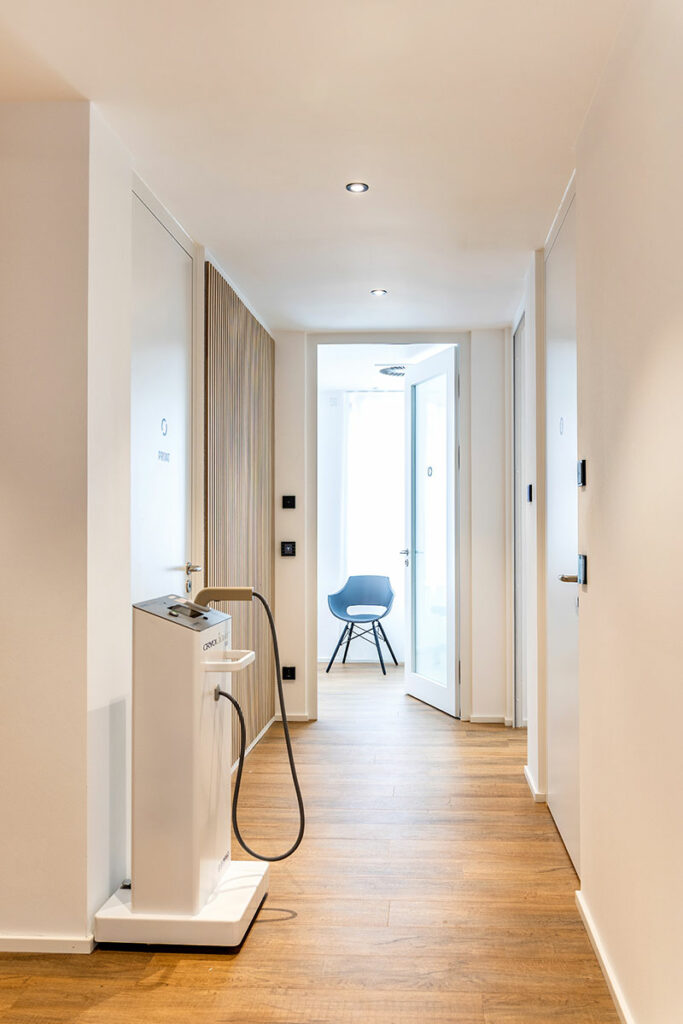
Modern office space


ROC Ortho
Private Orthopedic Practice
St.-Emmeram-Str. 5
85609 Aschheim
Email: praxis@roc-ortho.de
Phone: +49 89 46259930
Opening hours
| Monday | 7:30 a.m. – 6:00 p.m. |
| Tuesday | 7:30 a.m. – 6:00 p.m. |
| Wednesday | 7:30 a.m. – 8:00 p.m. |
| Thursday | 7:30 a.m. – 6:00 p.m. |
| Friday | 7:30 a.m. – 2:00 p.m. |