Guide | August 28, 2026
Herniated Disc in the Lumbar Spine: What You Should Know
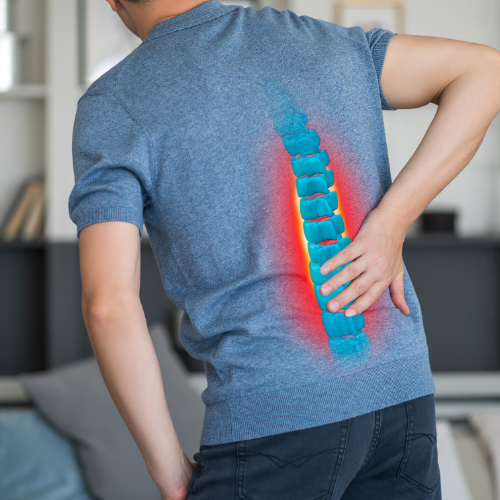
A herniated disc in the lumbar spine can cause much more than just back pain. The lumbar spine bears a large portion of our body weight every day and is subjected to high levels of stress when we sit, lift, carry, exercise, and perform many other movements. If a disc is damaged and a nerve root is irritated, you will often feel the symptoms not only in your lower back.
Typical symptoms of a herniated disc in the lumbar spine include pain that radiates from the lower back to the buttocks, thigh, calf, or even down to the foot. Tingling, numbness, or loss of strength may also occur and significantly limit daily activities—such as climbing stairs, driving, sitting for long periods, or sleeping.
As a result, many patients come to us asking, “What can I do about a herniated disc in the lumbar spine—and do I need surgery?”
At ROC Ortho in the Regenerative Center in Aschheim near Munich, we do not view a herniated disc in the lumbar spine in isolation. We determine which nerve root is affected, whether the symptoms and MRI findings align, and which movements exacerbate or alleviate the symptoms. Based on this, we develop a personalized treatment plan for a herniated disc in the lumbar spine with the goal of reducing pain, relieving pressure on the nerve, and helping you regain your mobility and physical capacity. Surgery is not automatically necessary. Many herniated discs in the lumbar spine can initially be treated conservatively. The key is to recognize neurological warning signs early on and tailor the treatment to your individual findings.
What happens when a disc herniates in the lumbar spine?
The intervertebral discs are located between the vertebral bodies of the lumbar spine. They consist of an outer fibrous ring and a softer, gel-like nucleus. The intervertebral discs distribute stress, enable mobility, and act as shock absorbers between the vertebral bodies. In a lumbar disc herniation, disc tissue protrudes outward through weakened or torn areas of the fibrous ring. If the tissue shifts toward the spinal canal or the nerve exit point, it can irritate or compress a nerve root there.
However, the typical symptoms of a lumbar disc herniation are not caused solely by mechanical pressure. Inflammatory processes around the nerve root can also cause significant pain. That is why the size of a disc herniation as seen on an MRI alone says little about how severe your symptoms are likely to be. A small herniated disc in an unfavorable location can cause severe leg pain and neurological symptoms. Conversely, we also see larger herniated discs that cause comparatively few symptoms. For successful treatment of a herniated disc in the lumbar spine, MRI findings, a neurological examination, and your actual symptoms must therefore be considered together.
Why do herniated discs often occur at the L4/L5 or L5/S1 levels?
A herniated disc in the lumbar spine occurs particularly frequently in the lower segments L4/L5 and L5/S1. These areas must withstand high mechanical stress in everyday life while also allowing for a great deal of movement.
When bending over, lifting, twisting, or sitting for long periods, significant forces are exerted on the lower intervertebral discs. At the same time, the disc tissue changes over the course of a person’s life: it loses fluid and elasticity, which can make it more susceptible to tears and displacement.
Various factors can further increase the strain on the lumbar spine:
- long periods of sitting and infrequent changes in position,
- Lack of or insufficient hull stability,
- repeated heavy lifting and carrying,
- one-sided strain from work or sports,
- Overweight,
- Smoking,
- Previous injuries and recurring symptoms in the lumbar spine.
Not every one of these factors automatically leads to a herniated disc. Often, several factors come together.
If you’re wondering “What should I do?” when you have pain in your lower back, the first crucial question to ask is: Is this localized back pain, or is a nerve root already involved? The appropriate treatment for a herniated disc in the lower back depends on the answer to this question.
Symptoms of a Herniated Disc in the Lumbar Spine: How Can You Tell If a Nerve Is Irritated?
Not all lower back pain is caused by a herniated disc. Muscular discomfort is often more localized to the back. If, on the other hand, a nerve root is irritated, pain and abnormal sensations can radiate along the course of the affected nerve into the leg or foot.
Typical symptoms of a herniated disc in the lumbar spine include:
- Lower back pain,
- Pain that radiates into the buttocks or leg,
- burning, stabbing, or electric-shock-like pain in the legs,
- Tingling or a "pins-and-needles" sensation in the leg or foot,
- Numbness,
- Loss of strength in the leg or foot,
- Discomfort when coughing, sneezing, or straining,
- a compensatory posture caused by pain.
The symptoms that occur depend, among other things, on which nerve root is affected.
In the case of a herniated disc at the L4/L5 level, for example, the L5 nerve root may be affected. Symptoms may then radiate down the outer side of the leg toward the top of the foot and the big toe. Difficulty lifting the foot may also occur.
A herniated disc at the L5/S1 level can irritate the S1 nerve root. Typical symptoms may include pain down the back of the leg and discomfort in the outer part of the foot. Standing on the toes may also be difficult if there is significant motor involvement.
This distribution provides us with important diagnostic information, but it is no substitute for a neurological and orthopedic examination. At ROC Ortho, we therefore assess, among other things, muscle strength, reflexes, sensation, and nerve function, and compare these results with your symptoms and imaging findings.
Lumbar Disc Herniation or Sciatica: What's the Difference?
The terms “herniated disc” and “sciatica” are often used interchangeably. However, they do not describe the same thing. A herniated disc refers to a structural change in the intervertebral disc. “Sciatica,” on the other hand, typically describes pain along the sciatic nerve or its nerve roots.
A herniated disc in the lumbar spine can cause sciatica—but it is not the only possible cause. That is why, when patients experience radiating leg pain, we first determine where the nerve irritation is actually originating before we begin treatment for a herniated disc in the lumbar spine.
Warning Signs of a Lumbar Disc Herniation: When You Need Immediate Medical Attention
Many lumbar disc herniations can be treated without surgery. However, you should not wait for certain symptoms to appear, as they may indicate severe nerve compression.
Seek immediate medical attention if:
- newly occurring problems with bladder or bowel control,
- Numbness in the genital, perineal, or buttock areas,
- new or worsening symptoms of paralysis in the leg or foot,
- significantly increasing muscle weakness,
- severe back pain following an accident,
- Back pain accompanied by a fever or a pronounced feeling of illness.
Time is of the essence, especially when there is increasing paralysis or changes in bladder and bowel function. In these situations, the focus is no longer on standard conservative treatment for a herniated disc in the lumbar spine, but rather on immediate medical evaluation.
If, on the other hand, back pain or radiating leg pain is present without such warning signs, there is often time for a thorough diagnosis and an individually tailored conservative treatment plan.
Diagnosis of a Herniated Disc in the Lumbar Spine: Understand First, Then Treat Targetedly
Successful treatment of a lumbar disc herniation begins with an accurate diagnosis. That’s why we at ROC Ortho first want to understand how your symptoms developed: How long have you been experiencing pain? Does it radiate from your lower back into your leg or all the way down to your foot? Which movements make the symptoms worse, and which positions provide relief? Was there a specific trigger, such as heavy lifting, exercise, a long car ride, or sitting for an unusually long period?
Next, we examine the lumbar spine and neurological function. Among other things, we assess range of motion, muscle strength, reflexes, sensation, and nerve stretching. We also assess the pelvis, hips, and adjacent structures. This is because not all lower back pain is actually caused by a herniated disc in the lumbar spine. Facet joints, the sacroiliac joint, or muscles can also cause similar symptoms or be additional contributing factors. Depending on the findings, we supplement the diagnosis with imaging procedures. An MRI of the lumbar spine shows intervertebral discs, nerve roots, the spinal canal, and potential narrowings without the use of X-rays. At ROC Ortho, our open MRI in Aschheim is also available for this purpose, which can be a more comfortable alternative, especially for patients with claustrophobia.
Not every case of back pain requires an immediate MRI. However, in cases of radiating pain, numbness, loss of strength, an unclear course of the condition, or prior to certain interventional treatments, MRI diagnostics can provide important information for the further treatment of a herniated disc in the lumbar spine.
Why MRI Findings and Symptoms Don't Always Match in Cases of a Lumbar Disc Herniation
Many patients come to us with MRI reports that include terms such as protrusion, extrusion, sequestration, osteochondrosis, or spinal stenosis. Such terms can be alarming at first. However, what matters is not the term on the report, but whether the finding actually corresponds to your symptoms.
A herniated disc in the lumbar spine is particularly relevant for treatment when the location and the affected nerve root correspond to the pain pattern and the results of the neurological examination.
For example, a herniated disc on the right side generally does not adequately explain pain exclusively in the left leg. Osteoarthritis of the small vertebral joints, on the other hand, tends to cause localized pain in the lumbar spine and does not necessarily result in tingling or numbness extending down to the foot.
That is why, at ROC Ortho, we never look at MRI images in isolation. We take into account imaging results, physical examination findings, neurological findings, and your actual symptoms.
In cases of recurring lower back pain, posture and movement patterns may also play a role. When indicated, a 4D spinal analysis can provide information on pelvic alignment, body mechanics, and functional imbalances.
Treatment for a Herniated Disc in the Lumbar Spine: Which Therapy Is Most Effective?
The appropriate treatment for a herniated disc in the lumbar spine depends on several factors: How severe is the pain? Does it radiate down the leg? Is there numbness or loss of strength? How long have the symptoms been present? And to what extent are daily activities, work, or sports limited?
In many cases, a herniated disc in the lumbar spine can initially be treated without surgery. Conservative treatment for a herniated disc in the lumbar spine aims to reduce pain and nerve irritation, maintain mobility, and gradually rebuild strength.
| Therapeutic Approach | Objective | May be an option for |
|---|---|---|
| Pain and Inflammation Management | Reduce acute symptoms and enable movement | acute pain without severe neurological deficits |
| Physical Therapy and Home Exercises | Improve flexibility, stability, and resilience | acute and chronic lower back pain |
| Image-Guided Infiltration / PRT | Targeted treatment of an irritated nerve root | Persistent, radiating leg pain with consistent findings |
| Treatment of Other Sources of Pain | Targeted reduction of additional symptoms | e.g., accompanying facet joint or sacroiliac joint symptoms |
| Operation | Relieve pressure on compressed nerve structures | certain neurological deficits or unsuccessful conservative treatment |
At ROC Ortho, we do not follow a fixed protocol for treating lumbar disc herniation. We select the individual treatment steps based on your symptoms, neurological findings, and imaging results.
Our goal is not to avoid surgery at any cost. We want to choose the treatment that makes the most medical sense and allows you to return to your daily life, work, and physical activity as safely as possible.
Treating a Lumbar Disc Herniation Without Surgery: Conservative Does Not Mean Passive
Many patients would like to treat their lumbar disc herniation without surgery. In many cases, this is possible. However, conservative treatment does not mean lying in bed for weeks on end, waiting for improvement.
A brief period of rest may be helpful during a severe acute pain episode. Prolonged bed rest, on the other hand, is usually not the goal. Moderate exercise helps maintain mobility and prevent a progressive loss of muscle strength.
Conservative treatment for a herniated disc in the lumbar spine may involve several components, depending on the findings:
- medically supervised treatment for pain and inflammation,
- positions that relieve pressure and provide warmth in cases of muscular tension caused by a defensive response,
- targeted physical therapy,
- Gradual strengthening of the core, gluteal, and hip muscles,
- Tailored mobilization for referred pain,
- ergonomic adjustments for the workplace and everyday life,
- Targeted infiltrations when medically indicated.
The appropriate course of action depends on the specific nature of your herniated disc. An acutely irritated nerve root requires a different treatment than predominantly localized lower back pain caused by facet joints or muscle strain.
Thanks to the close collaboration between ROC Ortho and ROC Physio, we can coordinate diagnostics and active rehabilitation and adapt your treatment over time to match your tolerance.
Exercises for a Herniated Disc in the Lumbar Spine: What Can You Do on Your Own?
Many people with this condition are looking for exercises for a herniated disc in the lumbar spine. However, there is no one-size-fits-all exercise program for every herniated disc. Which movements are appropriate depends, among other things, on which nerve root is affected and how severe the symptoms currently are.
Especially during the acute phase, it’s important to remember that you don’t need to “train away” your back pain. The initial goal is to find movements that don’t further irritate the nerve.
Three simple principles can be helpful when dealing with a herniated disc in the lumbar spine:
- Relief: A stepped position can be comfortable when experiencing acute symptoms. In this position, you lie on your back with your lower legs elevated, for example, on a chair.
- Exercise: Gentle movements of the lumbar spine can help prevent prolonged, rigid postures adopted to relieve pain.
- Stabilization: Once the acute pain phase subsides, the core and gluteal muscles can be gradually reactivated and strengthened.
Pay particular attention to where the pain radiates. If the pain spreads further down the leg or into the foot during or after an exercise, you should reduce the intensity of the exercise. If you also experience increasing numbness or muscle weakness, we recommend that you consult a doctor again.
Conversely, it may be a positive sign if the radiating pain gradually shifts from the leg back toward the back. This phenomenon is known as centralization.
Ideally, we’ll discuss which exercises for a herniated disc in the lumbar spine are right for you after an examination and diagnosis.
PRT for a Herniated Disc in the Lumbar Spine: When the Nerve Remains Irritated
A herniated disc in the lumbar spine can cause severe leg pain if a nerve root is irritated mechanically and by inflammation. If these symptoms persist despite conservative treatment, a targeted injection may be considered if the findings warrant it. One option is periradicular therapy, or PRT for short. In this procedure, medication is administered directly near the affected nerve root. The goal is to reduce the local inflammatory response and, consequently, the radiating pain. It is important to understand the correct context: PRT does not remove the herniated disc. However, it can help soothe the irritated nerve root, thereby enabling greater mobility, better sleep, and active rehabilitation.
At ROC Ortho, we can perform MRI-guided PRT when indicated. This allows us to treat the affected area precisely without the X-ray radiation required for CT guidance. Not every lumbar disc herniation requires PRT. Before proceeding with this treatment, we verify whether the pain pattern, neurological findings, and MRI results actually point to the same nerve root. If, on the other hand, the pain originates primarily from the small vertebral joints, other infiltration therapies may be more appropriate. This is precisely why an accurate diagnosis is crucial for us: We do not simply treat “the lumbar spine,” but rather target as precisely as possible the structure causing your symptoms.
Facet Joints, Sacroiliac Joints, and Osteoarthritis: Not All Lower Back Pain Is Caused by a Herniated Disc
Not all severe lower back pain is caused by a herniated disc in the lumbar spine. The small vertebral joints of the lumbar spine, the sacroiliac joint (SI joint), muscles, or age-related changes can also cause similar symptoms. Osteoarthritis of the facet joints, for example, often manifests as pain when standing for long periods, standing up straight, or leaning backward. Symptoms involving the sacroiliac joint, on the other hand, are often located deeper in the area of the iliac crest and buttocks and can also radiate to surrounding areas. This distinction is crucial for the treatment of a herniated disc in the lumbar spine. An irritated nerve root caused by disc tissue requires a different treatment than a painful facet joint or a dysfunction of the sacroiliac joint.
At ROC Ortho, we therefore examine not only the intervertebral disc but also the surrounding structures. Depending on the cause, treatments such as physical therapy, manual medicine, or targeted injections may be appropriate. For certain chronic facet joint conditions, denervation may also be an option following appropriate diagnostic evaluation.
Lumbar Disc Herniation: When Is Surgery Necessary?
Many patients specifically search for “treatment for a herniated disc in the lumbar spine without surgery.” In fact, many herniated discs in the lumbar spine can initially be treated conservatively. However, surgery may become necessary if nerve compression leads to significant or worsening neurological deficits. Persistent, severe nerve pain that does not improve sufficiently despite consistent conservative treatment may also warrant surgical evaluation. Worsening symptoms of paralysis, as well as bladder or bowel dysfunction, are particularly urgent. In these situations, further delay is not advisable.
At ROC Ortho, we therefore take a nuanced approach to the decision for or against surgery. Our goal is not to avoid surgery for a herniated disc at all costs. We want to avoid unnecessary procedures, but at the same time recognize when surgical relief of nerve compression becomes medically advisable or necessary. In cases of persistent symptoms following spinal surgery or certain chronic nerve irritations, specialized procedures such as the Racz catheter may also be considered, depending on the findings.
What can you do on your own if you have a herniated disc in your lumbar spine?
A herniated disc in the lumbar spine does not mean you have to take it easy on your back permanently. The lumbar spine needs movement, muscle strength, and a gradual increase in physical activity. The key is finding the right balance. Especially during the acute phase, we recommend tailoring your movements to your symptoms. You should neither keep your back completely still nor try to overcome the pain through intense exercise.
The following measures may be helpful in everyday life:
- Walk short distances regularly, as long as this does not cause your leg pain to increase significantly.
- While working, alternate more frequently between sitting, standing, and walking.
- During the acute phase, avoid heavy lifting and sudden movements while carrying a load.
- Lift objects as close to your body as possible, and avoid bending and twisting sharply at the same time.
- Use heat when muscle tension is the main issue.
- When sleeping, choose a position that minimizes back and leg pain as much as possible.
- Monitor tingling, numbness, and muscle strength as the condition progresses.
It is especially important to note: If you experience increasing numbness or weakness, or if new neurological symptoms appear, you should not simply continue exercising. Have a doctor evaluate these changes.
Spinal Therapy at the ROC: Treatment Tailored to Your Individual Diagnosis
There is no one-size-fits-all treatment for a herniated disc in the lumbar spine. While acute nerve irritation may be the primary concern for one patient, another patient may primarily need targeted muscle strengthening. In cases of severe radiating leg pain, however, an injection may be appropriate. For this reason, treatment for a herniated disc in the lumbar spine at ROC Ortho is based on a combination of the patient’s symptoms, a physical examination, neurological findings, and—if necessary—imaging.
Depending on the findings, various components can be combined:
- Pain and Inflammation Management,
- Physical therapy and a targeted exercise progression program,
- manual medicine for additional functional symptoms,
- image-guided infiltrations or PRT for nerve root irritation,
- other procedures near the spine when indicated,
- Monitoring changes in strength, sensitivity, and endurance.
Regenerative treatments may also play a role in selected concomitant orthopedic conditions. In the case of an acute herniated disc in the lumbar spine, however, another question takes center stage initially: Is the nerve root merely irritated, or is there significant compression resulting in neurological deficits?
This assessment determines how we plan the further treatment for a lumbar disc herniation.
The Medical Team

Dr. med. Daniel Filesch
Specialist in orthopaedics and trauma surgery

Martina Berger
Doctor for regenerative orthopaedic procedures

Dr. med. Edan Manos
Doctor for regenerative orthopaedic procedures

Patrick Heine
Specialist in orthopaedics and trauma surgery
Modern office space


ROC Ortho
Private Orthopedic Practice
St.-Emmeram-Str. 5
85609 Aschheim
Email: praxis@roc-ortho.de
Phone: +49 89 46259930
Opening hours
| Monday | 7:30 a.m. – 6:00 p.m. |
| Tuesday | 7:30 a.m. – 6:00 p.m. |
| Wednesday | 7:30 a.m. – 8:00 p.m. |
| Thursday | 7:30 a.m. – 6:00 p.m. |
| Friday | 7:30 a.m. – 2:00 p.m. |