
News | August 10, 2026
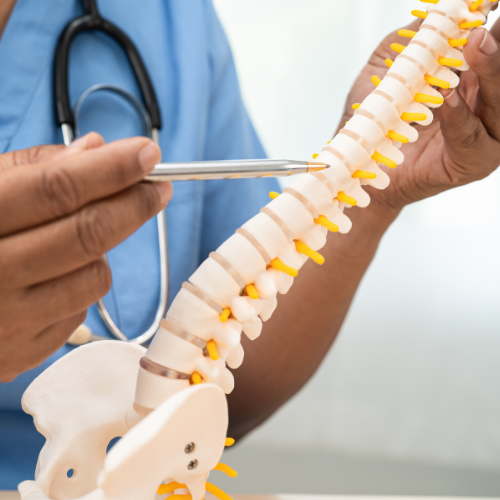
Successful treatment of spinal stenosis begins with an accurate diagnosis: your symptoms, your walking distance, and your MRI results must all align.
Many patients come to the ROC Regenerative Center in Aschheim near Munich with one clear concern: “I don’t want to have spinal surgery.” This wish must be respected and, at the same time, deserves an honest medical assessment. A narrowing of the spinal canal rarely requires immediate surgery. Spinal stenosis can often be treated without surgery if the therapy specifically addresses the mechanisms of pain, nerve irritation, posture, and physical capacity.
This guide explains which non-surgical procedures are options for lumbar spinal stenosis, when conservative treatment for spinal stenosis reaches its limits, and how we at ROC Ortho effectively combine diagnostic testing, physical therapy, injections, manual medicine, and other treatment approaches.
Spinal stenosis is a condition in which the canal through which nerve structures pass in the spine narrows. In the lower back, this usually affects the lumbar spine. The medical term for this is lumbar spinal stenosis. Many people with this condition do not initially experience sharp back pain, but rather heavy legs, numbness, tingling, or pain when walking.
This is a typical statement: “After 200 meters, I have to stop.” After a short break, I can walk again. The symptoms improve when I sit down. Leaning forward—for example, while pushing a shopping cart or riding a bike—provides relief. It is precisely this pattern that often distinguishes neurogenic claudication from conditions caused solely by hip, knee, or vascular disorders.
Our treatment for spinal stenosis at the ROC therefore does not focus solely on the back. It addresses the nerve root, mechanical constriction, inflammatory irritation, and movement patterns in daily life. Treating only an MRI image is not enough.
An MRI shows anatomical structures. It shows intervertebral discs, facet joints, bony spurs, thickened ligaments, and the width of the spinal canal. However, it does not reliably show how much pain you are in, how far you can walk, or how much strain your nerves can actually tolerate.
At ROC Ortho, we therefore examine three levels:
Only by considering this overall picture can a personalized treatment plan for spinal stenosis be developed. The narrowing alone is not enough. Some people have a narrow spinal canal but experience few symptoms. Other patients suffer greatly, even though their condition may seem less severe at first glance.
If you bring your previous MRI images with you, we at ROC Ortho can check whether your diagnosis, symptoms, and previous treatment have been properly coordinated.
The most common symptoms of spinal stenosis result from pressure on and irritation of the nerves in the lower back. Many people with this condition describe their symptoms not so much as “back pain” but rather as a loss of freedom: walks are cut short, trips into town are canceled, and traveling loses its appeal.
Especially in cases of exertion-related leg pain, early treatment of spinal stenosis can help restore walking distance and improve quality of life.
Typical signs include:
In cases of L4/L5 spinal stenosis, symptoms often occur in the buttocks, thigh, lower leg, or foot. The L4/L5 segment bears a heavy load during daily activities. Degenerative disc disease, facet joint osteoarthritis, and thickened ligaments often occur together in this area.
Treatment for spinal stenosis is based on these patterns. Leg pain responds differently to medical treatment than purely localized lower back pain. Numbness requires a neurological evaluation. A simple massage is rarely sufficient in cases of true nerve compression.
At ROC Ortho, we take a step-by-step approach to treating spinal stenosis. Not every patient requires the same treatment. The key factors are symptoms, nerve irritation, physical capacity, and personal goals in daily life.
Possible components of treatment include:
We always decide on the most appropriate course of action on a case-by-case basis following a thorough examination.
Many people are looking for ways to treat spinal stenosis without surgery. In fact, surgery is not always necessary. As long as there is no significant paralysis or severe neurological deficits, conservative treatment is often the first course of action.
The goal of treatment for spinal stenosis is to reduce pain, improve walking distance, and restore quality of life. Exercise, targeted therapy, and individualized activity management play an important role in this process.
Most cases allow time for diagnosis and treatment planning. Certain signs make it impossible to wait and see.
Seek immediate medical attention if any of these symptoms occur:
These symptoms are not consistent with the usual conservative treatment for spinal stenosis. They require prompt medical evaluation and, if necessary, treatment at a hospital.
The most common cause of spinal stenosis is age- and stress-related changes in the spine. “Wear and tear” sounds harmless, but it only partially captures the reality of the situation. The body reacts to instability: intervertebral discs lose height, small vertebral joints enlarge, ligaments thicken, and bony spurs form.
These changes can narrow the central spinal canal or constrict the lateral nerve exit openings. This results in what is known as foraminal stenosis.
Common contributing factors include:
An effective treatment for spinal stenosis takes these causes into account. Medications can relieve pain, physical therapy improves physical endurance, nerve blocks can soothe irritated nerves, and postural analysis can identify improper posture that repeatedly irritates the back.
Conservative treatment for spinal stenosis combines several components. The most common mistake is relying on a single approach: three weeks of painkillers, a few exercises found online, and then frustration. Nerve compression usually requires a step-by-step approach.
At ROC Ortho, we approach the treatment of spinal stenosis in phases:
Non-surgical treatment for spinal stenosis has a clear goal: to help you walk longer, stand more steadily, and require less pain medication. Promising pain relief overnight would be unrealistic. A measurable improvement in walking distance, physical endurance, and quality of life is realistic in many cases.
Successful treatment of spinal stenosis begins with listening. How far can you walk? Is standing more difficult than walking? Does bending forward help? Do you experience numbness? What medications are you taking? What pre-existing conditions might affect your treatment and your ability to tolerate physical activity?
This is followed by a physical examination. We assess range of motion, posture, nerve function, strength, reflexes, and pain provocation. A hip joint with osteoarthritis can cause similar symptoms. So can poor circulation in the legs. Without making this distinction, there is a risk of choosing the wrong course of treatment.
If necessary, we supplement the diagnostic work with our open MRI in Aschheim. This is particularly helpful for patients who have difficulty tolerating narrow tubes. For functional assessments, we use 4D spinal measurement when the clinical presentation warrants it. It shows posture, pelvic alignment, leg axes, and dynamic stress patterns.
For treatment of spinal stenosis to be successful, the treatment plan must be tailored to your back and your daily routine. A golfer, a sedentary executive, and a patient with osteoporosis often require different treatment approaches.
Physical therapy for spinal canal stenosis does not work the same way as standard back exercises. True lumbar spinal stenosis often responds better to slightly flexed positions, controlled core engagement, hip mobility, and moderate endurance training than to exercises performed with the back strongly extended.
Many people with this condition experience discomfort when walking in an upright position, but can tolerate cycling on an exercise bike just fine. The reason: The slight forward lean creates more space for the nerve structures in the lower back. This principle can be used therapeutically.
A well-designed training plan often includes:
In collaboration with ROC Physio, treatment for spinal stenosis can be closely coordinated with orthopedic diagnostics. Physical therapy is not based on a standard program, but rather on the individual patient’s findings.
Exercises found online are only helpful if they are appropriate for the affected area. In cases of spinal stenosis, excessive extension of the lumbar spine often worsens symptoms. Gentle flexion exercises and stabilizing movements provide greater relief for many patients.
These exercise principles have proven effective in the conservative treatment of spinal stenosis:
Stop the exercises if numbness increases, strength decreases, or leg pain becomes significantly worse. An exercise may be challenging, but it should not trigger any new neurological symptoms.
Consistency is key when it comes to treating spinal stenosis. Fifteen minutes several days a week is often more effective than a single long workout session.
Medications can reduce pain, alleviate inflammation, and restore mobility. However, they do not widen the spinal canal. This is precisely where their limitations lie.
Depending on the findings, the following options may be considered:
Long-term treatment with medication that fails to improve walking distance and function is rarely medically justified. Treatment for spinal stenosis then often requires a new approach: targeted injections, more intensive physical therapy, functional diagnostics, or, if necessary, a second opinion regarding surgery.
Patients with stomach problems, kidney disease, diabetes, high blood pressure, or those taking blood thinners should not take pain relievers on their own on a long-term basis. At ROC Ortho, we take these factors into account when planning treatment.
Targeted injections can be a useful adjunct to the treatment of spinal stenosis when the condition is characterized by inflammatory nerve root irritation, a painful facet joint, or local irritation.
The goal is not “a shot instead of a treatment plan.” The goal is to reduce pain and restore mobility.
At ROC Ortho, we use image-guided infiltration therapies. For facet joint pain, ultrasound-guided infiltrations can deliver medication precisely to the affected structure. This ultrasound procedure does not involve X-ray radiation.
In cases of severe nerve root irritation or complex clinical presentations, we assess whether further spinal therapeutic measures are appropriate. It is important to note that an infiltration is not a substitute for stabilization, physical therapy, or identifying the underlying cause. However, it can create a therapeutic window during which active treatment of spinal canal stenosis becomes possible again.
The Racz catheter is one of the minimally invasive procedures used in spinal pain management. Medications are delivered precisely to the area near irritated nerve structures via a thin catheter. At ROC Ortho, we use this procedure to treat conditions such as chronic back pain, nerve root irritation, spinal canal stenosis, and foraminal stenosis, among others.
The Racz catheter is not universally suitable for treating every form of spinal canal stenosis. It is particularly appropriate when symptoms are caused by inflammatory reactions, scar tissue, adhesions, or severe nerve root irritation. In cases of significant paralysis or severe bony narrowing accompanied by neurological deterioration, however, a different treatment may be necessary.
A reputable treatment for spinal stenosis always clearly outlines its limitations. That is why, before any procedure, we discuss the benefits, risks, alternatives, and realistic goals. A reasonable treatment goal might include, for example, reduced leg pain, an increased walking distance, or successful participation in physical therapy. An unrealistic goal, on the other hand, would be the expectation that the spinal canal will be anatomically widened again afterward.
In cases of spinal stenosis, additional blockages, muscle tension, and abnormal movements can exacerbate symptoms. In such cases, manual therapy can help improve mobility and reduce protective muscle tension.
However, the treatment requires experience. Aggressive manipulations into painful end positions are often not appropriate for an irritated nerve root. Gentle mobilizations, muscle energy techniques, and myofascial techniques—integrated into an active treatment plan—are far more effective.
Treatment for spinal stenosis benefits from manual medicine, particularly when the hip, sacroiliac joint, thoracic spine, or pelvis place additional, chronic strain on the lumbar spine. That is why, at ROC Ortho, we focus not only on the narrowing visible on an MRI scan, but on the overall function of the musculoskeletal system.
At ROC Regenerative Center, we combine traditional orthopedics with biological-regenerative procedures. However, when it comes to the treatment of spinal stenosis in particular, it is important to be realistic: PRP, autologous blood, or other regenerative procedures do not widen a narrowed spinal canal.
However, they can play a role in cases of accompanying sources of pain, such as facet joint osteoarthritis, irritation of tendon insertions, or degenerative joint conditions, which alter gait and place additional strain on the lumbar spine.
When knee, hip, or foot problems alter a person’s gait, the strain on the lumbar spine often increases significantly. In such situations, we at ROC Ortho evaluate whether procedures such as PRP or other regenerative therapies may be appropriate.
As a result, treatment for spinal stenosis remains individualized without becoming arbitrary. Every intervention requires a clear, well-defined goal.
Many patients focus exclusively on the MRI findings: “L4/5 is narrow.” In everyday life, however, the spine is subjected to dynamic stress. A tilted pelvis, misalignment of the legs, improper weight distribution on the feet, or limited hip mobility can permanently exacerbate the symptoms.
The 4D spinal measurement at ROC Ortho assesses body posture and movement patterns without exposure to radiation. Depending on the specific issue, we combine it with pedobarography or gait analysis.
This often provides specific points of focus for the treatment of spinal canal stenosis:
Our goal isn't perfect posture. Our goal is a spine that can distribute stress more effectively again.
| Building block | Goal | Suitable for | Border |
|---|---|---|---|
| Physiotherapy | Improve Walking Distance, Stability, and Endurance | mild to moderate symptoms, muscle weakness | is less effective in cases of severe nerve irritation |
| Medications | Reduce pain and inflammation | episodes of acute pain, sleep disturbances | do not change the tightness |
| Infiltrations | soothe local irritation | Facet joint pain, nerve root irritation | do not replace active treatment |
| Racz catheter | Delivering Medication Directly to the Nerve Root | chronic conditions, scarring, or adhesions | Not suitable for every type of stenosis |
| 4D Spinal Measurement | Analyzing Statics and Motion | Postural Problems, Gait Disorders, Follow-Up Examinations | Does not replace an MRI |
| Operation | mechanical decompression of the nerves | neurological deficits or treatment failure | requires a clear indication |
Conservative treatment for spinal stenosis has a particularly good chance of success when there is no progressive paralysis, the walking distance is limited but can still be improved through exercise, and the symptoms respond to positions that relieve pressure on the spine.
Other clearly identifiable pain drivers that are also common include:
Positive signs as the situation unfolds include:
For successful treatment of spinal stenosis, we need measurable goals. “Less pain” alone is often not enough. That is why we track, among other things, walking distance, time spent standing, pain intensity, medication needs, and neurological findings so that we can objectively assess progress.
The search query “spinal stenosis treatment surgery” often stems from uncertainty. Some patients are afraid of having surgery too soon. Others put it off for many months, even though their loss of strength or limitations in daily life are increasing.
Surgery is typically considered when severe symptoms persist over a long period of time, conservative treatments do not yield sufficient improvement, imaging reveals the appropriate narrowing, and the patient’s distress remains high. The situation changes significantly in cases of paralysis or bladder and bowel dysfunction. In such cases, prompt medical evaluation is necessary.
Spinal stenosis surgery in older adults, in particular, requires careful consideration. It is not age alone that is the deciding factor, but rather factors such as heart and lung diseases, diabetes, osteoporosis, medications, mobility goals, and the patient’s personal circumstances.
At ROC Ortho, we take a conservative approach to treatment, but we are not opposed to surgery in principle. Effective treatment of spinal stenosis also involves recognizing when surgical intervention may be appropriate. If we believe a second surgical opinion is advisable, we will discuss this openly with you.
Leg pain associated with spinal stenosis is often caused by irritation of the nerve structures. The pain may feel like a pulling, burning, or tingling sensation, or it may shoot down the leg. Sometimes it follows the path of a specific nerve; other times, the entire leg may feel heavy or weak.
Back pain, on the other hand, can originate in the intervertebral discs, muscles, facet joints, or the sacroiliac joint. This distinction has a significant impact on the treatment of spinal stenosis.
A common mistake is to continue training intensively despite increasing nerve pain. However, in cases of nerve compression, overexertion can lead to setbacks. In most cases, it makes more sense to train in moderation within a range of intensity that is individually tolerable.
Treatment for spinal stenosis doesn't end at the doctor's office door. Your daily routine plays a key role in determining whether the irritated nerves can recover. It's not about taking it easy, but about managing your physical activity wisely.
These measures help many people affected by this:
Many patients initially perceive such adjustments as a restriction. In fact, they often provide the necessary leeway for symptoms to improve over the long term.
At ROC Ortho, we don't just look at the MRI findings; we consider the entire load-bearing chain of the musculoskeletal system. Treatment for spinal stenosis is therefore tailored to each individual and carried out in stages.
The process often includes:
If you would like to treat your spinal stenosis without surgery, a comprehensive orthopedic evaluation can serve as the basis for further treatment.
Thorough preparation makes diagnosis and treatment planning easier. For example, make a note of the following:
The following are also helpful:
The more accurately the symptoms can be described, the more precisely the treatment for spinal stenosis can be planned.
ROC Ortho is a private orthopedic practice. We treat patients with private insurance, those eligible for government-subsidized health coverage, and self-pay patients. Depending on your plan, diagnostic or therapeutic services may be eligible for reimbursement. However, your insurance company or government-subsidized health coverage provider is the only source of definitive information.
Before any planned procedures, you will receive transparent information about the costs. This applies in particular to specialized diagnostic tests, injections, or advanced treatment methods.
Treatment for spinal stenosis can be medically complex. At the same time, it should remain understandable and transparent to you.
A diagnosis of spinal stenosis does not automatically mean that surgery is necessary. At the same time, worsening symptoms, a decreased walking distance, or neurological symptoms should not be ignored for months on end.
In our view, effective treatment for spinal stenosis addresses three key questions:
At ROC Ortho, we don’t just look at the narrowing seen on an MRI scan—we consider the overall function of your musculoskeletal system. Orthopedic examinations, modern imaging, functional diagnostics, and personalized treatment planning form the foundation of our treatment for spinal stenosis.
Our goal is to alleviate your symptoms—ideally without surgery—to increase your walking distance, and to restore your ability to handle the demands of daily life. At the same time, we’ll be open with you if we believe a second opinion regarding surgery is advisable.
If you would like to seek treatment for spinal stenosis without surgery or would like an independent orthopedic evaluation, please feel free to schedule an appointment at ROC Ortho in Aschheim.