Guide | September 3, 2026
Herniated Disc: Promote Healing, Relieve Pain
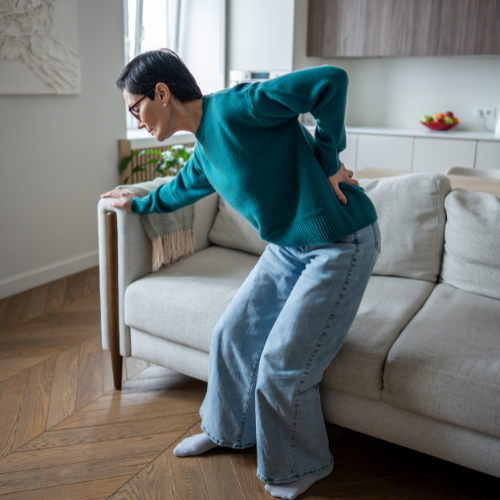
The good news is that in many cases, a herniated disc can heal without surgery. The body has remarkable self-healing abilities. Protruding disc tissue can be partially reabsorbed over time, inflammatory reactions subside, and irritated nerves can recover. At the same time, healing does not mean simply waiting it out. It is crucial to actively support the healing process and neither to rest the back indefinitely nor to overload it again too soon.
Recovery from a herniated disc rarely begins with a dramatic moment. It usually starts much more gradually: the pain becomes less intense, the tingling in your leg occurs less often, it becomes easier to stand up, or you can walk a little longer without having to take a break.
At ROC Ortho, we manage herniated discs through thorough diagnostics and a personalized treatment plan. In doing so, we consider not only the MRI results but, above all, your symptoms, your range of motion, neurological findings, and your personal goals. After all, not every herniated disc causes the same symptoms—and not every patient requires the same treatment.
In this guide, you'll learn:
- how the body heals itself after a herniated disc,
- how long it can take to recover from a herniated disc,
- which symptoms of a herniated disc are part of the normal healing process,
- When warning signs indicate the need for prompt medical evaluation,
- how a herniated disc can be treated without surgery and
- How we at ROC Ortho support you on your journey back to everyday life, work, and sports.
Recovery from a herniated disc means more than just less pain
A herniated disc occurs when disc tissue protrudes from the interior of the disc and irritates or compresses nearby nerves. This most commonly affects the lumbar spine (LS) and, less frequently, the cervical spine (CS). Many people assume that pressure on the nerve is the sole cause of the pain. In fact, however, inflammatory reactions around the nerve root also play a crucial role.
That is why an MRI can show what a herniated disc looks like, but it does not always explain why some people experience severe symptoms while others hardly notice anything.
For successful treatment of a herniated disc and a smooth recovery, we therefore focus on three key areas:
Mechanics: To what extent are the nerve roots or spinal cord actually compressed?
Inflammation: How severe is the irritation around the affected nerve?
Function: How do the spine, pelvis, hips, and muscles move in everyday life? Are there any compensatory postures or improper loading that further exacerbate the symptoms?
Only when these factors are evaluated together can a complete picture emerge. That is why, at ROC Ortho, we combine an orthopedic examination with modern imaging and a functional analysis. This allows us to develop a personalized treatment plan based not only on the MRI findings but, above all, on your symptoms.
Self-Healing for a Herniated Disc: What the Body Can Do on Its Own
Many people affected by this condition wonder whether a herniated disc can heal on its own. In fact, the body has remarkable self-healing abilities. This is especially true for many herniated discs in the lumbar spine, which can often be treated without surgery. However, this does not mean that the disc will subsequently look exactly the same as it did before the herniation. Rather, the goal of treatment is to relieve pressure on the nerve, reduce inflammation, and significantly alleviate pain, tingling, or numbness.
The body uses various natural processes to achieve this. Immune cells gradually break down the protruding disc tissue. At the same time, this tissue loses fluid and shrinks. This can reduce the pressure on the irritated nerve root. Concurrently, the inflammatory response subsides, and the muscles release the protective tension caused by pain. Many patients do not experience this healing process at a steady pace. Good days and bad days often alternate. Individual flare-ups of pain therefore do not automatically mean a setback. What matters most is the long-term progress: pain radiates less frequently, walking distance increases, movements become easier, and the ability to cope with everyday activities gradually improves.
How long does it take to recover from a herniated disc?
There is no one-size-fits-all answer. The duration of recovery depends, among other things, on the size and location of the herniated disc, whether a nerve root is affected, your overall health, and your occupational and physical demands. Many acute pain symptoms improve within six to twelve weeks. Symptoms such as tingling, numbness, or decreased muscle strength can persist for much longer, as nerve tissue recovers more slowly than muscles or ligaments.
For reference, the healing process can often be divided into four phases:
| Phase | Common Symptoms | Goal of Treatment |
|---|---|---|
| Acute phase: Days 1 through 14 | Severe back or leg pain, compensatory posture, sleep problems | Manage pain, rule out warning signs, and find the right exercise |
| Settling-in Phase: Weeks 2 through 6 | The pain comes and goes; sitting and bending over are difficult | Calm the nerves, increase walking distance, relieve muscle tension |
| Build-up phase: Weeks 6 through 12 | Residual symptoms, uncertainty when exerting oneself | Build Strength, Coordination, and Confidence in Movement |
| Stabilization phase: starting in month 3 | Pain on exertion or recurring irritation | Reduce the Risk of Relapse; Adapt Your Work Environment and Exercise Routine |
How long a herniated disc takes to heal without surgery depends on its location, size, nerve involvement, pain management, sleep, physical activity, and work-related stress. A severe herniated disc does not automatically require surgery. However, it does require closer monitoring.
When Pain from a Herniated Disc Doesn't Go Away
“The pain from a herniated disc won’t go away”—we hear this concern frequently during our office hours. In fact, persistent pain does not automatically mean that treatment for a herniated disc has failed. Often, other factors play a role in addition to the irritated nerve root.
Chronic pain alters movement patterns. Many people unconsciously adopt a protective posture; the gluteal and back muscles tense up, the hip loses mobility, and the body develops new compensatory movements. As a result, a second pain mechanism often develops alongside the original nerve irritation.
That is why at ROC Ortho, we look not only at the herniated disc itself, but at the entire musculoskeletal system. If symptoms persist, we examine, among other things:
- Do the MRI findings actually correspond to the pain history, reflexes, muscle strength, and sensation?
- Is the herniated disc irritating the nerve root, or is there also spinal canal stenosis or foraminal stenosis?
- Do the facet joints, sacroiliac joint, hip, or tense muscles exacerbate the symptoms?
- Do lack of sleep, stress, lack of exercise, or putting weight on the body too soon slow down recovery from a herniated disc?
Depending on the findings, we may supplement the examination with an ultrasound, modern imaging, or our open MRI in Aschheim. Patients with claustrophobia or severe pain in particular often benefit from this examination option.
Speeding Up Recovery from a Herniated Disc: What You Can Do on Your Own
Many people are looking for a “secret remedy for a herniated disc.” However, there is no single trick. The key is the right combination of exercise, managing physical strain, and therapy.
Taking it too easy often leads to a further decline in muscle strength and stability. On the other hand, resuming activity too soon or exercising too intensely can irritate the affected nerve root again. The goal, therefore, is to engage in controlled activity that supports the healing process.
In the early stages, we often recommend:
- short, regular walks
- Frequent changes in position instead of sitting for long periods
- Positions that relieve pressure
- Heat for Muscle Tension
- Everyday physical activity within one's personal exercise limits
On the other hand, sitting for long periods, heavy lifting with a rounded back, jerky movements, or straining under heavy loads can make the symptoms worse.
At ROC Ortho, we follow a clear, step-by-step approach:
- Reduce pain and inflammatory reactions.
- Improve nerve mobility.
- Build core, gluteal, and leg muscles in a targeted way.
- Preparing to return to daily life, work, and sports.
Working closely with our physical therapy team, we tailor each exercise to your recovery process. Our goal isn’t to do as much exercise as possible, but to do the right exercise at the right time.
Diagnostics at ROC Ortho: Why an MRI Alone Is Not Enough
An MRI provides important information about intervertebral discs, nerve roots, and the spinal canal. However, the images alone are not sufficient for successful treatment of a herniated disc.
That is why, during every examination, we ask ourselves the following questions, among others:
- Where exactly does the pain radiate to?
- Which movements make the symptoms worse or better?
- Is there muscle weakness or a sensory disturbance?
- Have reflexes changed?
- Do the symptoms and MRI findings actually match?
Only when we piece this information together do we get the full picture. A large herniated disc can cause surprisingly few symptoms. Conversely, even a small herniation in an unfavorable location can trigger significant nerve pain.
Depending on the specific issue, we at ROC Ortho combine orthopedic examinations with neurological function tests, ultrasound, 4D spinal imaging, open MRI, or—in cases of unclear nerve damage—EMG diagnostics.
Treating a Herniated Disc Without Surgery: Conservative Means Active
Many patients equate conservative treatment with a “wait-and-see” approach. In fact, the opposite is true. Successful non-surgical treatment of a herniated disc actively supports the healing process and pursues clear goals: reducing pain, alleviating inflammation, maintaining mobility, building muscle strength, and preventing relapses.
Depending on the diagnosis, we at ROC Ortho combine various conservative treatment approaches, including:
- personalized pain management
- manual medicine
- targeted physical therapy
- medical exercise therapy
- Image-guided injections
- Other conservative treatments for spinal conditions
If an irritated nerve root is causing the symptoms, image-guided periradicular therapy (PRT) may be appropriate. In this procedure, medication is delivered directly to the affected nerve root to reduce the inflammatory response.
It is important to note that such procedures are no substitute for active rehabilitation. However, they can create a therapeutic window of opportunity during which movement, sleep, and muscle strengthening become possible again. This is often the crucial step toward a successful recovery from a herniated disc.
Cervical Disc Herniation: Treatment of the Cervical Spine
The healing process for a herniated disc in the cervical spine generally follows the same biological processes as in the lumbar spine. However, the symptoms often differ significantly.
Typical symptoms include pain that radiates from the neck to the shoulder, arm, or hand. Tingling, numbness, or reduced grip strength may also indicate an irritated nerve root. Some people also describe a tingling sensation when they move their head in certain ways.
At ROC Ortho, we pay special attention to whether the spinal cord might be affected in addition to a nerve root. Warning signs such as unsteady gait, impaired fine motor skills, bilateral symptoms, or bladder and bowel problems must be evaluated by a doctor as soon as possible.
If there are no such warning signs, a cervical disc herniation can often be treated conservatively at first. Careful diagnosis is crucial to distinguish functional symptoms from true nerve compression and to initiate the appropriate treatment.
Herniated Disc: How Long Will You Be Unable to Work?
How long you will be unable to work after a herniated disc does not depend solely on the MRI results. The most important factor is the physical demands your job places on your back.
People who work primarily at a desk and can change positions regularly often return to work sooner than those who do heavy lifting or carrying on a daily basis or work on construction sites.
The following factors also influence the duration of sick leave:
- Severity of pain
- neurological deficits
- Physical Strain at Work
- necessary pain medication
- Agility and Resilience
- individual healing process
For us, returning to work is already part of the healing process for a herniated disc. That’s why we’ll work with you to discuss how to gradually rebuild your daily work routine and workload. Ergonomic adjustments, regular changes in posture, and a gradual return to work often help prevent relapses.
When Surgery May Be Necessary for a Herniated Disc
Most patients would prefer to avoid surgery. In many cases, that is possible. However, there are situations in which surgery may be medically advisable or even urgently necessary.
Seek immediate medical attention if:
- new-onset paralysis in the arm or leg
- a weakness in the foot lift
- Numbness in the genital or perineal area
- Bladder or Bowel Disorders
- rapidly progressing neurological deficits
- severe back pain following an accident or accompanied by a fever or unexplained weight loss
If these warning signs are not present, there is usually time to make a well-considered decision regarding treatment. At ROC Ortho, we first explore all conservative treatment options. At the same time, we provide you with honest advice if surgery might be the better option due to persistent nerve pain, increasing muscle weakness, or a lack of response to treatment.
Regenerative Medicine: What Role Does It Play in a Herniated Disc?
At ROC Regenerative Center, we combine traditional orthopedics with modern regenerative therapies. However, especially in the case of a herniated disc, it is important to make a realistic assessment.
Treatment for a herniated disc is primarily based on relieving pressure on the irritated nerve root, reducing inflammation, and restoring spinal function. Regenerative procedures, therefore, are no substitute for either a thorough diagnostic evaluation or targeted conservative therapy.
However, depending on the accompanying findings, regenerative treatments may be appropriate—for example, in cases of additional joint or tendon problems that affect the healing process. We always evaluate whether such a treatment is an option on a case-by-case basis, based on your overall medical findings.
Your Next Step Toward Healing a Herniated Disc
If you experience persistent pain radiating down your leg or arm, if numbness persists, or if you're unsure whether surgery is necessary, a second orthopedic evaluation may be helpful.
If possible, please bring any available MRI images, medical reports, and a summary of your previous treatments to your appointment. It is also helpful if you make a note of,
- when the symptoms began,
- where the pain radiates to,
- whether there is tingling or loss of strength,
- which movements make the symptoms worse or better.
At ROC Ortho, we don't just look at your MRI results. We assess how far along the healing process for your herniated disc is, which factors are influencing that process, and which treatment seems most appropriate for your specific situation.
Our goal is to reduce pain, restore mobility, and guide you safely back to your daily life, work, and sports.
The Medical Team

Dr. med. Daniel Filesch
Specialist in orthopaedics and trauma surgery

Martina Berger
Doctor for regenerative orthopaedic procedures

Dr. med. Edan Manos
Doctor for regenerative orthopaedic procedures

Patrick Heine
Specialist in orthopaedics and trauma surgery
Modern office space


ROC Ortho
Private Orthopedic Practice
St.-Emmeram-Str. 5
85609 Aschheim
Email: praxis@roc-ortho.de
Phone: +49 89 46259930
Opening hours
| Monday | 7:30 a.m. – 6:00 p.m. |
| Tuesday | 7:30 a.m. – 6:00 p.m. |
| Wednesday | 7:30 a.m. – 8:00 p.m. |
| Thursday | 7:30 a.m. – 6:00 p.m. |
| Friday | 7:30 a.m. – 2:00 p.m. |