
Guide | June 16, 2026
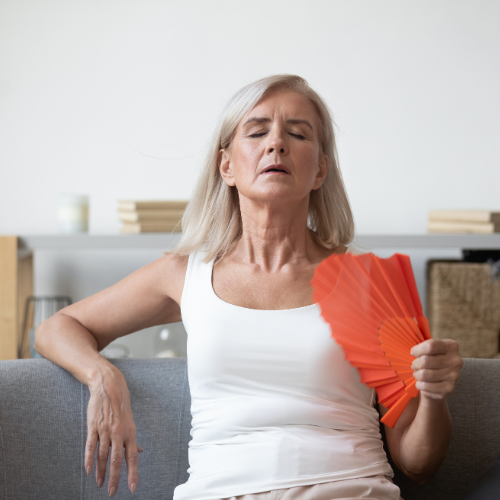
Menopause affects hormones, sleep, skin, joints, energy levels, and sexuality. Many women notice the first signs earlier than expected—and initially misinterpret them.
This article provides a medical overview of menopause symptoms, describes typical and lesser-known signs, explains the different stages, and indicates when it is advisable to seek medical evaluation.
At the gynecological clinic ROC gyne in Aschheim near Munich, we often encounter the same scenario: A patient comes in complaining of fatigue, restless sleep, hot flashes, heart palpitations, or new joint pain. She attributes these symptoms to stress or aging. After a thorough medical history, it becomes clear that the symptoms are consistent with the hormonal changes associated with midlife. Dr. Sarah Matz, a gynecologist at ROC gyne and a member of the German Menopause Society (Deutsche Menopausengesellschaft e.V.), supports women through precisely these phases—from the first changes in their menstrual cycle well into postmenopause.
Menopause—medically known as the climacteric—refers to the transition from the fertile phase of life to the period following the last menstrual period. The ovaries produce progressively less estrogen and progesterone. The menstrual cycle loses its regular rhythm, ovulation becomes increasingly irregular, and menstrual bleeding occurs at varying intervals.
Many women expect a clear turning point: first a regular cycle, then symptoms, and finally menopause. In reality, this transition occurs in waves. One month feels almost normal, while the next brings sleep problems, breast tenderness, irritability, or hot flashes—without any obvious trigger.
An Overview of Key Terms:
The following overview lists common symptoms and their hormonal causes. Individual symptoms alone do not necessarily indicate a hormonal cause—patterns, timing, and personal history are key factors.
| Complaints Section | Common Signs | Possible explanation |
|---|---|---|
| Temperature Control | Hot flashes, night sweats, sudden blushing | The brain is more sensitive to temperature fluctuations |
| Sleep and Energy | Difficulty falling asleep and staying asleep, fatigue, decreased performance | Hormonal fluctuations, night sweats, and changes in stress responses are all interconnected |
| Mental State and Concentration | Irritability, low moods, restlessness, “brain fog” | Estrogens affect neurotransmitters, sleep quality, and stress response |
| Joints and Muscles | Morning stiffness, diffuse pain, tendon irritation | Connective tissue, inflammatory processes, and regeneration change in response to hormonal changes |
| Skin and Mucous Membranes | Dry skin, itching, vaginal dryness, pain during sex | Estrogen deficiency reduces moisture, elasticity, and blood flow |
| Metabolism | Weight gain around the abdomen, changes in blood lipid levels, food cravings | Changes in muscle mass, insulin sensitivity, and energy expenditure |
Hot flashes are among the most well-known symptoms of menopause. Many women describe a sudden rush of heat rising from their chest or neck toward their face: their pulse quickens, their skin reddens, and they break out in a sweat—sometimes followed by chills after a few minutes.
Night sweats are a different kind of problem. They interrupt sleep, soak through clothes or bedding, and sap your energy for the next day. Anyone who sleeps poorly for several nights in a row will feel irritable, have trouble concentrating, and experience physical exhaustion during the day—a cycle that can easily spiral out of control.
When a medical evaluation is important: Fever, unexplained weight loss, new-onset severe palpitations, or episodes of sweating not related to hormonal changes should be evaluated promptly. Thyroid issues, infections, medications, blood sugar levels, and cardiovascular diseases can all cause similar symptoms.
Many female patients report not only sleeping less, but also experiencing a different quality of sleep. They wake up around three or four in the morning, are unable to fall back asleep, their heart rate remains elevated, and their thoughts keep racing—even though their bodies need rest.
Menopause affects sleep in several ways: Hot flashes interrupt deep sleep phases, progesterone levels drop, and the stress response becomes more sensitive. In addition, this stage of life often coincides with significant responsibilities—work, family, caring for parents, and one’s own health.
A thorough evaluation, therefore, considers more than just hormones. Sleep patterns, alcohol, thyroid function, iron levels, vitamin D, blood sugar, medications, and stress management are all taken into account.
Joint pain often takes many women by surprise during menopause. Women who exercise and eat a balanced diet don’t expect to experience morning stiffness in their fingers or unexplained knee pain—without any obvious injury.
Estrogens have effects that extend far beyond the menstrual cycle and the mucous membranes. They influence connective tissue, cartilage metabolism, pain processing, and the body’s susceptibility to inflammation. Declining levels can reveal existing vulnerabilities: old sports injuries, minor strain, or early-stage osteoarthritis become more noticeable during this phase.
It is important to conduct a thorough examination to ensure that hormonal factors are not mistaken for structural damage. The orthopedics department at the ROC combines orthopedic diagnostics with a regenerative approach to tissue, stress, and inflammation.
Perimenopause often begins without any noticeable symptoms. Menstrual cycles continue, but their nature changes: periods may become heavier or shorter, PMS symptoms may worsen, breast tenderness may last longer, and migraines may start or become more severe. Some women describe the second half of their cycle as a time when they “don’t feel like themselves anymore.”
People who are heavily burdened by their jobs often attribute these symptoms to lack of sleep or mental stress. That’s an obvious explanation—but it doesn’t fully account for the issue if the symptoms occur cyclically or worsen over the course of months.
Tip: Keep a symptom diary for three months. Note any bleeding, sleep patterns, hot flashes, mood changes, pain, libido, exercise, and periods of particular stress. This pattern provides more insight during a doctor’s appointment than a single lab result. Changes sometimes take more time. The goal is always to achieve a more even complexion while treating the skin as gently as possible.
Medical professionals use models that differ slightly from one another. For practical guidance, the following classification has proven useful:
These phases are a roadmap, not a rigid framework. Some women experience hardly any symptoms. Others feel affected for years. Both are possible.
Many people start noticing their first age spots around age 40. When pigment spots actually appear depends on... Searches related to menopause and sexuality are often driven by shame, frustration, and unspoken questions. Declining estrogen levels make the vaginal lining drier, more sensitive, and more vulnerable. Sex can cause a burning sensation or pain. Bladder problems or persistent soreness occur more frequently.
However, libido does not depend solely on hormone levels. Sleep, relationships, body image, medications, stress, and musculoskeletal pain all play a role. A woman who sweats at night, works exhaustingly during the day, and suffers from back pain in the evening naturally experiences her sexuality differently than she did ten years ago.
Good medical care addresses these issues openly. Depending on the findings, local therapies, pelvic floor medicine, lubricants, hormonal and non-hormonal options, and regenerative procedures can all be helpful. When treating symptoms during perimenopause and postmenopause, Dr. Sarah Matz and the team at ROC gyne also take into account the pelvic floor, sexual dysfunction, and changes in the mucous membranes—all within an atmosphere where these topics are welcomed and discussed openly.
During menopause, many women’s skin loses moisture and elasticity. Fine lines become more visible, itching increases, and wound healing and the skin’s barrier function change. Some patients report acne flare-ups, rosacea, or increased pigmentation.
Hair is also sensitive to hormonal changes, nutrient deficiencies, and thyroid disorders. Diffuse hair loss requires a thorough evaluation: ferritin levels, thyroid function, signs of inflammation, medications, stress levels, and overall hormonal status are all factors to consider.
Many women are looking for a reliable test that provides clarity. However, a single blood test result is rarely sufficient: FSH, estradiol, and progesterone fluctuate significantly during perimenopause—a result may be abnormal today but look completely different in the next cycle.
For women in their mid-40s and older, changes in the menstrual cycle and typical symptoms often provide more insight than a lab test alone. Lab tests are still useful, however, if symptoms appear early, bleeding is unusual, a thyroid disorder is suspected, or other causes need to be ruled out.
At ROC, we use diagnostic tools in a targeted manner: medical history, gynecological examination, ultrasound, laboratory tests, metabolic values, and—depending on the patient’s symptoms—orthopedic or dermatological evaluation.
The options range from locally acting preparations to nonhormonal medications and menopausal hormone therapy. The most appropriate treatment depends on symptoms, age, time since menopause, pre-existing conditions, family history, and personal goals.
Hormone therapy can significantly alleviate hot flashes, night sweats, sleep disturbances, and urogenital symptoms. However, it is not suitable for every woman. A history of breast cancer, risk of thrombosis, liver disease, unexplained bleeding, and certain cardiovascular conditions require a particularly careful assessment of the benefits and risks.
Non-hormonal strategies nevertheless have their place: strength training, dietary adjustments, sleep medicine, pelvic floor therapy, local mucosal care, and targeted medications for vasomotor symptoms. Herbal supplements can help some women—but they are no substitute for a medical evaluation in cases of severe or newly onset symptoms.
After menopause, there is a greater focus on the long-term protection of bones, muscles, and the cardiovascular system. Since estrogen supports bone metabolism, a sustained decline in estrogen levels—combined with a genetic predisposition—increases the risk of osteopenia and osteoporosis.
A bone density test is particularly recommended in cases of familial osteoporosis, early menopause, long-term corticosteroid use, low body weight, fractures without significant trauma, or chronic illnesses.
Strength training is one of the most effective activities during this stage of life. Two to three structured sessions per week improve body composition, insulin sensitivity, joint stability, and fall prevention. Endurance training promotes cardiovascular health and helps reduce stress. Flexibility and balance ensure the quality of movement in everyday life.
Not every symptom that occurs after age 45 has a hormonal cause. It is important to make this distinction. Heavy bleeding, postmenopausal bleeding, new breast changes, persistent lower abdominal pain, unexplained weight loss, shortness of breath, chest pain, or neurological deficits require prompt medical evaluation.
Mental health issues also deserve careful attention. Low mood, anxiety, irritability, and exhaustion can be exacerbated by hormonal imbalances—but they can also be signs of depression, burnout, a thyroid disorder, or a nutrient deficiency. If you focus solely on hormones, you may overlook causes that are treatable.
Don't start with ten resolutions. Choose two areas that have the greatest impact on your symptoms—and stick to them.
If joint pain is limiting your training, it’s worth getting an orthopedic evaluation. For osteoarthritis, the ROC offers, among other things, regenerative treatments such as autologous blood therapy with PRP, provided that the diagnosis and treatment goals are appropriate.
Menopause does not call for a one-size-fits-all approach. A 44-year-old woman with sleep disturbances, irregular periods, and migraines needs a different strategy than a 58-year-old patient with vaginal dryness, a risk of osteoporosis, and knee pain.
As a gynecologist at ROC gyne, Dr. Sarah Matz supports women through all phases of hormonal changes—with a focus on menopause and drawing on her expertise as a member of the German Menopause Society (Deutsche Menopausengesellschaft e.V.). In practice, this focus means: following current guidelines, conducting a nuanced risk-benefit assessment for hormone therapy, and looking beyond individual symptoms to understand their underlying causes.
At the ROC Regenerative Center in Aschheim, we take a holistic approach to treating symptoms, considering them in the context of gynecological health, metabolism, bones, joints, skin, stress regulation, and physical performance. Gynecology, orthopedics, dermatology, and physical therapy work hand in hand—because the body, metabolism, mind, and tissues rarely respond in isolation.
If you notice symptoms of menopause, please bring a brief list of your symptoms, any available lab results, your medication schedule, and details about your menstrual bleeding to your appointment. This will help us quickly get a clear picture of your condition based on your individual symptoms.
Schedule a consultation at the ROC in Aschheim if your symptoms are noticeably affecting your sleep, performance, sexual health, joint health, or quality of life. You can find information on the location and how to get there under “Directions to the ROC Regenerative Center.”