Guide | August 4, 2026
ROC Laboratory in Aschheim: Research, Diagnostics, and Regenerative Medicine Under One Roof
Many of the innovative treatments offered by the Regenerative Center (ROC) in Aschheim have their origins in the center’s own ROC Laboratory. As the ROC’s scientific hub, the laboratory forms the foundation for modern diagnostics, regenerative therapies, and evidence-based patient care. Patients are supported before, during, and after their treatment through precise laboratory analyses and scientifically sound procedures.
The ROC Laboratory in Aschheim combines two closely interlinked areas: medical laboratory diagnostics, which provides precise laboratory analyses for diagnosis, treatment planning, and monitoring of treatment progress, and the Laboratory for Regenerative Biology, which translates scientific findings into innovative regenerative therapies. Through close collaboration between physicians, biologists, and laboratory experts, individualized treatment plans are developed that combine scientific precision with modern patient care.
Two laboratories—one common goal
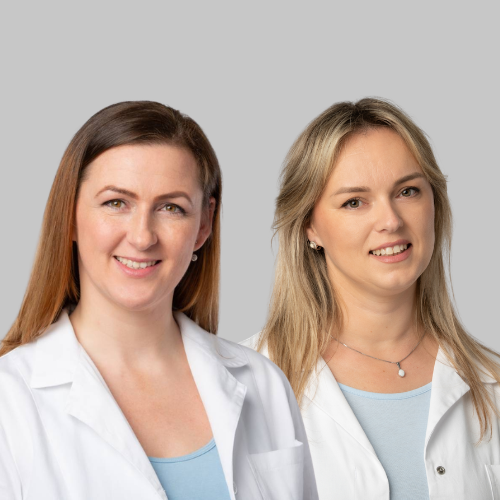
The diagnostic laboratory, led by Jasna Vizintin, lays the foundation for well-informed medical decisions. Modern diagnostics support preventive care, treatment planning, and monitoring of patient progress, and enable a rapid, individualized assessment of a patient’s health status. This department is complemented by modern point-of-care diagnostics, which allow selected laboratory parameters to be determined directly at the ROC in Aschheim within a few minutes. This ensures that important results are available without long wait times and are immediately incorporated into treatment.
The Laboratory for Regenerative Biology forms the scientific core of regenerative medicine at the ROC. Here, autologous biological products are processed and quality-assured for therapeutic applications. At the same time, the team works continuously to further develop regenerative procedures, evaluate them scientifically, and responsibly translate new findings into clinical practice. Research and patient care are directly intertwined in this process.
Regenerative Medicine Based on Scientific Principles
A particular focus of the Laboratory for Regenerative Biology is the production and quality control of autologous biological therapies. This involves using the patients’ own cells and tissues to specifically support natural regenerative processes. The range of regenerative treatments includes, among others, platelet-rich plasma (PRP), microfragmented adipose tissue (MFAT), the stromal vascular fraction (SVF), and cartilage-based micrograft therapies. In addition, cell viability and other quality parameters are monitored to ensure consistently high quality and safety of the processed biological products.
Research, Quality, and Innovation at the ROC Laboratory
The ROC Laboratory sees itself not only as a diagnostic facility but also as an active contributor to the scientific advancement of regenerative medicine. Its focus is on the continuous optimization of autologous therapeutic procedures, the scientific evaluation of new technologies, and the development of innovative laboratory processes. Another key focus is the implementation of standardized quality control procedures to ensure the high quality, reproducibility, and safety of regenerative therapies over the long term. In addition, the laboratory is working on strategies for the cryopreservation of biological materials and regenerative cell products and maintains regular contact with internationally recognized experts. In this way, the latest scientific findings are continuously incorporated into research and clinical practice.
“What makes us unique is the close collaboration between physicians, biologists, and laboratory experts. This allows us to translate scientific findings directly into patient care and offer regenerative therapies based on the continuous optimization of quality and patient safety. At the same time, we view the laboratory as a place for research and further development—particularly in the field of stem cell-based and cell-supported therapies,” says Szilvia Ruszkai-Szaniszló, Head of the Laboratory for Regenerative Biology and Director of Translational Science at the ROC in Aschheim.
Diagnostics as the Basis for Individualized Treatments
The ROC Laboratory supports all medical departments at the ROC in Aschheim with a comprehensive range of diagnostic and regenerative services. While the Laboratory for Regenerative Biology processes patients’ own biological samples for therapeutic applications, the Diagnostic Laboratory provides the foundation for precise diagnostics and individualized treatment decisions.
For ROC Ortho, this includes, among other things, the analysis of blood-based biomarkers for treatment planning, as well as state-of-the-art multiplex PCR diagnostics for joint infections based on synovial fluid. In the ROC Gyne division, laboratory tests of thyroid function, vitamin D and iron metabolism, and other blood parameters support gynecological diagnosis and treatment. In addition, specialized rapid tests are used for screening and early detection. ROC Derma offers comprehensive allergy testing as well as microbiological and molecular diagnostic methods for fungal diagnosis. The close integration of diagnostics, scientific expertise, and clinical application results in personalized treatment plans that are optimally tailored to the needs of patients.
The ROC Lab: The Heart of the ROC in Aschheim
The direct integration of both laboratory areas into the ROC in Aschheim offers patients numerous benefits. Diagnostic results are available quickly, biological samples can be processed and tested directly on site under controlled conditions, and communication between the laboratory and the treating specialists takes place without any delays. This results in streamlined workflows, high process reliability, and personalized treatment strategies based on scientific evidence and objective data.
With its diagnostic laboratory and the Laboratory for Regenerative Biology, the ROC Laboratory underscores its commitment to closely integrating medical innovation, scientific excellence, and patient-centered care. Where diagnostics, research, and clinical experience converge, the foundations are laid for regenerative medicine that is consistently tailored to the individual needs of patients.