Treating a Meniscus Tear Without Surgery: Meniscus Adhesion

For many people affected by a meniscus tear, the initial concern is that they will need to undergo major arthroscopic knee surgery. At the Regenerative Center (ROC) in Aschheim near Munich, we assess whether treatment is possible without traditional knee surgery—for example, through minimally invasive meniscus refixation using tissue adhesive. This method is also known as meniscus gluing or meniscus repair.
We conduct the evaluation right here in our office, using, among other things, the open MRI scanner at the ROC. This allows us to assess the location, shape, and extent of the tear and work with you to decide which treatment is best for your knee.
The focus here is on preserving the patient’s own meniscus tissue. Not every meniscus tear requires the same treatment. That’s why we first determine the type of tear, the symptoms it causes, and whether minimally invasive refixation could be a suitable alternative to traditional knee surgery in your specific case. Whether a meniscus tear can be treated without surgery depends primarily on the type of tear, the quality of the tissue, and the stability of the knee joint.

Minimally invasive
Treatment performed through a small incision under local anesthesia instead of traditional arthroscopic knee surgery.
Focus on Meniscus Preservation
For suitable tears, existing meniscus tissue should be stabilized and preserved as much as possible.

Diagnosis and Treatment
Orthopedic examinations, open MRI scans, treatment, and physical therapy can all be coordinated at the ROC.
Minimally Invasive Treatment for a Meniscus Tear Without Traditional Surgery
At ROC, we always first assess whether major surgery can be avoided. If the findings are appropriate, the torn meniscus can be reattached using a fibrin tissue adhesive that is well-established in medicine. The goal is to preserve the patient’s own meniscus tissue and support the natural healing process.
It is important to understand the exact context: When we say “meniscus tear without surgery,” we do not mean that the injury heals on its own, but rather treatment without traditional arthroscopic knee surgery. Meniscus adhesion is not a substitute for every type of meniscus surgery. The key factors are your symptoms, the MRI images, the stability of the knee joint, and whether the tissue can be preserved.
What do we need the meniscus for?
The medial meniscus is located on the inner side of the knee, and the lateral meniscus on the outer side. Both menisci act as shock absorbers: they stabilize the knee joint, distribute pressure evenly, and cushion the impact of walking, climbing stairs, or playing sports.
In addition, the meniscus helps supply the articular cartilage with synovial fluid and nutrients. Preserving as much of the patient’s own meniscus tissue as possible can be important for the long-term durability of the knee joint.
Why It's Important to Preserve the Meniscus
For this reason, the decision regarding treatment is not based solely on reducing current pain. Equally important is the question of whether—and to what extent—functional meniscus tissue can be preserved. This is precisely where meniscus refixation comes into play: If the findings are appropriate, the separated tissue segments are stabilized rather than removing the affected meniscus tissue directly.
However, whether this approach is feasible cannot be determined based on symptoms alone. The shape of the tear, its extent, the condition of the tissue, and the stability of the knee joint must all be evaluated together. Therefore, a thorough orthopedic evaluation is required before any possible meniscus repair can be performed.
What are the symptoms of a meniscus tear?
Typical symptoms include sharp or pulling pain in the knee, swelling, a feeling of stiffness in the joint, and pain when climbing stairs, squatting, or turning. Some people also report snapping or cracking sounds, or the feeling that they cannot fully straighten their knee.
Symptoms may appear suddenly after a twisting motion or develop gradually. Degenerative tears, in particular, often develop gradually and are not always recognized as a meniscus problem at first.
The severity of symptoms associated with a meniscus tear can therefore vary greatly. While pain may occur immediately after an acute twisting motion, symptoms associated with age-related changes sometimes develop only gradually. For this reason, a description of the symptoms alone is not sufficient to determine the appropriate treatment. Whether a meniscus tear can be treated without surgery can therefore only be assessed after a thorough examination and imaging.
How does a meniscus tear occur?
Meniscus tears are among the most common knee injuries in sports. However, they can also occur in everyday life due to a sudden, awkward movement—for example, when the knee twists under heavy strain.
Wear-and-tear-related, or degenerative, tears occur in many people over the course of their lives. They often go unnoticed at first. Pain then develops gradually, particularly in people with knee osteoarthritis.
How is a meniscus tear diagnosed?
The diagnostic process begins with an orthopedic examination at the ROC and a detailed assessment of your symptoms. We can then quickly and easily use the open MRI scanner on our premises to check for a tear—a radiation-free, painless procedure that provides high-quality images.
Open MRI is particularly helpful when symptoms are unclear or when it is necessary to distinguish between a recent injury, degenerative changes, and associated findings.
For further treatment, it is particularly important not to consider the meniscus tear in isolation. Symptoms, clinical examination, and MRI findings are evaluated together. Based on this, it is possible to assess whether conservative measures are sufficient at first, whether meniscus repair is an option, or whether another approach is medically more appropriate. The MRI thus provides an important basis for deciding whether the meniscus tear can be treated without surgery, specifically through a traditional arthroscopic procedure.
Who is a good candidate for meniscus repair?
Minimally invasive meniscus repair using tissue adhesive is primarily an option when the meniscus can be preserved and major knee surgery should be avoided. This method may be appropriate, for example, in cases of:
- fresh or clearly defined cracks,
- Meniscus tissue that can still be stabilized,
- Symptoms that persist despite conservative treatments such as physical therapy or pain management,
- the desire to avoid meniscus suturing or partial meniscus removal whenever possible.
Whether treatment is appropriate in your case can only be determined after an examination and imaging tests.
Therefore, the diagnosis of “meniscus tear” alone is not the deciding factor. Two findings that sound similar may have different requirements for reattachment. At ROC, we therefore assess on a case-by-case basis whether the existing tissue can be stabilized and whether meniscus adhesion is appropriate for your specific situation. Non-surgical treatment for a meniscus tear is therefore not an option for every case.
When can a meniscus tear be treated without surgery?
Not every tear requires arthroscopic surgery. At the ROC, we try to avoid surgery whenever a less invasive approach is medically justifiable. That is why, among other things, we specialize in the refixation of meniscal tears using fibrin tissue adhesive.
Under continuous MRI guidance, the affected area is treated in a targeted manner. The procedure is minimally invasive to minimize stress on the surrounding tissue and allow healing to proceed undisturbed.
Meniscus Adhesion Instead of Traditional Knee Surgery
The term “meniscus tear without surgery” can easily be misunderstood. Meniscus repair is also a medical procedure. The main difference is that it does not involve traditional arthroscopic knee surgery. The treatment is performed using a minimally invasive technique under local anesthesia and with MRI guidance.
The goal is not to treat every meniscus tear this way. The method is intended for specific cases where reattachment of the existing tissue appears feasible. We will therefore discuss which treatment is appropriate in the long term only after conducting an examination and evaluating the imaging results.
Procedure of the minimally invasive procedure
The procedure is performed under local anesthesia. As a result, many patients find the treatment easy to tolerate. Under MRI guidance, meniscus and tendon lesions are reattached using tissue adhesive via a minimally invasive technique.
This rejoins the separated tissue sections, allowing them to heal undisturbed. The adhesive stabilizes the torn meniscus, so that—based on the doctor’s assessment—the knee can often be weight-bearing again early on in daily life. You should avoid sports activities as well as twisting, jumping, and impact movements at first.
After treatment, you will receive clear recommendations regarding behavior and movement. During follow-up appointments, we will monitor your progress and adjust your treatment plan as needed.
If a meniscus tear can be treated in this way without surgery, the reattachment is carefully planned, and the subsequent load is adjusted to the individual’s healing process.
How long does it take to heal after meniscus repair?
For many patients, the treated tear has stabilized enough after about six weeks that the level of activity can be gradually increased, including targeted muscle strengthening and initial sports activities.
The actual healing time depends on the extent of the tear, any accompanying injuries, your initial physical condition, and your post-treatment care. For this reason, we determine the gradual resumption of physical activity on an individual basis.
Therefore, it is not just a matter of a fixed timeframe. The level of stress the knee can handle and the timing of a return to sports depend on the individual healing process. During follow-up appointments, we assess how the knee is progressing and determine when the load on it can be increased further. Even after treatment of a meniscus tear without surgery, the individual findings therefore determine when daily activities, training, and sports can be fully resumed.
Support through physiotherapy
Through targeted physical therapy at the ROC and a customized muscle-building program, you can significantly support recovery after refixation. It is important to stabilize the knee without overloading the healing meniscus too early with twisting, jumping, or impact forces.
We will issue the prescription for you and work with you to schedule appointments with our experienced in-house physical therapy team.
By combining orthopedic treatment and physical therapy, diagnosis, follow-up care, and gradual increase in activity levels can be coordinated. The goal is a controlled transition from initial everyday activities to targeted muscle strengthening and, later—depending on the healing process—back to athletic activities.
Cost of Meniscus Repair
You will receive an overview of the estimated treatment costs during your personal consultation and, upon request, in the form of a transparent cost breakdown. Whether and to what extent your insurance will cover the costs depends on your plan and your individual situation.
We will discuss the costs with you in advance in a transparent manner so that you can assess the treatment from both a medical and organizational perspective.
The Benefits at a Glance
- An outpatient procedure without general anesthesia and without traditional knee surgery
- A Minimally Invasive Alternative to Meniscus Suturing or Partial Meniscus Resection
- Use of a fibrin tissue adhesive established in the medical field
- Preservation of the patient's own meniscus tissue without an implant
- It's often possible to resume daily life early on
- A combination of diagnostics, procedures, and physical therapy at the ROC
Meniscus Tear Treated Without Surgery at ROC Aschheim Near Munich
At the ROC in Aschheim near Munich, we combine orthopedic examinations with imaging using an open MRI and—for eligible patients—minimally invasive meniscus repair. This allows us to coordinate the diagnosis, treatment plan, and follow-up care in a structured manner.
Accurate diagnosis is crucial, especially when determining whether a meniscus tear can be treated without traditional surgery. Only once the location and extent of the tear, as well as the condition of the meniscus, are known can it be determined whether meniscus repair is an appropriate treatment option.
For patients seeking treatment for a meniscus tear without surgery, the ROC combines the necessary diagnostics, potential repair, and subsequent follow-up care all in one location.

Orthopedic Specialists
Diagnosis and treatment decisions are made following an individualized orthopedic examination.

On-site Open MRI
The necessary imaging can be performed directly at the ROC and incorporated into the treatment plan.
Minimally Invasive Approach
When the findings are appropriate, the focus is on preserving the meniscus tissue without traditional knee surgery.

In-House Physical Therapy
Follow-up care and muscle-building exercises can be coordinated with the physical therapy team at the ROC.
Our experienced team of doctors

Dr. med. Daniel Filesch
Specialist in orthopaedics and trauma surgery

Martina Berger
Doctor for regenerative orthopaedic procedures

Dr. med. Edan Manos
Doctor for regenerative orthopaedic procedures

Patrick Heine
Specialist in orthopaedics and trauma surgery
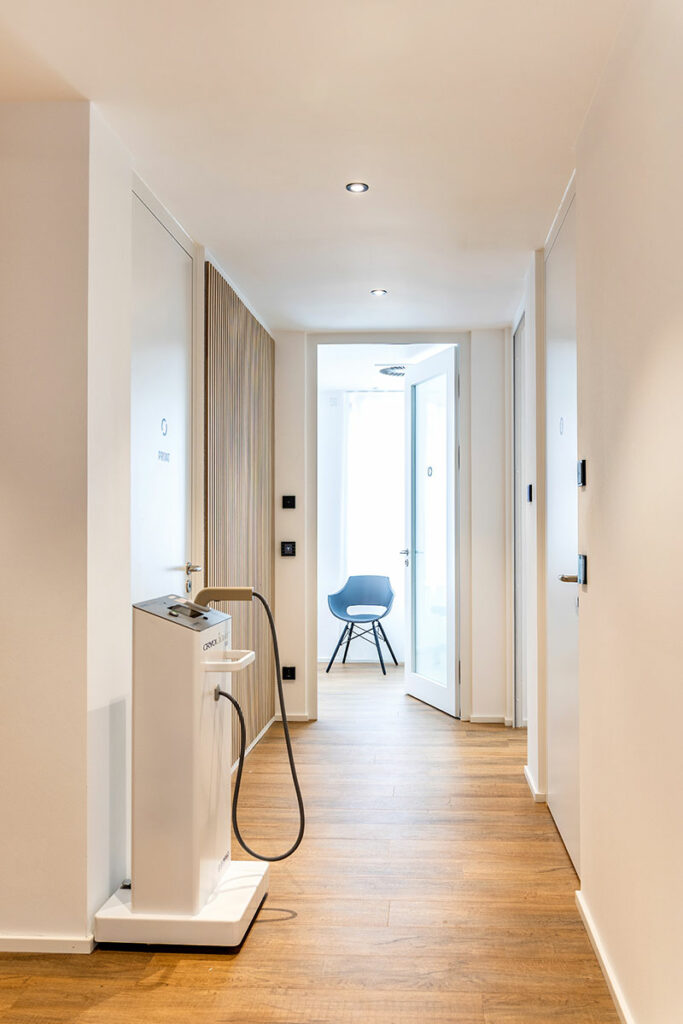
Modern medical offices in Aschheim, near Munich


Consultation Appointment at ROC Aschheim
Please feel free to schedule a consultation at our office to determine whether meniscus repair is an option for you. We will assess your symptoms, review your MRI images, and discuss with you which treatment is medically appropriate for your case.
This will allow us to determine specifically whether, based on your findings, non-surgical treatment of your meniscus tear—in the form of a traditional arthroscopic knee surgery—is a viable option.
For information on the practice's location, see " Directions to ROC Aschheim."
Frequently Asked Questions About Meniscus Tears Without Surgery
What does “meniscus tear without surgery” mean at ROC?
Can I walk and work normally with a torn meniscus?
When can I resume playing sports after meniscus repair surgery?
Is every meniscus tear suitable for meniscus repair?
Why is an MRI performed before treatment?
What are the risks associated with treatment using tissue adhesive?
Does health insurance cover the costs?
Would you like to find out if your meniscus tear is a candidate for minimally invasive meniscus repair? Schedule a consultation at the ROC in Aschheim near Munich. After an examination and MRI evaluation, we’ll discuss with you which treatment options are appropriate for your condition.
ROC Ortho
Private Orthopedic Practice
St.-Emmeram-Str. 5
85609 Aschheim
Email: praxis@roc-ortho.de
Phone: +49 89 46259930
Opening hours
| Monday | 7:30 a.m. – 6:00 p.m. |
| Tuesday | 7:30 a.m. – 6:00 p.m. |
| Wednesday | 7:30 a.m. – 8:00 p.m. |
| Thursday | 7:30 a.m. – 6:00 p.m. |
| Friday | 7:30 a.m. – 3:00 p.m. |