Guide | September 24, 2026
Knee Cartilage Damage: Symptoms, Causes, Treatment
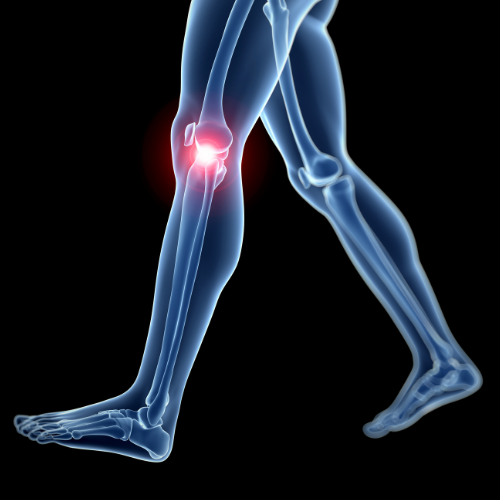
At first glance, “cartilage damage in the knee” sounds like a clear-cut diagnosis. In fact, the term encompasses a wide range of changes—from superficial softening of the cartilage to small tears to deep defects with exposed bone. The causes can also vary widely. Cartilage damage can result from an injury, develop over the course of years due to unfavorable stress patterns, or be part of early-stage or advanced knee osteoarthritis.
Therefore, treatment should not be based solely on the fact that the MRI shows “cartilage damage.” The key factors are questions such as:
- Where is the problem?
- How deep and how big is it?
- Is only one spot affected, or is a larger area around the joint involved?
- What does the bone underneath look like?
- Are the meniscus or ligaments damaged?
- Is there a significant leg alignment abnormality?
- Do you already have osteoarthritis?
- What symptoms does this finding actually cause?
At the ROC Regenerative Center in Aschheim near Munich, we therefore consider not only the articular cartilage but the entire knee. Muscles, menisci, ligaments, leg alignment, joint inflammation, load-bearing patterns, and individual activity goals all work together to determine which treatment may be appropriate for cartilage damage. This guide explains what cartilage damage in the knee means, what the typical symptoms are, how the various degrees of severity are classified, and when conservative or surgical treatments are options.
What is cartilage damage in the knee?
The articular surfaces of the knee are covered with hyaline articular cartilage. This cartilage is found, among other places:
- at the articular surfaces of the femur,
- at the head of the tibia,
- on the back of the kneecap.
Together with synovial fluid, it enables the joint surfaces to glide with as little friction as possible and helps distribute stress across the joint. However, articular cartilage differs significantly from many other tissues in the body. It has no blood supply of its own. The cartilage cells are supplied primarily through synovial fluid or via the exchange of substances within the tissue. As a result, articular cartilage has only a limited capacity for spontaneous regeneration. However, this does not mean that every small instance of cartilage damage will inevitably progress or cause symptoms.
Why Exercise Is Important for Joint Cartilage
Movement creates an alternation between stress and relief on the joint cartilage. This alternation supports the exchange of substances between the cartilage and the synovial fluid. Therefore, completely resting the joint in cases of cartilage damage is not usually a long-term solution. At the same time, it’s important to note that more stress isn’t automatically better. A damaged knee requires a level of stress that is appropriate for the joint’s current condition. The goal of conservative therapy is therefore often to rebuild the joint’s ability to withstand stress without permanently overloading it.
Where does cartilage damage occur in the knee?
Cartilage damage can generally occur on various joint surfaces. Commonly affected areas include, for example:
- inner surface of the knee joint,
- outer joint surface,
- Thigh rollers,
- Back of the kneecap,
- The patella's gliding joint.
The location is relevant to the symptoms and treatment. For example, a small cartilage defect in a heavily loaded area can cause significantly more symptoms than a larger defect in a less stressed region. Associated changes also play a role.
Knee Cartilage Damage: What Are the Typical Symptoms?
Cartilage damage in the knee can present in a variety of ways. Minor changes in the cartilage are sometimes discovered incidentally on an MRI and cause no symptoms at all. Other defects, even when relatively mild, can lead to significant pain or joint irritation. Possible symptoms include:
- Pain caused by physical exertion,
- Pain when climbing stairs,
- Pain after sitting for a long time,
- recurrent swelling,
- Joint effusion,
- Start-up pains,
- A feeling of stiffness,
- limited load-bearing capacity,
- A sensation of friction or grinding,
- Restrictions on movement.
Mechanical symptoms, such as blockages or a sudden sensation of the joint getting stuck, should be investigated more thoroughly. They can occur, for example, in cases of loose bodies, meniscus tears, or other mechanical problems.
Why MRI Findings and Pain Don't Always Match
As with osteoarthritis, the same applies to cartilage damage: The imaging findings alone do not always explain the symptoms. An MRI may reveal a structural defect, but it does not automatically prove that this specific defect is the source of the current pain. The current guidelines for knee osteoarthritis also point out that radiological changes are not always associated with pain or functional impairment in all affected individuals. That is why, at ROC Ortho, we combine imaging with:
- Medical history,
- physical examination,
- Stressful situation,
- Stability,
- Leg axis,
- Meniscus status,
- Muscle strength.
Only then does a clinically meaningful overall picture emerge.
Grade 1 to 4 Knee Cartilage Damage: What Do the Severity Grades Mean?
Cartilage damage is often classified based on its extent. There are various classification systems. One of the best-known systems is the classification developed by the International Cartilage Regeneration & Joint Preservation Society (ICRS). The ICRS distinguishes four degrees of severity, ranging from superficial changes to complete cartilage defects involving the subchondral bone. In simple terms, the classification can be summarized as follows:
| Degree | Explained in simple terms |
|---|---|
| Grade 1 | superficial changes, such as softening or superficial cracks |
| Grade 2 | The defect extends less than halfway through the thickness of the cartilage |
| Grade 3 | Deep cartilage damage extending through more than half the thickness of the cartilage, without complete penetration of the underlying bone |
| Grade 4 | Complete cartilage defect involving or exposing the subchondral bone |
Important: Not every diagnostic report uses the same classification system. Therefore, a “Grade 3 cartilage injury” or “Grade 4” should always be interpreted in the context of the classification system used.
Cartilage Damage or Osteoarthritis: What's the Difference?
These terms are often used interchangeably, but they do not describe exactly the same thing. Cartilage damage can be localized. For example, following a sports injury, a single area of cartilage may be damaged, while the rest of the articular cartilage remains largely intact. Knee osteoarthritis, on the other hand, is a condition that affects the entire joint. In addition to the cartilage, the following may also be involved:
- Bone,
- Synovial membrane,
- Joint capsule,
- Menisci,
- Tapes,
- surrounding muscles.
The S3 guideline describes knee osteoarthritis as a degenerative disease of the entire knee joint involving multiple joint structures. This distinction is very important for treatment.
Causes of Cartilage Damage in the Knee
Cartilage damage can occur suddenly or develop over a longer period of time. Possible causes and contributing factors include:
- Sports injuries,
- direct falls or trauma,
- Meniscus injuries,
- previous cruciate ligament injuries,
- chronic instability,
- Leg Alignment Abnormalities,
- repeated high stress on the joints,
- progressive osteoarthritis,
- certain changes in bone structure.
Often, several factors come together.
Meniscus and Cartilage Damage
Cruciate ligament injury and cartilage damage
Bowlegs, Knock-knees, and Cartilage Damage
Excess Weight and Cartilage Damage
Does exercise cause cartilage damage?
Exercise is not inherently harmful to joint cartilage. Regular physical activity is important for joints, muscles, and overall health. However, situations in which the level of stress on the joints does not match the joints’ ability to withstand that stress can be problematic. Examples include:
- sudden, significant increases in training intensity,
- high stress despite acute joint irritation,
- repeated violations,
- Exercise with severe instability,
- Intense stress combined with poor joint mechanics.
That is why, in cases of cartilage damage, the goal is usually not to “avoid sports,” but rather to manage physical activity wisely.
Diagnosing Knee Cartilage Damage: It's Not Just About the MRI
A thorough diagnosis begins with the question of what symptoms are actually present. We want to know:
- Where is the pain located?
- When will he perform?
- Is your knee swelling?
- Are there any blockages?
- Which movements are restricted?
- What sports are played?
- Have you had any previous knee injuries or surgeries?
This is followed by a physical examination. During the examination, we assess, among other things:
- Mobility,
- Joint effusion,
- Band stability,
- Meniscus signs,
- Patellar tracking,
- Muscle strength,
- Leg axis,
- Gear pattern.
Imaging provides additional information.
X-rays for Cartilage Damage in the Knee
MRI for Cartilage Damage in the Knee
Ultrasound for Knee Cartilage Damage
When should cartilage damage in the knee be evaluated by a doctor?
An orthopedic evaluation is particularly advisable if:
- Knee pain persists for several weeks,
- the knee keeps swelling,
- are increasingly limited in their ability to participate in sports or carry out daily activities,
- Blockages occur,
- the knee will not be able to bear full weight after an injury,
- Rotational movements cause pain,
- cartilage damage has already been diagnosed on an MRI,
- You would like to know if treatment without surgery is possible.
At ROC Ortho in Aschheim, near Munich, we don’t just evaluate the cartilage defect itself. What’s crucial is why the knee is causing symptoms and which structures need to be taken into account during treatment.
Treating Knee Cartilage Damage: What Can Be Done Without Surgery?
Not every case of cartilage damage in the knee requires surgery. Especially in cases of minor or degenerative cartilage changes, conservative treatment is often the first line of treatment. Even in cases of deeper defects, the decision regarding treatment does not depend solely on the MRI findings, but also on factors such as the size and location of the damage, the patient’s age and activity level, symptoms, joint function, leg alignment, ligament stability, meniscus condition, and any possible accompanying osteoarthritis.
The goal of conservative treatment for cartilage damage is not simply to make a deep cartilage defect disappear through exercises or injections. Rather, we aim to reduce pain and joint irritation, improve muscle strength and function, and make the knee more resilient again. At ROC Ortho, we combine various conservative, interventional, and regenerative treatment approaches, depending on the findings.
Physical Therapy for Knee Cartilage Damage
Physical therapy is one of the most important conservative treatments for many types of cartilage damage and for accompanying knee osteoarthritis. It is not just about maintaining mobility. Targeted exercises can help strengthen the thigh and gluteal muscles, improve leg alignment, stabilize gait, and gradually rebuild the ability to handle athletic activities.
Strong muscles can provide functional support to the joint and help better manage stress on it. Which exercises are appropriate always depends on the location of the joint, the symptoms, and the individual’s tolerance for physical exertion.
Exercises for Knee Cartilage Damage: Which Exercises Are Effective?
Exercises for cartilage damage should not be chosen with the goal of “training the cartilage” as much as possible. Rather, the goal is to strengthen the structures surrounding the knee so that stress on the knee can be better controlled. The thigh, gluteal, calf, and core muscles are often particularly important.
Suitable exercises might include, for example, isometric thigh exercises, controlled standing up from a chair, mini-squats, step-ups, glute bridges, and calf raises. During more sensitive phases, exercises that involve minimal joint movement may be beneficial, while later on, increasingly dynamic and activity-based exercises can be incorporated.
Cycling can also be a good way to combine exercise and endurance. However, how deep a squat should be performed or how high a step should be chosen depends on the individual’s knees. The intensity should be adjusted so as not to cause a significant worsening of symptoms.
Can exercising cause pain if you have cartilage damage?
Not every slight pulling sensation during an exercise automatically means that the cartilage is being further damaged. At the same time, pain should not be the goal of the workout. More important than a rigid pain threshold is how the knee responds during and after exercise.
If pain increases significantly, the knee subsequently swells more, or your ability to handle the workload decreases from one workout to the next, you should adjust the intensity. It is often sufficient to reduce the range of motion, additional weight, number of repetitions, or frequency of training. New or recurring swelling is an important signal that you need to reassess your training load.
Medications for Knee Cartilage Damage
Pain relievers and anti-inflammatory medications may be helpful in the short term for an acutely irritated knee. However, they do not treat the structural cartilage defect. In cases of concomitant knee osteoarthritis, for example, nonsteroidal anti-inflammatory drugs (NSAIDs) may be used, provided there are no medical contraindications.
In doing so, potential risks and interactions must be taken into account, particularly in cases of gastrointestinal disorders, kidney problems, cardiovascular diseases, or when taking other medications at the same time. Long-term use should therefore be coordinated with a doctor.
Infiltrations for Cartilage Damage in the Knee
If exercise, physical therapy, and adjustments to physical activity levels are not sufficient on their own, injection therapies may be considered for selected patients. It is important to have realistic expectations: An injection does not automatically repair deep cartilage damage. However, depending on the procedure used and the underlying condition, it may be aimed at alleviating symptoms and reducing joint irritation.
PRP for Knee Cartilage Damage
In autologous blood therapy with PRP, the patient’s own blood is drawn and processed. This produces plasma with a higher concentration of platelets, which contain various signaling molecules. PRP is used in particular for knee osteoarthritis and other musculoskeletal conditions and is currently the subject of scientific research.
For selected patients, PRP can be used as a biological therapeutic component to influence symptoms and processes in the joint area. Whether treatment is appropriate cannot be determined solely based on the degree of cartilage damage. The type of defect, possible osteoarthritis, load-bearing capacity, meniscus and ligament status, previous treatments, and individual goals also play a role. PRP should not be viewed as a substitute for exercise and muscle strengthening.
Hyaluronic Acid for Knee Cartilage Damage
Hyaluronic acid is a natural component of synovial fluid and has been used for many years for the symptomatic treatment of knee osteoarthritis. Here, too, a distinction must be made between potential symptom relief and actual cartilage repair. A hyaluronic acid injection does not repair deep cartilage defects and does not simply cause lost cartilage to regrow.
In cases of symptomatic knee osteoarthritis, opinions on this method vary, and it is not equally suitable for every patient. Therefore, the decision should always be based on the patient’s findings, symptoms, and treatment goals.
Stem Cell and Autologous Fat Therapy for Knee Cartilage Damage
Regenerative cell therapies are particularly sought after by patients who wish to preserve their knee for as long as possible. In procedures using autologous fat, the body’s own cells and tissue components are harvested and processed. The therapeutic approach aims to influence biological processes in the area surrounding the joint.
It is important to have clear expectations: Such treatment does not automatically mean that a deep cartilage defect will be filled in with original hyaline articular cartilage. Nor should the term “stem cell therapy” give the impression that new articular cartilage will reliably form from the injected cells. At ROC Ortho, we therefore evaluate these procedures following an examination and imaging studies and discuss their potential and limitations on a case-by-case basis.
Can cartilage damage in the knee heal on its own?
Joint cartilage has only a limited ability to regenerate on its own. Therefore, a deep cartilage defect does not normally heal on its own in such a way that the same original hyaline joint cartilage is restored. Nevertheless, symptoms can improve significantly.
A knee can become more resilient and less painful in everyday life, even though structural cartilage damage remains visible on an MRI. Therefore, a distinction should be made between structural cartilage healing and functional improvement. For patients, functional improvement is often just as important—if not more so.
How long does it take for a knee cartilage injury to heal?
There is no standard recovery time. The course of recovery depends, among other things, on whether the injury is acute or degenerative, how deep and extensive it is, where it is located, whether bones, menisci, or ligaments are involved, and what treatment is administered.
With consistent conservative treatment, symptoms may improve over a period of weeks to months. With surgical cartilage procedures, rehabilitation often takes significantly longer because the treated tissue must be gradually reloaded.
Arthroscopy for Cartilage Damage: Does “Cleaning Out the Joint” Make Sense?
Knee arthroscopy is not automatically indicated simply because cartilage wear is visible on an MRI. In cases of primary degenerative knee osteoarthritis, in particular, arthroscopic lavage or debridement alone is not routinely performed.
The situation may be different in the case of certain mechanical problems, such as loose bodies or clearly defined associated injuries. Here, too, the specific findings are decisive.
Grade 4 Knee Cartilage Damage: When Is a Knee Replacement Necessary?
Grade 4 cartilage damage does not automatically mean that a knee replacement is necessary. A small, focal Grade 4 defect in an otherwise well-preserved joint is different from extensive, complete cartilage loss in advanced knee osteoarthritis.
Therefore, the decision to undergo joint replacement is based not only on the extent of cartilage damage, but also on pain, walking distance, daily functioning, range of motion, joint alignment, previous treatments, and quality of life.
Knee Surgery for Cartilage Damage: How Long Is the Recovery Period?
It is not possible to give a general estimate of the recovery time following surgery for cartilage damage. It depends on the procedure performed, the location of the defect, its size and depth, whether the meniscus, ligaments, or bone were also treated, and the patient’s occupational or athletic requirements.
After minor arthroscopic procedures, a return to daily life may be possible relatively quickly. For those with primarily sedentary jobs, a return to work may be possible within a few days to a few weeks. Physical work that involves prolonged standing, frequent stair climbing, kneeling, lifting, or carrying often requires more time.
Rehabilitation following cartilage regeneration surgery is usually significantly longer. Depending on the procedure, partial weight-bearing, forearm crutches, or a limited range of motion may be necessary at first. A return to sports involving jumping, quick changes of direction, or high impact often takes several months and should be based on the healing process, muscle strength, and function.
Rehabilitation After Cartilage Surgery
Even though the knee must initially be protected or partially unloaded after cartilage surgery, rehabilitation often begins early. Depending on the procedure, this may include reducing swelling, restoring range of motion, muscle activation, gait training, and gradual strength building.
Excessive stress too early on can be just as problematic as unnecessarily prolonged inactivity. For this reason, follow-up care after cartilage surgery should be as clearly structured as possible and tailored to the individual.
Knee Cartilage Damage Without Surgery: How Long Do the Symptoms Last?
Even without surgery, it is not possible to specify a fixed recovery period. An acutely irritated knee can improve significantly within a few weeks with appropriate activity levels. In contrast, treatment for long-standing degenerative cartilage damage or accompanying knee osteoarthritis may take several months.
It’s important to make a key distinction here: being pain-free in everyday life does not automatically mean you can handle the full demands of sports. A knee may be largely pain-free during normal walking but may still react when jogging, skiing, or engaging in other more intense activities.
How We Assess Cartilage Damage at ROC Ortho
At ROC Ortho in Aschheim near Munich, the decision on treatment does not begin with the selection of a specific procedure. First, we want to understand where the cartilage damage is located, how large and deep it is, whether it is focal or part of osteoarthritis, what the menisci and ligaments look like, and what symptoms the patient is actually experiencing.
Individual goals also play an important role. A younger, physically active patient with a traumatic cartilage defect requires a different treatment plan than an older patient with extensive cartilage loss and concomitant knee osteoarthritis. At the ROC, we therefore combine orthopedic examination, imaging, and, if necessary, functional diagnostics.
Treating Cartilage Damage: Joint Preservation Tailored to the Diagnosis
Many patients would prefer to avoid surgery if possible. However, conservative or regenerative treatment is only appropriate if it is consistent with the actual joint findings. Surgical intervention may be necessary in cases of severe leg alignment abnormalities, significant instability, certain types of meniscus damage, or advanced osteoarthritis.
Conversely, cartilage damage does not automatically require surgery just because it was classified as Grade 3 or Grade 4 on an MRI. The overall picture is what matters. At ROC Ortho, we therefore discuss both joint-preserving options and their limitations.
What You Can Do Yourself If You Have Cartilage Damage
Daily life has a major impact on how well an irritated knee can tolerate stress. This doesn't mean you should avoid every movement. It makes more sense to gradually increase the volume and intensity of your workouts, avoid sudden spikes in stress, and do strength training regularly.
Hip and core muscles should also be included in the training regimen. Recurrent joint swelling is an important sign that the level of exertion needs to be adjusted. In cases of medically significant obesity, weight loss may also be part of conservative treatment.
When Should You Not Wait to Seek Treatment for Knee Pain?
Not every case of knee pain requires immediate, extensive diagnostic testing. However, certain symptoms should be evaluated by a doctor as soon as possible. These include severe swelling following an accident, marked instability, a true joint lock, a sudden and significant loss of range of motion, severe warmth and redness, fever accompanied by joint pain, and severe pain at rest or at night.
If cartilage damage is already known to exist, further evaluation is also advisable if joint effusions occur repeatedly, joint locking becomes more frequent, the distance one can walk becomes significantly shorter, or activities that were previously well tolerated suddenly become impossible.
Knee Cartilage Damage at ROC Ortho in Aschheim
When it comes to cartilage damage, we don’t just want to know the severity level indicated by the MRI. We want to understand how well the entire knee is still functioning and which treatment is best suited to the individual findings. Depending on the specific issue, this may involve an orthopedic examination, imaging, functional diagnostics, physical therapy, conservative treatment, as well as selected injections and regenerative procedures.
The goal is to develop a realistic strategy for managing pain, physical capacity, and activity—regardless of whether the most appropriate approach is conservative, regenerative, or surgical.
The Medical Team

Dr. med. Daniel Filesch
Specialist in orthopaedics and trauma surgery

Martina Berger
Doctor for regenerative orthopaedic procedures

Dr. med. Edan Manos
Doctor for regenerative orthopaedic procedures

Patrick Heine
Specialist in orthopaedics and trauma surgery
Modern office space



ROC Ortho
Private Orthopedic Practice
St.-Emmeram-Str. 5
85609 Aschheim
Email: praxis@roc-ortho.de
Phone: +49 89 46259930
Opening hours
| Monday | 7:30 a.m. – 6:00 p.m. |
| Tuesday | 7:30 a.m. – 6:00 p.m. |
| Wednesday | 7:30 a.m. – 8:00 p.m. |
| Thursday | 7:30 a.m. – 6:00 p.m. |
| Friday | 7:30 a.m. – 2:00 p.m. |